





1. Walnut Facts
2. Types of Walnuts
3. Walnut Nutritional Value
4. Walnut Health Benefits
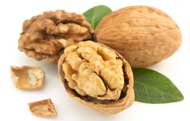
Walnuts are nutritious tree nuts known for being rich in Omega-3s, protein, and antioxidants, and they offer several health benefits, including improved heart health and gut health. They can be eaten as a snack or used in a variety of recipes, from salads and pastas to baked goods.
The scientific name for the common or English walnut is Juglans regia. The scientific name for the broader genus of walnut trees is Juglans. Other species, like the Black Walnut, have their own scientific name, such as Juglans nigra.
History and Origin
Walnuts are the oldest known tree food, with origins in Central Asia, the Himalayas, and Eastern Europe. First cultivated around 7,000 BCE in the region of modern-day Iran, they were a status symbol for royalty and were traded along the Silk Road. The Romans then spread the Juglans regia (Persian) walnut across Europe, and later, English sailors transported the nut globally, leading to the name "English walnut".
- • Chandler
- • Franquette
- • Vina
- • Lara
- • Sir Vina
- • Eureka
- • Hartley
- • Andean Walnut
- • Black Walnut
- • Omega Walnut
- • Pickled Walnuts
- • Walnut Oil
The main types of walnuts grown and sold in Australia are English (Juglans regia) varieties like Chandler, Franquette, and Vina. Other varieties include Lara and Sir Vina. While English walnuts are the most common, other types like Andean Walnut and Black Walnut are also grown, though commercial sales are primarily of English varieties.
Common walnut varieties in Australia
Chandler: A popular variety, known for its premium quality, sweet, creamy flavour, and early and mid-season fruiting.
Franquette: Another established variety grown in Australia.
Vina: A variety that is grown alongside early and mid-season types.
Lara: An early and mid-season variety.
Sir Vina: Another early and mid-season variety.
Eureka: A variety that is grown in Australia.
Hartley: A variety that is grown in Australia.
Other walnut types
Andean Walnut: A fast-growing, frost-free evergreen from the Andes that may be grown in subtropical parts of Australia.
Black Walnut: While not as common commercially as English walnuts, this is another type of walnut that is grown in Australia.
Omega Walnut: A specific brand or grower of high-quality walnuts in Western Australia.
Other walnut products
Pickled Walnuts: Coaldale Walnuts in Tasmania are a large producer of pickled walnuts.
Walnut Oil: Goulburn Valley Walnuts and QWP sell walnut oil.
Nuts ” Walnuts ” ( Nutritional value )
Nutritional Value per 100 g
Nuts, walnuts, english
|
Nutrient ( Proximate’s )
|
Unit
|
Value
|
Daily Value %
|
|
Energy
|
kcal
|
730
|
36.5%
|
|
Protein
|
g
|
14..6
|
29.2%
|
|
Total lipid (fat)
|
g
|
69.7
|
89.3%
|
|
Carbohydrate, by difference
|
g
|
10.9
|
3.9%
|
|
Fiber, total dietary
|
g
|
6.7
|
23.9%
|
|
Total Sugars
|
g
|
5.2
|
|
|
Minerals
|
|||
|
Calcium, Ca
|
mg
|
88
|
6.7%
|
|
Iron, Fe
|
mg
|
224
|
124.4%
|
|
Magnesium, Mg
|
mg
|
142
|
33.8%
|
|
Phosphorus, P
|
mg
|
365
|
29.2%
|
|
Potassium, K
|
mg
|
424
|
9%
|
|
Sodium, Na
|
mg
|
2.5
|
0.1%
|
|
Zinc, Zn
|
mg
|
2.76
|
25%
|
|
Copper, Cu
|
mg
|
1.21
|
134.4%
|
|
Manganese, Mn
|
mg
|
3
|
130.4%
|
|
Molybdenum, Mo
|
mcg |
21
|
46.6%
|
|
Vitamins
|
|||
|
Vitamin C, total ascorbic acid
|
mg
|
||
|
Thiamin (B-1)
|
mg
|
0.23
|
19.1%
|
|
Riboflavin (B-2)
|
mg
|
||
|
Niacin (B-3)
|
mg
|
1.22
|
7.6%
|
|
Pantothenic acid (B-5)
|
mg
|
||
|
Vitamin (B-6)
|
mg
|
0.66
|
38.8%
|
|
Folate (B-9)
|
mcg
|
||
|
Vitamin (B-12)
|
mcg
|
||
|
Vitamin A, RAE
|
mcg
|
||
|
Vitamin E (alpha-tocopherol)
|
mg
|
0.70
|
4.6%
|
|
Vitamin D (D2 + D3)
|
mcg
|
||
|
Vitamin K (phylloquinone)
|
mcg
|
2.7
|
2.2%
|
|
Lipids
|
|||
|
Saturated Fatty Acids
|
g
|
6.05
|
30.2%
|
|
Monounsaturated Fatty Acids
|
g
|
8.933
|
|
|
Polyunsaturated Fatty Acids
|
g
|
47.174
|
|
|
Carotenoids
|
|||
|
Beta-Carotene
|
mcg
|
12
|
|
|
Alpha-Carotene
|
mcg
|
0
|
|
|
Lutein + zeaxanthin
|
mcg
|
9
|
|

|
Reference Values are based on a 2,000 Calorie Intake, for Adults and Children 4 or More Years of Age. Your daily values may be higher or lower depending on your calorie needs.
|
|
Percentages are roughly approximated using (RDA) Recommended Dietary Allowances for adults. Source: USDA United States Department of Agriculture
|
|
Reference Values for Nutrition – FDA U.S. Food and Drug Administration
|
Walnuts Nutritional Value
Walnuts provide significant health benefits due to their rich content of omega-3 fatty acids, antioxidants, vitamins, and minerals. They support heart health by lowering cholesterol and reducing inflammation, and contribute to brain health by improving memory and cognitive function. Other benefits include supporting gut health, aiding in weight management, and potentially reducing the risk of certain cancers and type 2 diabetes.
- SUPPORT CARDIOVASCULAR HEALTH
Walnuts support cardiovascular health by improving lipid profiles, reducing blood pressure, and enhancing endothelial function through their content of beneficial compounds like omega-3 fatty acids, antioxidants, and polyphenols. Regular consumption is linked to a lower risk of cardiovascular diseases such as coronary heart disease and stroke. - LOWER CHOLESTEROL
Walnuts can help lower cholesterol, specifically total and LDL ("bad") cholesterol. Consuming a serving of walnuts daily can lead to modest reductions in total and LDL cholesterol and may improve the quality of LDL particles, which are associated with a lower risk of heart disease. This is largely due to their high content of plant-based omega-3 fatty acids, particularly alpha-linolenic acid. - REDUCE INFLAMMATION
Walnuts reduce inflammation due to their rich content of compounds like alpha-linolenic acid (ALA) (an omega-3 fatty acid), polyphenols, and other antioxidants. These components work by lowering inflammatory markers like IL-6, TNF-α, and C-reactive protein (CRP), and by inhibiting inflammatory pathways and oxidative stress. - IMPROVE BLOOD VESSEL FUNCTION
Walnuts improve blood vessel function by increasing the production of nitric oxide, which helps relax and widen arteries. They contain L-arginine, an amino acid that is a key ingredient for the body to make nitric oxide. Walnuts also reduce inflammation, oxidation, and high cholesterol, further supporting overall cardiovascular health. - SUPPORT COGNITIVE FUNCTION
Walnuts can support cognitive function by reducing oxidative stress and inflammation in the brain, improving memory, and potentially delaying age-related cognitive decline. Their beneficial effects are attributed to the antioxidants, anti-inflammatory polyphenols, and nutrients like omega-3 fatty acids, vitamin E, and B vitamins found in them. Studies have shown positive associations between walnut consumption and improved cognitive performance in various age groups.
- ENHANCE MEMORY AND MOOD
Walnuts may enhance memory and mood due to their high levels of omega-3 fatty acids, polyphenols, and other beneficial compounds like vitamin E, folate, and melatonin. These nutrients support cognitive function, protect against brain decline, and may influence mood through both direct and indirect effects on the brain and gut microbiota. - HELP MANAGE WEIGHT
Walnuts can help manage weight by promoting satiety, as studies show they can increase fullness and decrease appetite. Despite being calorie-dense, some of the fat in walnuts is not fully absorbed by the body due to their fiber content and structure, which can aid in weight management. Additionally, eating walnuts may help reduce cravings and impulse to eat unhealthy foods by influencing brain regions associated with appetite control. - AID IN BLOOD SUGAR CONTROL
Walnuts can aid in blood sugar control due to their low glycaemic index, healthy fats, fiber, and protein, which help stabilize blood sugar and promote fullness. They contain magnesium, which improves insulin sensitivity, and omega-3 fatty acids that may reduce triglycerides. However, due to their calorie density, portion control is important. - SUPPORT GUT HEALTH
Walnuts support gut health by acting as a prebiotic that nourishes beneficial bacteria and promotes a healthier gut microbiome. This is because walnuts contain fiber, fatty acids, and polyphenols that are converted by gut microbes into beneficial compounds like short-chain fatty acids (SCFAs), which can reduce inflammation. Daily consumption has been shown to increase the abundance of beneficial bacteria, increase gut microbial diversity, and may also help reduce inflammation in the colon. - CANCER PREVENTION
Walnuts have a rich content of beneficial compounds like ellagitannins, which are converted to anti-inflammatory molecules called urolithins, as well as other antioxidants and fatty acids. Animal and human studies suggest walnuts can inhibit the growth of various cancers and reduce inflammation associated with cancer risk.
References
Nutrient Database – USDA (United States Department of Agriculture)
Reference Values for Nutrition – FDA U.S. Food and Drug Administration
Support cardiovascular health - Walnuts support cardiovascular health by improving lipid profiles, reducing blood pressure, and enhancing endothelial function through their content of beneficial compounds like omega-3 fatty acids, antioxidants, and polyphenols. Regular consumption is linked to a lower risk of cardiovascular diseases such as coronary heart disease and stroke.
Lower cholesterol - Walnuts can help lower cholesterol, specifically total and LDL ("bad") cholesterol. Consuming a serving of walnuts daily can lead to modest reductions in total and LDL cholesterol and may improve the quality of LDL particles, which are associated with a lower risk of heart disease. This is largely due to their high content of plant-based omega-3 fatty acids, particularly alpha-linolenic acid.
Reduce inflammation - Walnuts reduce inflammation due to their rich content of compounds like alpha-linolenic acid (ALA) (an omega-3 fatty acid), polyphenols, and other antioxidants. These components work by lowering inflammatory markers like IL-6, TNF-α, and C-reactive protein (CRP), and by inhibiting inflammatory pathways and oxidative stress.
Improve blood vessel function - Walnuts improve blood vessel function by increasing the production of nitric oxide, which helps relax and widen arteries. They contain L-arginine, an amino acid that is a key ingredient for the body to make nitric oxide. Walnuts also reduce inflammation, oxidation, and high cholesterol, further supporting overall cardiovascular health.
Support cognitive function - Walnuts can support cognitive function by reducing oxidative stress and inflammation in the brain, improving memory, and potentially delaying age-related cognitive decline. Their beneficial effects are attributed to the antioxidants, anti-inflammatory polyphenols, and nutrients like omega-3 fatty acids, vitamin E, and B vitamins found in them. Studies have shown positive associations between walnut consumption and improved cognitive performance in various age groups.
Enhance memory and mood - Walnuts may enhance memory and mood due to their high levels of omega-3 fatty acids, polyphenols, and other beneficial compounds like vitamin E, folate, and melatonin. These nutrients support cognitive function, protect against brain decline, and may influence mood through both direct and indirect effects on the brain and gut microbiota.
Help manage weight - Walnuts can help manage weight by promoting satiety, as studies show they can increase fullness and decrease appetite. Despite being calorie-dense, some of the fat in walnuts is not fully absorbed by the body due to their fiber content and structure, which can aid in weight management. Additionally, eating walnuts may help reduce cravings and impulse to eat unhealthy foods by influencing brain regions associated with appetite control.
Aid in blood sugar control - Walnuts can aid in blood sugar control due to their low glycaemic index, healthy fats, fiber, and protein, which help stabilize blood sugar and promote fullness. They contain magnesium, which improves insulin sensitivity, and omega-3 fatty acids that may reduce triglycerides. However, due to their calorie density, portion control is important.
Support gut health - Walnuts support gut health by acting as a prebiotic that nourishes beneficial bacteria and promotes a healthier gut microbiome. This is because walnuts contain fiber, fatty acids, and polyphenols that are converted by gut microbes into beneficial compounds like short-chain fatty acids (SCFAs), which can reduce inflammation. Daily consumption has been shown to increase the abundance of beneficial bacteria, increase gut microbial diversity, and may also help reduce inflammation in the colon.
Cancer prevention - Walnuts have potential for cancer prevention due to their rich content of beneficial compounds like ellagitannins, which are converted to anti-inflammatory molecules called urolithins, as well as other antioxidants and fatty acids. Animal and human studies suggest walnuts can inhibit the growth of various cancers and reduce inflammation associated with cancer risk.