




1. Hazelnuts Facts
2. Types of Hazelnuts
3. Hazelnut Nutritional Value
4. Hazelnut Health Benefits
The scientific name for the hazelnut is Corylus avellana, which is the common or European hazelnut and the primary species for commercial production.
Different species of hazel have variations in their scientific names, such as Corylus americana for the American hazelnut or Corylus cornuta for the beaked hazelnut.
Also known as filberts, they grow on shrubs or small trees of the Corylus genus, native to the temperate regions of Europe and Asia.
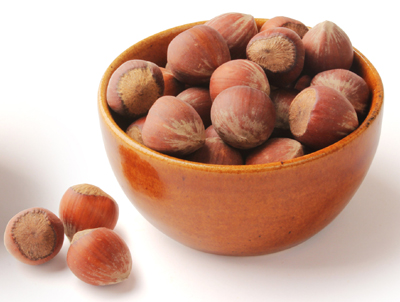
Hazelnuts (Corylus avellana) are small, round nuts with a distinctive sweet flavour and crunchy texture, enclosed in a hard shell and a leafy husk. They are rich in healthy fats, protein, fiber, vitamins, and minerals, and are used in everything from desserts to savoury dishes.
History and Origin
Hazelnuts originated in Europe and Western Asia, with evidence of human consumption dating back to the Mesolithic era around 7000 BC.
Archaeological finds, such as charred hazelnut shells in Scotland, indicate organized processing and early human use.
Ancient Greeks and Romans cultivated hazelnuts, with documentation of their use by figures like Dioscorides and Pliny the Elder. The name "avellana" (the scientific name) comes from the town of Avella in Italy, where they were once abundant.
- • Barcelona
- • Ennis
- • Tonda di Giffoni
- • Lewis
- • Tokolyi/Brownfield Cosford
- • Butler
- • Willamette
The main hazelnut varieties grown in Australia include Barcelona, Ennis, Tonda di Giffoni, Lewis, and Tokolyi/Brownfield Cosford.
These are all cultivars of the European hazelnut, with many Australian-grown types being prized for their quality.
Main varieties grown
- Barcelona: A popular, large-sized hazelnut used in shell and for kernels.
- Ennis: A large, round hazelnut known for its high yield and versatility in cooking.
- Tonda di Giffoni: A medium-sized Italian variety, popular with chefs and food producers for its rich flavour.
- Lewis: A medium-sized nut suitable for blanching and use in confectionery.
- Tokolyi/Brownfield Cosford: An Australian selection with good growth characteristics and suitability for the confectionery industry.
Other varieties
- Butler: A common pollinator variety for other main crop types.
- Willamette: Another medium-sized nut used for blanching and confectionery.
- Other local selections: A number of local selections are also grown.
Nuts ” Hazelnut ” ( Nutritional value )
Nutritional Value per 100 g
Nuts, hazelnuts or filberts
|
Nutrient ( Proximate’s )
|
Unit
|
Value
|
Daily Value %
|
|
Energy
|
kcal
|
628
|
31.4%
|
|
Protein
|
g
|
14.95
|
29.9%
|
|
Total lipid (fat)
|
g
|
60.75
|
77.8%
|
|
Carbohydrate, by difference
|
g
|
16.70
|
6%
|
|
Fiber, total dietary
|
g
|
9.7
|
34.6%
|
|
Total Sugars
|
g
|
4.34
|
|
|
Minerals
|
|||
|
Calcium, Ca
|
mg
|
114
|
8.7%
|
|
Iron, Fe
|
mg
|
4.70
|
26.1%
|
|
Magnesium, Mg
|
mg
|
163
|
38.8%
|
|
Phosphorus, P
|
mg
|
290
|
23.2%
|
|
Potassium, K
|
mg
|
680
|
14.4%
|
|
Sodium, Na
|
mg
|
0
|
|
|
Zinc, Zn
|
mg
|
2.45
|
22.2%
|
|
Copper, Cu
|
mg
|
1.725
|
191.6%
|
|
Manganese, Mn
|
mg
|
6.175
|
268.4%
|
|
Selenium, Se
|
mcg
|
2.4
|
4.3%
|
|
Vitamins
|
|||
|
Vitamin C, total ascorbic acid
|
mg
|
6.3
|
7%
|
|
Thiamin (B-1)
|
mg
|
0.643
|
53.5%
|
|
Riboflavin (B-2)
|
mg
|
0.113
|
8.6%
|
|
Niacin (B-3)
|
mg
|
1.800
|
11.2%
|
|
Pantothenic acid (B-5)
|
mg
|
0.918
|
8.2%
|
|
Vitamin (B-6)
|
mg
|
0.563
|
33.1%
|
|
Folate (B-9)
|
mcg
|
113
|
28.2%
|
|
Vitamin (B-12)
|
mcg
|
0.00
|
|
|
Vitamin A, RAE
|
mcg
|
1
|
0.1%
|
|
Vitamin E (alpha-tocopherol)
|
mg
|
15.03
|
100.2%
|
|
Vitamin D (D2 + D3)
|
mcg
|
0
|
|
|
Vitamin K (phylloquinone)
|
mcg
|
14.2
|
11.8%
|
|
Lipids
|
|||
|
Saturated Fatty Acids
|
g
|
4.464
|
22.3%
|
|
Monounsaturated Fatty Acids
|
g
|
45.652
|
|
|
Polyunsaturated Fatty Acids
|
g
|
7.920
|
|
|
Trans Fatty Acids
|
g
|
||
|
Cholesterol
|
mg
|
0
|
|
|
Carotenoids
|
|||
|
Beta-Carotene
|
mcg
|
11
|
|
|
Alpha-Carotene
|
mcg
|
3
|
|
|
Lutein + zeaxanthin
|
mcg
|
92
|
|
Reference Values are based on a 2,000 Calorie Intake, for Adults and Children 4 or More Years of Age. Your daily values may be higher or lower depending on your calorie needs.
Percentages are roughly approximated using (RDA) Recommended Dietary Allowances for adults. Source: USDA United States Department of Agriculture.
Reference Values for Nutrition – FDA U.S. Food and Drug Administration.
Hazelnuts Nutritional Value
Hazelnuts are beneficial for health due to their rich nutritional profile, which includes healthy fats, antioxidants, fiber, and minerals like magnesium, copper, and manganese.
They support heart health by reducing LDL cholesterol and blood pressure, aid brain health through neuroprotective compounds, and can help with weight management by promoting satiety and boosting metabolism. To maximize benefits, consume whole hazelnuts with the skin, as many antioxidants are in the skin and can be lost during roasting.
CARDIOVASCULAR HEALTH
Hazelnuts benefit cardiovascular health by lowering "bad" LDL cholesterol, triglycerides, and blood pressure, and by reducing inflammation and oxidative stress. These benefits are attributed to their high content of monounsaturated fats, antioxidants (like vitamin E and polyphenols), minerals (magnesium, potassium), and L-arginine, which promotes healthy blood vessel function. A hazelnut-rich diet can lead to a reduced risk of cardiovascular disease.HEART-FRIENDLY FATS
Hazelnuts are heart-friendly due to their high content of monounsaturated fats, which help lower "bad" LDL cholesterol and increase "good" HDL cholesterol. They also contain antioxidants like vitamin E and phenolic compounds that protect against oxidative stress and inflammation and are a source of plant-based omega-3 fatty acids (ALA), contributing to a reduced risk of heart disease.BRAIN AND COGNITIVE FUNCTION
Hazelnuts benefit brain and cognitive function due to their high levels of nutrients like vitamin E, healthy fats, and B vitamins, which protect brain cells, reduce oxidative stress, and support neurotransmitter function. This neuroprotective profile may help improve memory and cognitive performance, reduce the risk of age-related cognitive decline, and lower the risk of neurodegenerative disorders.NEUROPROTECTIVE PROPERTIES
Hazelnuts have neuroprotective properties due to their anti-inflammatory and antioxidant components, such as polyphenols and other compounds, which may help protect against neurodegenerative diseases like Alzheimer's and Parkinson's. Research in animal models suggests that regular consumption can improve memory, reduce anxiety, and protect brain cells from damage.RICH IN ANTIOXIDANTS
Hazelnuts are rich in antioxidants, particularly phenolic compounds and vitamin E, which are concentrated in the skin. Consuming hazelnuts helps protect cells from damage, may lower bad cholesterol, and supports heart health. To get the most antioxidants, it's best to eat them with the skin and in their raw form, as roasting can reduce some of their nutritional value.
EXCELLENT SOURCE OF FOLATE
Hazelnuts are an excellent source of folate, often containing the highest amount of this B-vitamin compared to other nuts. Folate is crucial for many metabolic processes and is especially important during pregnancy to prevent neural tube defects. A 100-gram serving of hazelnuts contains about 30% of the recommended daily value for folate.SUPPORT WEIGHT MANAGEMENT
Hazelnuts can support weight management due to their high content of protein, fiber, and healthy fats, which increase feelings of fullness and reduce overall calorie intake. While calorie-dense, when consumed in moderation (around 30 grams or about 20 hazelnuts), they provide essential nutrients like antioxidants and fiber that aid in satiety and metabolic health, helping to prevent overeating. To maximize benefits, consume them as a snack or add them to meals instead of relying on high calorie, processed alternatives, and practice portion control.SUPPORT METABOLISM
Hazelnuts support metabolism by providing energy through healthy fats, B vitamins, and minerals, which help convert carbs to glucose. They improve metabolic outcomes by increasing feelings of fullness, which can help with weight management, and also positively impact cardiovascular risk factors like cholesterol and blood pressure. Additionally, hazelnuts are rich in antioxidants and other phytonutrients that may protect against cell damage and inflammation, further supporting overall metabolic health.RICH IN VITAMINS AND MINERALS
Hazelnuts are rich in vitamins, minerals, and other nutrients, including vitamin E, B vitamins like folate and B6, magnesium, copper, and manganese. They are also a great source of healthy monounsaturated fats, protein, and fiber, which contribute to heart health and digestion.IMPROVED MEMORY
Hazelnuts may improve memory due to their rich content of nutrients like vitamin E, B vitamins, and healthy fats, which protect brain cells and support cognitive function. Research shows that hazelnut consumption can positively affect memory and cognitive performance by protecting brain tissue from damage and supporting brain health.
References
Nutrient Database – USDA (United States Department of Agriculture)
Reference Values for Nutrition – National Institutes of Health USA
Cardiovascular health - Hazelnuts benefit cardiovascular health by lowering "bad" LDL cholesterol, triglycerides, and blood pressure, and by reducing inflammation and oxidative stress. These benefits are attributed to their high content of monounsaturated fats, antioxidants (like vitamin E and polyphenols), minerals (magnesium, potassium), and L-arginine, which promotes healthy blood vessel function. A hazelnut-rich diet can lead to a reduced risk of cardiovascular disease.
Heart-friendly fats - Hazelnuts are heart-friendly due to their high content of monounsaturated fats, which help lower "bad" LDL cholesterol and increase "good" HDL cholesterol. They also contain antioxidants like vitamin E and phenolic compounds that protect against oxidative stress and inflammation and are a source of plant-based omega-3 fatty acids (ALA), contributing to a reduced risk of heart disease.
Brain and cognitive function - Hazelnuts benefit brain and cognitive function due to their high levels of nutrients like vitamin E, healthy fats, and B vitamins, which protect brain cells, reduce oxidative stress, and support neurotransmitter function. This neuroprotective profile may help improve memory and cognitive performance, reduce the risk of age-related cognitive decline, and lower the risk of neurodegenerative disorders.
Neuroprotective properties - Hazelnuts have neuroprotective properties due to their anti-inflammatory and antioxidant components, such as polyphenols and other compounds, which may help protect against neurodegenerative diseases like Alzheimer's and Parkinson's. Research in animal models suggests that regular consumption can improve memory, reduce anxiety, and protect brain cells from damage.
Improved memory - Hazelnuts may improve memory due to their rich content of nutrients like vitamin E, B vitamins, and healthy fats, which protect brain cells and support cognitive function. Research shows that hazelnut consumption can positively affect memory and cognitive performance by protecting brain tissue from damage and supporting brain health.
Excellent source of folate - Hazelnuts are an excellent source of folate, often containing the highest amount of this B-vitamin compared to other nuts. Folate is crucial for many metabolic processes and is especially important during pregnancy to prevent neural tube defects. A 100-gram serving of hazelnuts contains about 30% of the recommended daily value for folate.
Support weight management - Hazelnuts can support weight management due to their high content of protein, fiber, and healthy fats, which increase feelings of fullness and reduce overall calorie intake. While calorie-dense, when consumed in moderation (around 30 grams or about 20 hazelnuts), they provide essential nutrients like antioxidants and fiber that aid in satiety and metabolic health, helping to prevent overeating. To maximize benefits, consume them as a snack or add them to meals instead of relying on high calorie, processed alternatives, and practice portion control.
phytonutrients that may protect against cell damage and inflammation, further supporting overall metabolic health.
Support metabolism - Hazelnuts support metabolism by providing energy through healthy fats, B vitamins, and minerals, which help convert carbs to glucose. They improve metabolic outcomes by increasing feelings of fullness, which can help with weight management, and also positively impact cardiovascular risk factors like cholesterol and blood pressure. Additionally, hazelnuts are rich in antioxidants and other phytonutrients that may protect against cell damage and inflammation, further supporting overall metabolic health.
Rich in vitamins and minerals - Hazelnuts are rich in vitamins, minerals, and other nutrients, including vitamin E, B vitamins like folate and B6, magnesium, copper, and manganese. They are also a great source of healthy monounsaturated fats, protein, and fiber, which contribute to heart health and digestion.
Rich in antioxidants - Hazelnuts are rich in antioxidants, particularly phenolic compounds and vitamin E, which are concentrated in the skin. Consuming hazelnuts helps protect cells from damage, may lower bad cholesterol, and supports heart health. To get the most antioxidants, it's best to eat them with the skin and in their raw form, as roasting can reduce some of their nutritional value.