


1. Pecan Nut Facts
2. Types of Pecan Nuts
3. Pecan Nut Nutritional Value
4. Pecan Nut Health Benefits
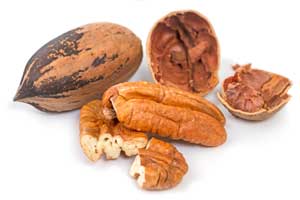
The scientific name for the pecan nut is Carya illinoinensis. It is a species of hickory tree native to North America that produces the edible pecan nut.
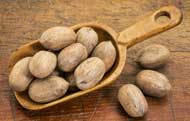
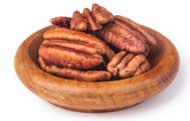
A pecan has a rich, buttery, and slightly sweet flavour and a crunchy texture. It is the fruit of the Carya illinoinensis tree, a type of hickory, with a smooth, brown shell containing a wrinkly, two-halved nut.
History and Origin
Pecan nuts are native to North America and hold a rich history, being the only major tree nut that is indigenous to the continent. They naturally grew across the south-central United States and into Mexico, with vast natural groves located along riverbanks.
Commercial cultivation began in the late 19th century, with the first plantings in the US in the 1880s. Today, commercial growing is widespread across the southern U.S., Mexico, and other countries.
- • Western Schley
- • Wichita
- • Cheyenne
- • Cherokee
- • Pawnee
- • Shoshoni
- • Tejas
- • Trawalla
- • Redbank
- • Loch Lomond
- • Oongarah
- • Long Creek
Major pecan varieties grown and sold in Australia include Western Schley and Wichita, which are common in large commercial plantations, as well as other varieties like Cheyenne, Cherokee, Pawnee, and Shoshoni.
The specific types grown are often selected based on climate and the need for cross-pollination, as different varieties have different maturation times and growth characteristics.
Common varieties
- Western Schley: A popular variety in commercial plantations, though it has a long maturation period.
- Wichita: A main variety in commercial orchards.
- Cheyenne: A high-yielding variety with a shorter growing season and good quality, smaller nuts.
- Cherokee: A high-producing variety with a short growing season that yields large quantities of medium-sized nuts.
- Pawnee: An early-maturing, high-quality variety suitable for coastal areas.
- Shoshoni: An early-maturing and heavy-cropping variety that is popular in subtropical areas.
- Tejas: An early to mid-season variety with high kernel quality that acts as a good pollinator for other types like Cherokee and Cheyenne.
Other types and considerations
- Trawalla, Redbank, Loch Lomond, Oongarah, and Long Creek: These are other varieties developed or planted by major producers like Stahmann Webster.
- Seedling: Seedlings are from the rootstock of grafted trees and can be used for rootstock or if a fast-growing tree is desired.
- Cross-pollination: Pecan trees are monoecious, meaning they have separate male and female flowers. To ensure a good yield, at least two different varieties (a Type 1 and a Type 2) must be planted to enable cross-pollination.
- Varietal needs: The selection of varieties depends on the growing environment and climate, with different varieties having different maturation periods and optimal growing conditions.
Nuts ” Pecan Nut ” ( Nutritional value )
Nutritional Value per 100 g
Nuts, pecans
|
Nutrient ( Proximate’s )
|
Unit
|
Value
|
Daily Value %
|
|
Energy
|
kcal
|
691
|
34.5%
|
|
Protein
|
g
|
9.17
|
18.3%
|
|
Total lipid (fat)
|
g
|
71.97
|
92.2%
|
|
Carbohydrate, by difference
|
g
|
13.86
|
5%
|
|
Fiber, total dietary
|
g
|
9.6
|
34.2%
|
|
Total Sugars
|
g
|
3.97
|
|
|
Minerals
|
|||
|
Calcium, Ca
|
mg
|
70
|
5.3%
|
|
Iron, Fe
|
mg
|
2.53
|
14%
|
|
Magnesium, Mg
|
mg
|
121
|
28.8%
|
|
Phosphorus, P
|
mg
|
277
|
22.1%
|
|
Potassium, K
|
mg
|
410
|
8.7%
|
|
Sodium, Na
|
mg
|
||
|
Zinc, Zn
|
mg
|
4.53
|
41.1%
|
|
Copper, Cu
|
mg
|
1.200
|
133.3%
|
|
Manganese, Mn
|
mg
|
4.500
|
65.2%
|
|
Selenium, Se
|
mcg
|
3.8
|
6.9%
|
|
Vitamins
|
|||
|
Vitamin C, total ascorbic acid
|
mg
|
1.1
|
1.2%
|
|
Thiamin (B-1)
|
mg
|
0.660
|
55%
|
|
Riboflavin (B-2)
|
mg
|
0.130
|
10%
|
|
Niacin (B-3)
|
mg
|
1.167
|
7.2%
|
|
Pantothenic acid (B-5)
|
mg
|
0.863
|
17.2%
|
|
Vitamin (B-6)
|
mg
|
0.210
|
12.3%
|
|
Folate (B-9)
|
mcg
|
22
|
5.5%
|
|
Vitamin (B-12)
|
mcg
|
0.00
|
|
|
Vitamin A, RAE
|
mcg
|
||
|
Vitamin E (alpha-tocopherol)
|
mg
|
1.40
|
9.3%
|
|
Vitamin D (D2 + D3)
|
mcg
|
0
|
|
|
Vitamin K (phylloquinone)
|
mcg
|
3.5
|
2.9%
|
|
Lipids
|
|||
|
Saturated Fatty Acids
|
g
|
6.180
|
30.9%
|
|
Monounsaturated Fatty Acids
|
g
|
40.801
|
|
|
Polyunsaturated Fatty Acids
|
g
|
21.614
|
|
|
Cholesterol
|
mg
|
0
|
|
|
Carotenoids
|
|||
|
Beta-Carotene
|
mcg
|
29
|
|
|
Beta-Cryptoxanthin
|
mcg
|
9
|
|
|
Lutein + zeaxanthin
|
mcg
|
17
|
|
Reference Values are based on a 2,000 Calorie Intake, for Adults and Children 4 or More Years of Age. Your daily values may be higher or lower depending on your calorie needs.
Percentages are roughly approximated using (RDA) Recommended Dietary Allowances for adults. Source: USDA United States Department of Agriculture.
Reference Values for Nutrition – FDA U.S. Food and Drug Administration.
Pecan Nuts Nutritional Value
Pecans are a nutrient-rich, functional food supporting cardiovascular health, glycaemic control, cognitive function, inflammation reduction, and modulation of gut microbiota.
These effects make pecans a valuable dietary component in public health nutrition and athletic recovery strategies.
HEART HEALTH
Pecan nuts support heart health by helping to lower bad cholesterol and triglycerides, reducing the risk of heart disease, and improving vascular function. They achieve this due to their high content of monounsaturated and polyunsaturated fats, antioxidants like polyphenols and vitamin E, and minerals like zinc and magnesium. Regularly eating a handful of pecans can be a heart-healthy snack, and replacing other snacks with pecans may improve your overall diet quality.MAY AID WEIGHT MANAGEMENT
Pecan nuts have a high content of protein, fiber, and healthy fats, which help you feel full and satisfied, potentially leading to reduced calorie intake. Studies also suggest that eating pecans can increase the body's energy expenditure and metabolic processes and may help prevent weight gain. The healthy fats in pecans may improve cholesterol levels and reduce inflammation.SUPPORT DIGESTIVE HEALTH
Pecan nuts support digestive health primarily through their high fiber content, which promotes regularity, prevents constipation, and feeds beneficial gut bacteria. While beneficial, excessive consumption can cause bloating, gas, or cramping, so it is best to introduce them gradually. A serving of about one ounce provides around 3 grams of fiber.POWERFUL ANTIOXIDANTS
Pecan nuts are powerful antioxidants, rich in polyphenols, vitamin E, and ellagic acid, which help protect cells from damage and inflammation. They are a source of heart-healthy monounsaturated fats, fiber, and minerals like manganese and zinc. Studies indicate that pecans can help reduce oxidative stress and have other health benefits.
RICH IN ESSENTIAL NUTRIENTS
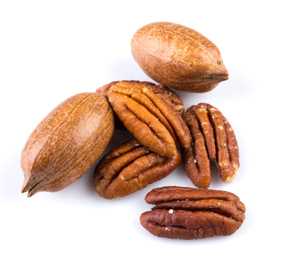
Pecans are a type of tree nut that's rich in several key nutrients, including fiber, copper, thiamine, and zinc. They've been associated with many potential health benefits, including improved blood sugar control, heart health, and brain function.RICH IN HEALTHY FATS
Raw pecans pack a 1-2-3 punch of protein, healthy fats, and fiber that can help keep you energized and satisfied. Pecans are a good source of calcium, magnesium, and potassium, which help lower blood pressure. Most of the fat found in pecans is a healthy type called monounsaturated fat.BENEFIT BRAIN HEALTH
Pecan nuts benefit brain health by providing antioxidants, healthy fats, and minerals that support cognitive function and protect against age-related decline. Their antioxidants, like Vitamin E, combat oxidative stress, while healthy fats, such as monounsaturated and polyunsaturated fats, are linked to reduced mental decline and improved neuroplasticity. Additionally, nutrients like copper and zinc play crucial roles in nerve cell function and overall brain growth.ANTI-INFLAMMATORY PROPERTIES
Pecan nuts have anti-inflammatory properties due to their rich content of antioxidants like flavonoids and vitamin E, healthy monounsaturated fats, and minerals such as magnesium, manganese, and copper. These components help fight oxidative stress, reduce pro-inflammatory compounds, and can lower levels of C-reactive protein (CRP), a marker for inflammation. Consuming pecans can therefore help manage chronic inflammation associated with diseases like arthritis and cardiovascular disease.
References
Nutrient Database – USDA (United States Department of Agriculture)
Reference Values for Nutrition – FDA U.S. Food and Drug Administration
Heart health - Pecan nuts support heart health by helping to lower bad cholesterol and triglycerides, reducing the risk of heart disease, and improving vascular function. They achieve this due to their high content of monounsaturated and polyunsaturated fats, antioxidants like polyphenols and vitamin E, and minerals like zinc and magnesium. Regularly eating a handful of pecans can be a heart-healthy snack, and replacing other snacks with pecans may improve your overall diet quality.
Rich in healthy fats - Raw pecans pack a 1-2-3 punch of protein, healthy fats, and fiber that can help keep you energized and satisfied. Pecans are a good source of calcium, magnesium, and potassium, which help lower blood pressure. Most of the fat found in pecans is a healthy type called monounsaturated fat.
Support digestive health - Pecan nuts support digestive health primarily through their high fiber content, which promotes regularity, prevents constipation, and feeds beneficial gut bacteria. While beneficial, excessive consumption can cause bloating, gas, or cramping, so it is best to introduce them gradually. A serving of about one ounce provides around 3 grams of fiber.
Powerful antioxidants - Pecan nuts are powerful antioxidants, rich in polyphenols, vitamin E, and ellagic acid, which help protect cells from damage and inflammation. They are a source of heart-healthy monounsaturated fats, fiber, and minerals like manganese and zinc. Studies indicate that pecans can help reduce oxidative stress and have other health benefits.
Rich in essential nutrients - Pecans are a type of tree nut that's rich in several key nutrients, including fiber, copper, thiamine, and zinc. They've been associated with many potential health benefits, including improved blood sugar control, heart health, and brain function.
May aid weight management - Pecan nuts may aid weight management due to their high content of protein, fiber, and healthy fats, which help you feel full and satisfied, potentially leading to reduced calorie intake. Studies also suggest that eating pecans can increase the body's energy expenditure and metabolic processes and may help prevent weight gain. The healthy fats in pecans may improve cholesterol levels and reduce inflammation.
Benefit brain health - Pecan nuts benefit brain health by providing antioxidants, healthy fats, and minerals that support cognitive function and protect against age-related decline. Their antioxidants, like Vitamin E, combat oxidative stress, while healthy fats, such as monounsaturated and polyunsaturated fats, are linked to reduced mental decline and improved neuroplasticity. Additionally, nutrients like copper and zinc play crucial roles in nerve cell function and overall brain growth.
Anti-inflammatory properties - Pecan nuts have anti-inflammatory properties due to their rich content of antioxidants like flavonoids and vitamin E, healthy monounsaturated fats, and minerals such as magnesium, manganese, and copper. These components help fight oxidative stress, reduce pro-inflammatory compounds, and can lower levels of C-reactive protein (CRP), a marker for inflammation. Consuming pecans can therefore help manage chronic inflammation associated with diseases like arthritis and cardiovascular disease.