



1. Great Northern Bean Facts
2. Types of Beans
3. Nutritional Value
4. Health Benefits
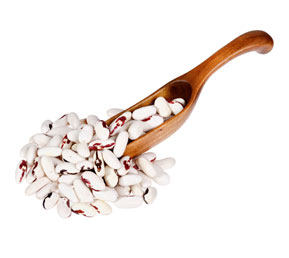
Great Northern beans are medium-sized, white, oval-shaped legumes with a delicate, creamy texture and a mild, nutty flavour.
They are very versatile, absorbing other flavours well, which makes them ideal for a wide range of dishes like soups, stews, salads, and casseroles.
History and Origin
Great Northern beans originated in the Americas, likely from wild ancestors cultivated by South American indigenous peoples.
They spread through migrations and trade, eventually reaching North America where they were further cultivated, with some historical records pointing to stewardship by Native American tribes like the Hidatsa.
Great Northern beans are a type of common bean (Phaseolus vulgaris) that were later distributed globally through trade and exploration, particularly by Spanish explorers who introduced them to Europe.
Great Northern beans are not commonly grown or sold in Australia, where other varieties are more popular. Instead, you can find similar white beans like Cannellini beans or Borlotti beans, which are widely available in supermarkets.
Alternatives to Great Northern Beans in Australia
- Cannellini Beans: Also known as white kidney beans, these are a close substitute with a slightly creamier texture and nuttier flavour than Great Northern beans.
- Borlotti Beans: These are widely available in Australian supermarkets and are a good substitute for pinto beans, but can also be used in dishes that might call for Great Northern beans.
Other common beans in Australia
- Broad (Faba) Beans: The most commonly grown bean in Australia.
- Mung Beans: Frequently grown and sold in Australia.
- Adzuki Beans: Grown in Australia and often used in Asian cuisine.
- Navy Beans: Also known as haricot beans, they are commonly grown and sold in Australia.
" Great Northern Bean ” ( Nutritional value )
Nutritional Value per 100 g
Beans, great northern, mature seeds, cooked, boiled, with salt
|
Nutrient ( Proximate’s )
|
Unit
|
Value
|
Daily Value %
|
|
Energy
|
kcal
|
118
|
5.9%
|
|
Protein
|
g
|
8.33
|
16.6%
|
|
Total lipid (fat)
|
g
|
0.45
|
0.5%
|
|
Carbohydrate, by difference
|
g
|
21.09
|
7.6%
|
|
Fiber, total dietary
|
g
|
7.0
|
25%
|
|
Minerals
|
|||
|
Calcium, Ca
|
mg
|
68
|
5.2%
|
|
Iron, Fe
|
mg
|
2.13
|
11.8%
|
|
Magnesium, Mg
|
mg
|
50
|
11.9%
|
|
Phosphorus, P
|
mg
|
165
|
13.2%
|
|
Potassium, K
|
mg
|
391
|
8.3%
|
|
Sodium, Na
|
mg
|
238
|
10.3%
|
|
Zinc, Zn
|
mg
|
0.88
|
8%
|
|
Copper, Cu
|
mg
|
0.247
|
27.4%
|
|
Manganese, Mn
|
mg
|
0.518
|
22.5%
|
|
Selenium, Se
|
mcg
|
4.1
|
7.4%
|
|
Vitamins
|
|||
|
Vitamin C, total ascorbic acid
|
mg
|
1.3
|
1.4%
|
|
Thiamin (B-1)
|
mg
|
0.158
|
13.1%
|
|
Riboflavin (B-2)
|
mg
|
0.059
|
4.5%
|
|
Niacin (B-3)
|
mg
|
0.681
|
4.2%
|
|
Pantothenic acid (B-5)
|
mg
|
0.266
|
5.3%
|
|
Vitamin (B-6)
|
mg
|
0.117
|
6.8%
|
|
Folate (B-9)
|
mcg
|
102
|
25.5%
|
|
Vitamin (B-12)
|
mcg
|
0.00
|
|
|
Vitamin A, RAE
|
mcg
|
||
|
Vitamin D (D2 + D3)
|
mcg
|
0.0
|
|
|
Vitamin D
|
mcg
|
0
|
|
|
Lipids
|
|||
|
Saturated Fatty Acids
|
g
|
0.140
|
0.7%
|
|
Monounsaturated Fatty Acids
|
g
|
0.021
|
|
|
Polyunsaturated Fatty Acids
|
g
|
0.187
|
|
|
Trans Fatty Acids
|
g
|
0.000
|
|
|
Cholesterol
|
mg
|
0
|
|

Reference Values are based on a 2,000 Calorie Intake, for Adults and Children 4 or More Years of Age. Your daily values may be higher or lower depending on your calorie needs.
Percentages are roughly approximated using (RDA) Recommended Dietary Allowances for adults. Source: USDA United States Department of Agriculture.
Reference Values for Nutrition – FDA U.S. Food and Drug Administration.
Great Northern Beans Nutritional Value
Great Northern beans are beneficial for health because they are a great source of protein, fiber, and essential vitamins and minerals like folate, iron, magnesium, and potassium.
They can help lower cholesterol, improve heart health, regulate blood sugar, and promote digestive health and weight management due to their high fiber and protein content.
SUPPORT HEART HEALTH
Great Northern beans support heart health by helping to lower cholesterol, maintain healthy blood sugar levels, and provide fiber, which contributes to a healthy heart and digestive system. They are low in fat and cholesterol-free, and studies suggest they may lower the risk of cardiovascular disease and overall mortality.DIGESTIVE HEALTH
Great Northern beans are a rich source of both soluble and insoluble fiber, which promotes regular digestion, prevents constipation, and supports a healthy gut microbiome. However, they also contain raffinose, an oligosaccharide that can cause gas and bloating. Soaking the beans before cooking and discarding the soaking water can help reduce the oligosaccharide content and the resulting digestive discomfort.PACKED WITH MINERALS
Great northern beans are packed with minerals like iron, magnesium, potassium, and zinc, which support various bodily functions such as oxygen transport, blood pressure regulation, immune function, and wound healing. They also provide other beneficial nutrients, including B vitamins like folate, thiamine, and vitamin B6, and are a good source of protein and fiber.BLOOD SUGAR MANAGEMENT
Great Northern beans can help manage blood sugar due to their low glycaemic index (GI), high fiber, and high protein content, which slow carbohydrate absorption and prevent sharp blood sugar spikes. Regular consumption of beans is associated with better glycaemic control, including lower fasting blood sugar and HbA1c levels.
RICH IN PROTEIN AND FIBER
Great Northern beans are rich in protein and fiber, offering about 8.3g of protein and 7g of fiber per 100g (about 1/2 cup) of cooked beans. This plant-based protein and high fiber content contribute to satiety, support digestive health, and aid in regulating blood sugar and cholesterol levels.GOOD SOURCE OF VITAMINS
Great northern beans are a good source of vitamins, particularly B vitamins, particularly folate (B9), which is crucial for cell and DNA creation, and B1 and B6. They also provide significant amounts of other important nutrients such as protein, fiber, iron, magnesium, and potassium.WEIGHT MANAGEMENT
Great Northern beans support weight management due to their high content of protein and fiber, which promotes fullness and reduces overall calorie intake. They are a low-fat, plant-based source of these nutrients, and the complex carbohydrates digest slowly, helping to regulate blood sugar and prevent energy crashes. Additionally, research suggests that a diet rich in beans may help prevent weight gain, reduce body fat, and lower cholesterol.REDUCED CANCER RISK
Consuming Great Northern beans may help reduce cancer risk due to their high fiber content and various bioactive compounds, which can improve gut health, reduce inflammation, and have antioxidant effects. Fiber promotes regular bowel movements and supports healthy gut bacteria, while antioxidants like flavonoids and phenolic compounds can help inhibit cancer cell growth and induce apoptosis.
References
Nutrient Database – USDA (United States Department of Agriculture)
Reference Values for Nutrition – FDA U.S. Food and Drug Administration
Rich in protein and fiber - Great Northern beans are rich in protein and fiber, offering about 8.3g of protein and 7g of fiber per 100g (about 1/2 cup) of cooked beans. This plant-based protein and high fiber content contribute to satiety, support digestive health, and aid in regulating blood sugar and cholesterol levels.
Good source of vitamins - Great northern beans are a good source of vitamins, particularly B vitamins, particularly folate (B9), which is crucial for cell and DNA creation, and B1 and B6. They also provide significant amounts of other important nutrients such as protein, fiber, iron, magnesium, and potassium.
Packed with minerals - Great northern beans are packed with minerals like iron, magnesium, potassium, and zinc, which support various bodily functions such as oxygen transport, blood pressure regulation, immune function, and wound healing. They also provide other beneficial nutrients, including B vitamins like folate, thiamine, and vitamin B6, and are a good source of protein and fiber.
Support heart health - Great Northern beans support heart health by helping to lower cholesterol, maintain healthy blood sugar levels, and provide fiber, which contributes to a healthy heart and digestive system. They are low in fat and cholesterol-free, and studies suggest they may lower the risk of cardiovascular disease and overall mortality.
Blood sugar management - Great Northern beans can help manage blood sugar due to their low glycaemic index (GI), high fiber, and high protein content, which slow carbohydrate absorption and prevent sharp blood sugar spikes. Regular consumption of beans is associated with better glycaemic control, including lower fasting blood sugar and HbA1c levels.
Digestive health - Great Northern beans benefit digestive health by being a rich source of both soluble and insoluble fiber, which promotes regular digestion, prevents constipation, and supports a healthy gut microbiome. However, they also contain raffinose, an oligosaccharide that can cause gas and bloating. Soaking the beans before cooking and discarding the soaking water can help reduce the oligosaccharide content and the resulting digestive discomfort.
Weight management - Great Northern beans support weight management due to their high content of protein and fiber, which promotes fullness and reduces overall calorie intake. They are a low-fat, plant-based source of these nutrients, and the complex carbohydrates digest slowly, helping to regulate blood sugar and prevent energy crashes. Additionally, research suggests that a diet rich in beans may help prevent weight gain, reduce body fat, and lower cholesterol.
Reduced cancer risk - Consuming Great Northern beans may help reduce cancer risk due to their high fiber content and various bioactive compounds, which can improve gut health, reduce inflammation, and have antioxidant effects. Fiber promotes regular bowel movements and supports healthy gut bacteria, while antioxidants like flavonoids and phenolic compounds can help inhibit cancer cell growth and induce apoptosis.