


1. Salt Facts
2. Types of Salt
3. Salt Nutritional Value
4. Salt Health Benefits
Salt is a chemical compound, most commonly sodium chloride (NaCl), made of sodium and chlorine, that's essential for life, flavouring food, preserving it, and crucial for nerve/muscle function, but too much intake raises blood pressure and risks heart disease.
Chemically salt, is a broader term for ionic compounds formed from acid-base reactions, but in cooking, it's the mineral seasoning.
History and Origin
Salt's history is inextricably intertwined with human civilization, spanning over 8,000 years as a vital, often sacred, commodity for food preservation, trade, and medicine.
Salt, often referred to as "white gold," was one of the most critical commodities in the ancient world, driving economic, military, and exploratory endeavours.
Its paramount ability to preserve food—particularly meat and fish—in the absence of refrigeration made it an essential, highly valued resource for survival, trade, and the expansion of empires.
- • Table Salt
- • Kosher Salt
- • Sea Salt
- • Flake Salt (Maldon, Fleur de Sel)
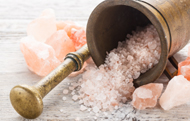
- • Himalayan Pink Salt
- • Black Salt (Kala Namak)
- • Smoked Salt
- • Pickling Salt
Types of salt vary by origin, processing, and crystal size, with common culinary types including fine-grained Table Salt (often iodized), coarse Kosher Salt, sea-evaporated Sea Salts (like flaky Maldon or briny Fleur de Sel), mineral-rich Himalayan Pink Salt, earthy Black Salt (Kala Namak), and flavoured or smoked varieties, each offering different textures and flavours for cooking, baking, or finishing dishes.
Types of Salt
- Table Salt: Fine, uniform crystals, often with anti-caking agents and iodine; dissolves quickly, great for baking and general seasoning.
- Kosher Salt: Larger, irregular crystals, easy to pinch; used for seasoning meats (koshering) and general cooking.
- Sea Salt: Evaporated from seawater, comes in fine to coarse grains, offering nuanced ocean flavours (e.g., French Grey Salt, Hawaiian Salt).
- Flake Salt (Maldon, Fleur de Sel): Thin, delicate crystals; used as a finishing salt for texture and a burst of flavour.
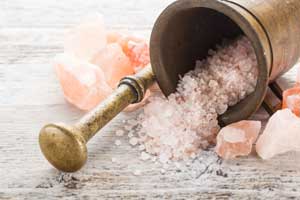
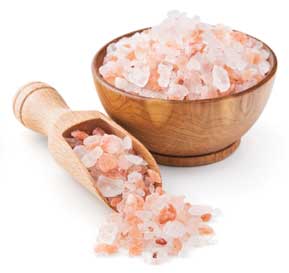
- Himalayan Pink Salt: Mined salt with iron, giving it a pink hue; used for seasoning and finishing.
- Black Salt (Kala Namak): Volcanic salt with a sulfuric, pungent aroma; popular in Indian cuisine.
- Smoked Salt: Salt infused with smoke; adds a smoky depth to dishes.
- Pickling Salt: Pure, additive-free salt for preserving foods like cucumbers.
By Processing and Origin
- Sea Salt: From evaporated ocean water.
- Rock Salt (Halite): Mined from ancient seabeds.
How They Differ
- Crystal Size: Fine (table), coarse (kosher, grinder), flaky (Maldon).
- Additives: Iodine, anti-caking agents in table salt; none in kosher or some sea salts.
- Mineral Content: Varies, giving pink (Himalayan) or black (lava) colours.
- Flavour: Ranges from pure salty to sulfuric (black salt) or smoky.
Spices ” Salt ” ( Nutritional value )
Nutritional value per 6 g – 1 Tablespoon
Salt, table
|
Nutrient ( Proximate’s )
|
Unit
|
Value
|
Daily Value %
|
|
Energy
|
kcal
|
0
|
|
|
Protein
|
g
|
0.00
|
|
|
Total lipid (fat)
|
g
|
0.00
|
|
|
Carbohydrate, by difference
|
g
|
0.00
|
|
|
Fiber, total dietary
|
g
|
0.0
|
|
|
Sugars, total
|
g
|
0.00
|
|
|
Minerals
|
|||
|
Calcium, Ca
|
mg
|
1
|
.007%
|
|
Iron, Fe
|
mg
|
0.02
|
0.1%
|
|
Magnesium, Mg
|
mg
|
0
|
|
|
Phosphorus, P
|
mg
|
0
|
|
|
Potassium, K
|
mg
|
0
|
|
|
Sodium, Na
|
mg
|
2325
|
101%
|
|
Zinc, Zn
|
mg
|
0.01
|
.009%
|
|
Copper, Cu
|
mg
|
0.002
|
0.2%
|
|
Manganese, Mn
|
mg
|
0.006
|
0.2%
|
|
Selenium, Se
|
mcg
|
0.0
|
|
|
Vitamins
|
|||
|
Vitamin C, total ascorbic acid
|
mg
|
0.0
|
|
|
Thiamin (B-1)
|
mg
|
0.000
|
|
|
Riboflavin (B-2)
|
mg
|
0.000
|
|
|
Niacin (B-3)
|
mg
|
0.000
|
|
|
Pantothenic acid (B-5)
|
mg
|
0.000
|
|
|
Vitamin (B-6)
|
mg
|
0.000
|
|
|
Folate (B-9)
|
mcg
|
0
|
|
|
Vitamin (B-12)
|
mcg
|
0.00
|
|
|
Vitamin A, RAE
|
mcg
|
0
|
|
|
Vitamin E (alpha-tocopherol)
|
mg
|
0.00
|
|
|
Vitamin D (D2 + D3)
|
mcg
|
0
|
|
|
Vitamin K (phylloquinone)
|
mcg
|
0.0
|
|
|
Lipids
|
|||
|
Saturated Fatty Acids
|
g
|
0.000
|
|
|
Monounsaturated Fatty Acids
|
g
|
0.000
|
|
|
Polyunsaturated Fatty Acids
|
g
|
0.000
|
|
|
Trans Fatty Acids
|
g
|
0.000
|
|
|
Carotenoids
|
|||
|
Beta-Carotene
|
mcg
|
0
|
|
|
Beta-Cryptoxanthin
|
mcg
|
0
|
|
|
Lutein + zeaxanthin
|
mcg
|
0
|
|
Reference Values are based on a 2,000 Calorie Intake, for Adults and Children 4 or More Years of Age. Your daily values may be higher or lower depending on your calorie needs.
Percentages are roughly approximated using (RDA) Recommended Dietary Allowances for adults. Source: USDA United States Department of Agriculture.
Reference Values for Nutrition – FDA U.S. Food and Drug Administration.
Salt Nutritional Value
Salt (sodium chloride) is vital for nerve signals, muscle function, fluid balance, and nutrient transport, but only in small amounts; iodized salt provides iodine for thyroid health, while external uses like gargling can soothe throats, and salt baths can benefit skin, though excessive intake raises blood pressure and risks heart/kidney issues.
HYDRATION
Adding a small amount of salt to water can help with hydration, especially after heavy sweating, as it replenishes electrolytes like sodium. However, most people get enough sodium from their diet, and adding extra salt is unnecessary and can lead to health issues like high blood pressure and bloating. It's only beneficial for those who are exercising intensely, sweating profusely, or are ill, and it should be done sparingly.DENTAL HEALTH
Salt rinse kills bacteria, reducing inflammation, and speeding healing after procedures like extractions by creating an alkaline, antibacterial environment, and too much sodium in your diet can leach calcium, weakening teeth. Dentists recommend warm saltwater rinses (1 tsp salt in warm water) to fight plaque and gum issues, but fine sea or Himalayan salt is better for occasional brushing than coarse table salt to avoid enamel damage.FLUID BALANCE
Salt (sodium) is crucial for fluid balance, as it's the main electrolyte controlling water inside/outside cells; too much makes your body hold water (water retention) to dilute it, increasing blood volume, straining the heart, and raising blood pressure, while insufficient sodium (hyponatremia) can also be dangerous, requiring a delicate balance managed by your kidneys.NERVE AND MUSCLE FUNCTION
Salt (sodium chloride) is vital for nerve and muscle function because its sodium ions help generate electrical signals (nerve impulses) that trigger muscles to contract and relax, working with potassium to maintain fluid balance and cell potential; without enough sodium, nerve signals falter, leading to fatigue, cramps, and confusion, though too much causes high blood pressure.
NUTRIENT TRANSPORT
Salt (sodium ions) is crucial for nutrient transport by creating electrochemical gradients that power co-transporters, moving sugars, amino acids, and minerals (like glucose, phosphates, ) into cells, while also regulating fluid balance and nerve/muscle function in animals; in plants, salt transport manages osmotic stress and brings in minerals via channels/transporters, but excess sodium can be toxic, requiring sequestration or extrusion.SKIN HEALTH
Salt impacts skin health both positively (through minerals in saltwater baths for exfoliation, hydration, and conditions like eczema/psoriasis) and negatively (excess dietary salt causing dehydration, inflammation, puffiness, and accelerating aging by reducing collagen). Using salt as an exfoliant is great for removing dead cells, but direct facial application can cause microtears; instead, try salt scrubs, baths, or rinses, and limit dietary sodium for better skin vitality.SORE THROATS
Gargling with warm salt water is a simple, effective home remedy for sore throats, helping to reduce swelling, kill bacteria, loosen mucus, and soothe irritation by drawing fluid from inflamed tissues. Mix about 1/4 to 1/2 teaspoon of salt in 8 ounces (a glass) of warm water, gargle for 15 seconds, then spit it out, repeating every few hours for relief. It's safe for most adults and older children who can gargle, but always spit it out and avoid swallowing too much.IMPORTANT CONSIDERATION (MODERATION IS KEY)
Salt is an essential nutrient required for bodily functions, but moderation is key because excessive intake is a major risk factor for high blood pressure, heart disease, and stroke. Most people consume significantly more than the recommended daily amount.
References
Nutrient Database – USDA (United States Department of Agriculture)
Reference Values for Nutrition – FDA U.S. Food and Drug Administration
Fluid balance - Salt (sodium) is crucial for fluid balance, as it's the main electrolyte controlling water inside/outside cells; too much makes your body hold water (water retention) to dilute it, increasing blood volume, straining the heart, and raising blood pressure, while insufficient sodium (hyponatremia) can also be dangerous, requiring a delicate balance managed by your kidneys.
Nerve and muscle function - Salt (sodium chloride) is vital for nerve and muscle function because its sodium ions help generate electrical signals (nerve impulses) that trigger muscles to contract and relax, working with potassium to maintain fluid balance and cell potential; without enough sodium, nerve signals falter, leading to fatigue, cramps, and confusion, though too much causes high blood pressure.
Nutrient transport - Salt (sodium ions) is crucial for nutrient transport by creating electrochemical gradients that power co-transporters, moving sugars, amino acids, and minerals (like glucose, phosphates, <K+>) into cells, while also regulating fluid balance and nerve/muscle function in animals; in plants, salt transport manages osmotic stress and brings in minerals via channels/transporters, but excess sodium can be toxic, requiring sequestration or extrusion.
Sore throats - Gargling with warm salt water is a simple, effective home remedy for sore throats, helping to reduce swelling, kill bacteria, loosen mucus, and soothe irritation by drawing fluid from inflamed tissues. Mix about 1/4 to 1/2 teaspoon of salt in 8 ounces (a glass) of warm water, gargle for 15 seconds, then spit it out, repeating every few hours for relief. It's safe for most adults and older children who can gargle, but always spit it out and avoid swallowing too much.
Skin health - Salt impacts skin health both positively (through minerals in saltwater baths for exfoliation, hydration, and conditions like eczema/psoriasis) and negatively (excess dietary salt causing dehydration, inflammation, puffiness, and accelerating aging by reducing collagen). Using salt as an exfoliant is great for removing dead cells, but direct facial application can cause microtears; instead, try salt scrubs, baths, or rinses, and limit dietary sodium for better skin vitality.
Dental health - Salt is great for dental health as a rinse for killing bacteria, reducing inflammation, and speeding healing after procedures like extractions by creating an alkaline, antibacterial environment, but it shouldn't replace brushing/flossing, and too much sodium in your diet can leach calcium, weakening teeth. Dentists recommend warm saltwater rinses (1 tsp salt in warm water) to fight plaque and gum issues, but fine sea or Himalayan salt is better for occasional brushing than coarse table salt to avoid enamel damage.
Hydration - Adding a small amount of salt to water can help with hydration, especially after heavy sweating, as it replenishes electrolytes like sodium. However, most people get enough sodium from their diet, and adding extra salt is unnecessary and can lead to health issues like high blood pressure and bloating. It's only beneficial for those who are exercising intensely, sweating profusely, or are ill, and it should be done sparingly.
Important consideration (moderation is key) - Salt is an essential nutrient required for bodily functions, but moderation is key because excessive intake is a major risk factor for high blood pressure, heart disease, and stroke. Most people consume significantly more than the recommended daily amount.
In Summary: Salt is a necessary mineral, but it's crucial to balance intake with needs, especially as excess sodium poses significant health risks, note the Heart Foundation (Australia) and the Harvard School of Public Health.