



1. Coconut Oil Facts
2. Types of Coconut Oil
3. Coconut Oil Nutritional Value
4. Coconut Oil Health Benefits
History and Origin
Coconut Oil ( Nutritional value )
Nutritional Value per 13.6 g – 1 Tablespoon
Oil, coconut
|
Nutrient ( Proximate’s )
|
Unit
|
Value
|
Daily Value %
|
|
Energy
|
kcal
|
121
|
6%
|
|
Protein
|
g
|
0.00
|
|
|
Total lipid (fat)
|
g
|
13.47
|
%
|
|
Carbohydrate, by difference
|
g
|
0.00
|
|
|
Fiber, total dietary
|
g
|
0.0
|
|
|
Total Sugars
|
g
|
0.00
|
|
|
Minerals
|
|||
|
Calcium, Ca
|
mg
|
0
|
|
|
Iron, Fe
|
mg
|
0.01
|
0.05%
|
|
Magnesium, Mg
|
mg
|
0
|
|
|
Phosphorus, P
|
mg
|
0
|
|
|
Potassium, K
|
mg
|
0
|
|
|
Sodium, Na
|
mg
|
0.00
|
|
|
Zinc, Zn
|
mg
|
0.00
|
|
|
Copper, Cu
|
mg
|
0.000
|
|
|
Manganese, Mn
|
mg
|
0.000
|
|
|
Selenium, Se
|
mcg
|
0.0
|
|
|
Vitamins
|
|||
|
Vitamin C, total ascorbic acid
|
mg
|
0.0
|
|
|
Thiamin (B-1)
|
mg
|
0.000
|
|
|
Riboflavin (B-2)
|
mg
|
0.000
|
|
|
Niacin (B-3)
|
mg
|
0.000
|
|
|
Pantothenic acid (B-5)
|
mg
|
0.000
|
|
|
Vitamin (B-6)
|
mg
|
0.000
|
|
|
Folate (B-9)
|
mcg
|
0
|
|
|
Vitamin (B-12)
|
mcg
|
0.00
|
|
|
Vitamin A, RAE (retinol)
|
mcg
|
0
|
|
|
Vitamin E (alpha-tocopherol)
|
mg
|
0.01
|
%
|
|
Beta -Tocopherol
|
mg
|
0.08
|
|
|
DeltaTocopherol
|
mg
|
0.02
|
|
|
Vitamin D
|
mcg
|
0
|
|
|
Vitamin K (phylloquinone)
|
mcg
|
0.1
|
%
|
|
Lipids
|
|||
|
Saturated Fatty Acids
|
g
|
11.217
|
56%
|
|
Monounsaturated Fatty Acids
|
g
|
0.861
|
|
|
Polyunsaturated Fatty Acids
|
g
|
0.231
|
|
|
Trans Fatty Acids
|
g
|
0.004
|
|
|
Trans-monoenoic Fatty Acids
|
g
|
0.003
|
|
|
Cholesterol
|
mg
|
0
|
|
|
Reference Values are based on a 2,000 Calorie Intake, for Adults and Children 4 or More Years of Age. Your daily values may be higher or lower depending on your calorie needs.
|
|
Percentages are roughly approximated using (RDA) Recommended Dietary Allowances for adults. Source: Nutrient Database – USDA (United States Department of Agriculture)
|
|
Reference Values for Nutrition – FDA U.S. Food and Drug Administration
|
Coconut Oil Nutritional Value
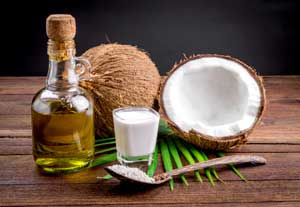
Coconut oil offers numerous, scientifically backed health benefits, primarily due to its high concentration of MCTs (medium-chain triglycerides) and lauric acid. It is commonly used to boost metabolism, enhance brain function, and improve skin/hair health, though it should be used in moderation due to its high calorie and saturated fat content.
Note: Due to high calorie density (130 calories per tablespoon), it is recommended to limit intake to roughly 2 tablespoons per day, preferably using organic, virgin coconut oil.
- PROTECTS BRAIN FUNCTION
Coconut oil potentially protects brain function by providing an alternative energy source for brain cells through Medium-Chain Triglycerides (MCTs), which are converted into ketones. These ketones may help cells in the brain, especially in cases of Alzheimer's disease where glucose metabolism is impaired. The oil also contains polyphenols, acts as a natural antioxidant with anti-inflammatory properties, and may help prevent brain cell degeneration. - PROVIDES QUICK ENERGY
Coconut oil provides quick energy because it is rich in Medium-Chain Triglycerides (MCTs), a type of saturated fat that the body metabolizes differently than other fats. Instead of being stored, MCTs travel directly to the liver, where they are immediately broken down for energy. - ENHANCES ORAL HEALTH (OIL PULLING)
Oil pulling with coconut oil is an ancient Ayurvedic practice that may offer some benefits for oral hygiene when used as an adjunct to regular dental care. The potential benefits are primarily linked to the lauric acid in coconut oil, which has antimicrobial and anti-inflammatory properties. - IMPROVES SKIN AND HAIR HEALTH
Coconut oil offers significant health benefits for skin and hair due to its high lauric acid content, which provides intense moisture, antimicrobial protection, and anti-inflammatory properties. It penetrates hair shafts to reduce protein loss and strengthens strands, while acting as a barrier to deeply hydrate skin, soothe irritation, and treat conditions like eczema.

- BOOSTS METABOLISM AND FAT BURNING
Coconut oil is rich in Medium-Chain Triglycerides (MCTs), which are easily digested and sent to the liver to be used as a direct energy source rather than being stored as fat. These MCTs can boost metabolism, increase calorie burning (thermogenesis), and help manage body weight. - REDUCES INFLAMMATION AND ARTHRITIS
Virgin Coconut Oil (VCO) acts as a potent natural anti-inflammatory agent, potentially reducing arthritis symptoms by suppressing inflammatory cytokines and alleviating pain, according to studies. Rich in phenolic compounds and lauric acid, it works to lower systemic inflammation and can be used as a carrier oil for soothing topically applied joint treatments. - ANTIMICROBIAL EFFECTS
Coconut oil possesses strong antimicrobial properties, largely due to its high concentration (about 50%) of lauric acid and, to a lesser extent, capric acid. These medium-chain fatty acids (MCFAs) effectively combat bacteria, viruses, and fungi by disrupting pathogen cell membranes. It is used for skin infections, oral health, and immune support. - BOOSTS HEART HEALTH (HDL CHOLESTEROL)
Coconut oil raises high-density lipoprotein (HDL or "good") cholesterol, but it also increases low-density lipoprotein (LDL or "bad") cholesterol more than many vegetable oils, making its overall cardiovascular benefit controversial. While it may boost HDL, the high saturated fat content (over 90%) means it should be used in moderation.
References
Nutrient Database – USDA (United States Department of Agriculture)
Reference Values for Nutrition – FDA U.S. Food and Drug Administration
Boosts metabolism and fat burning - Coconut oil is rich in Medium-Chain Triglycerides (MCTs), which are easily digested and sent to the liver to be used as a direct energy source rather than being stored as fat. These MCTs can boost metabolism, increase calorie burning (thermogenesis), and help manage body weight.
Provides quick energy - Coconut oil provides quick energy because it is rich in Medium-Chain Triglycerides (MCTs), a type of saturated fat that the body metabolizes differently than other fats. Instead of being stored, MCTs travel directly to the liver, where they are immediately broken down for energy, acting more like carbohydrates than fat.
Antimicrobial effects - Coconut oil possesses strong antimicrobial properties, largely due to its high concentration (about 50%) of lauric acid and, to a lesser extent, capric acid. These medium-chain fatty acids (MCFAs) effectively combat bacteria, viruses, and fungi by disrupting pathogen cell membranes. It is used for skin infections, oral health, and immune support.
Improves skin and hair health - Coconut oil offers significant health benefits for skin and hair due to its high lauric acid content, which provides intense moisture, antimicrobial protection, and anti-inflammatory properties. It penetrates hair shafts to reduce protein loss and strengthens strands, while acting as a barrier to deeply hydrate skin, soothe irritation, and treat conditions like eczema.
Enhances oral health (oil pulling) - Oil pulling with coconut oil is an ancient Ayurvedic practice that may offer some benefits for oral hygiene when used as an adjunct to regular dental care. The potential benefits are primarily linked to the lauric acid in coconut oil, which has antimicrobial and anti-inflammatory properties.
Protects Brain Function - Coconut oil potentially protects brain function by providing an alternative energy source for brain cells through Medium-Chain Triglycerides (MCTs), which are converted into ketones. These ketones may help cells in the brain, especially in cases of Alzheimer's disease where glucose metabolism is impaired. The oil also contains polyphenols, acts as a natural antioxidant with anti-inflammatory properties, and may help prevent brain cell degeneration.
Reduces inflammation and arthritis - Virgin Coconut Oil (VCO) acts as a potent natural anti-inflammatory agent, potentially reducing arthritis symptoms by suppressing inflammatory cytokines and alleviating pain, according to studies. Rich in phenolic compounds and lauric acid, it works to lower systemic inflammation and can be used as a carrier oil for soothing topically applied joint treatments.
Boosts heart health (HDL cholesterol) - Coconut oil raises high-density lipoprotein (HDL or "good") cholesterol, but it also increases low-density lipoprotein (LDL or "bad") cholesterol more than many vegetable oils, making its overall cardiovascular benefit controversial. While it may boost HDL, the high saturated fat content (over 90%) means it should be used in moderation.