





1. Catfish Facts
2. Types of Catfish
3. Catfish Nutritional Value
4. Catfish Health Benefits
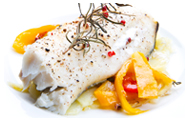
Catfish is a mild, slightly sweet, and moist white fish with a firm, low-flake texture, often described as having subtle earthy notes.
Farmed, grain-fed, and bottom-dwelling varieties are generally preferred for their clean flavour, whereas wild-caught, which are bottom-feeders, can have a stronger, muddier taste. It is commonly prepared fried, blackened, or in stews.
History and Origin
Catfish, historically considered a "poor man's fish" found in muddy, regional waters, has transformed into a major, high-quality, farm-raised, global industry over the last 60 years.
Originating as a staple in Southern US, West African, and Asian cuisines, the modern consumption of catfish is driven by aquaculture, which has replaced wild-caught fish with a milder, consistent, and widely popular protein source.
- • Basa / Mekong Catfish
- • Yellow Catfish / Ca Tre
- • Native Australian Catfish (Tandanus tandanus)
The most common catfish sold in Australian supermarkets and seafood stores is Basa (often labelled as Pangasius, Panga, or River Cobbler), which is imported, typically from Vietnam.
While many native Australian catfish exist, they are rarely sold commercially.
Catfish types sold and available in Australia
- Basa / Mekong Catfish (Most Common)
- Where to find: Supermarket freezers (fillets), sometimes fresh, in Asian grocery stores.
- Taste/Texture: Very mild, slightly sweet flavory with a light, delicate, and soft texture. It is generally not "fishy" or muddy. It is a very versatile white fish that takes on the flavour of sauces well.
- Alternative Names: Pacific Dory (though this is technically incorrect/restricted now), River Cobbler, Pangasius.
- Yellow Catfish / Ca Tre (Imported)
- Where to find: Asian seafood factory outlets.
- Taste/Texture: Mild flavour, firm texture. Similar to Basa but often preferred for stewing or frying due to the firmer bite.
- Native Australian Catfish (Rarely in stores)
- Species: Eel-tailed Catfish (Tandanus tandanus) or Estuary Cobbler (Cnidoglanis macrocephalus).
- Taste/Texture: These are considered excellent eating, with firm, white, and boneless fillets. They are delicate in flavour and generally considered superior to imported frozen catfish.
- Availability: Usually caught by recreational anglers; not typically found in major supermarkets
Summary of Taste Profile
- Farmed/Frozen (Basa/Yellow Catfish): Extremely mild, white flesh, delicate, low-fat.
- Wild-Caught (Native): Delicate, firm, and considered a high-quality eating fish.
- Note: In Australia, it is illegal to sell farmed Vietnamese catfish (Basa) as "Pacific Dory".
Catfish ( Nutritional value )
Value per 100 g
Fish, catfish, channel, wild, cooked, dry heat
|
Nutrient ( Proximate’s )
|
Unit
|
Value
|
Daily Value %
|
|
Energy
|
kcal
|
105
|
5.2%
|
|
Protein
|
g
|
18.47
|
36.9%
|
|
Total lipid (fat)
|
g
|
2.85
|
3.6%
|
|
Carbohydrate, by difference
|
g
|
0.00
|
0.00
|
|
Fiber, total dietary
|
g
|
0.0
|
0.0
|
|
Sugars, total
|
g
|
0.00
|
0.00
|
|
Minerals
|
|||
|
Calcium, Ca
|
mg
|
11
|
0.8%
|
|
Iron, Fe
|
mg
|
0.35
|
1.9%
|
|
Magnesium, Mg
|
mg
|
28
|
6.6%
|
|
Phosphorus, P
|
mg
|
304
|
6.4%
|
|
Potassium, K
|
mg
|
419
|
8.9%
|
|
Sodium, Na
|
mg
|
50
|
2.1%
|
|
Zinc, Zn
|
mg
|
0.61
|
5.5%
|
|
Copper, Cu
|
mg
|
0.039
|
4.3%
|
|
Manganese, Mn
|
mg
|
0.027
|
1.1%
|
|
Selenium, Se
|
mcg
|
14.3
|
26%
|
|
Vitamins
|
|||
|
Vitamin C, total ascorbic acid
|
mg
|
0.8
|
0.8%
|
|
Thiamin (B-1)
|
mg
|
0.227
|
18.9%
|
|
Riboflavin (B-2)
|
mg
|
0.067
|
5.1%
|
|
Niacin (B-3)
|
mg
|
2.385
|
14.9%
|
|
Pantothenic acid (B-5)
|
mg
|
0.910
|
18.2%
|
|
Vitamin (B-6)
|
mg
|
0.106
|
6.2%
|
|
Folate (B-9)
|
mcg
|
10
|
2.5%
|
|
Vitamin A, IU
|
IU
|
50
|
1.6% |
|
Vitamin (B-12)
|
mcg
|
2.9
|
120.8%
|
|
Vitamin A, RAE
|
mcg
|
15
|
1.6%
|
|
Lipids
|
|||
|
Saturated Fatty Acids
|
g
|
0.744
|
3.7%
|
|
Monounsaturated Fatty Acids
|
g
|
1.099
|
|
|
Polyunsaturated Fatty Acids
|
g
|
0.636
|
|
|
Cholesterol
|
mg
|
72
|
24%
|

Reference Values are based on a 2,000 Calorie Intake, for Adults and Children 4 or More Years of Age. Your daily values may be higher or lower depending on your calorie needs.
Percentages are roughly approximated using (RDA) Recommended Dietary Allowances for adults. Source: USDA United States Department of Agriculture.
Reference Values for Nutrition – FDA U.S. Food and Drug Administration.
Catfish Nutritional Value
Catfish is a nutrient-dense, low-calorie, and high-protein food that supports muscle growth, heart health, and cognitive function. It is particularly rich in Vitamin B12, omega-3 and omega-6 fatty acids, and selenium, providing over 100% of the daily value for B12 in a single serving. It is a versatile, lean, and affordable protein option.
Safety Note: Farmed catfish is generally recommended over wild-caught to avoid potential contaminants and heavy metals like mercury.
MUSCLE REPAIR AND GROWTH
Catfish is an excellent dietary choice for muscle repair and growth due to its high-quality, lean protein content, which provides all necessary amino acids for muscle protein synthesis. A 100-gram serving typically contains 18–20 grams of protein, often providing 32–39% of the daily recommended value.BRAIN AND DEVELOPMENT SUPPORT
Catfish is an excellent dietary source for brain health and development, particularly due to its high levels of omega-3 fatty acids (DHA and EPA), vitamin B12, and quality protein. These nutrients are critical for foetal and child brain development, cognitive function, and maintaining cognitive health in adults.NUTRIENT DENSE AND LOW-CALORIE
Catfish is a highly nutritious, low-calorie, and lean protein source (approx. 100–105 calories per 100g) that promotes satiety, aiding in weight management. It is packed with vitamin B12, selenium, potassium, and heart-healthy omega-3 fatty acids, supporting brain function, immune health, and reduced inflammation.PROMOTES EYE HEALTH
Catfish promotes eye health primarily through its content of omega-3 fatty acids, particularly docosahexaenoic acid (DHA) and eicosapentaenoic acid (EPA), which are crucial for maintaining retinal health and preventing age-related vision decline.

VITAMIN B12 BOOST
Catfish is an exceptionally nutritious, low-calorie, and high-protein seafood option that acts as a significant "Vitamin B12 Boost." A single 100-gram serving can provide over 100% of the recommended daily value of Vitamin B12.HIGH QUALITY PROTEIN
Catfish is a nutrient-dense, low-calorie, high-quality protein source, providing roughly 15-18 grams of protein and over 120% of the daily value for vitamin B12 per 3.5-ounce serving. This lean protein aids in muscle repair, tissue growth, and increased satiety while delivering essential heart-healthy omega-3 fatty acids, making it an excellent, low-mercury, affordable, and nutritious diet choice.PROMOTES HEART HEALTH
Catfish provides a rich source of omega-3 fatty acids, which reduce inflammation, lower blood pressure, and decrease the risk of heart disease, heart attacks, and stroke. As a low-fat, low-calorie, and high-protein food, it is a healthy choice for maintaining cardiovascular function.RICH IN MINERALS
Catfish is a nutrient-dense, low-calorie seafood powerhouse rich in essential minerals like selenium, phosphorus, potassium, and zinc. A 3.5-ounce serving provides over 100% of the daily value for Vitamin B12 and significant amounts of selenium (26% DV) and phosphorus (24% DV), supporting bone health, immune function, and thyroid health.
References
Nutrient Database – USDA (United States Department of Agriculture)
Reference Values for Nutrition – National Institutes of Health USA
Promotes heart health - Catfish promotes heart health by providing a rich source of omega-3 fatty acids, which reduce inflammation, lower blood pressure, and decrease the risk of heart disease, heart attacks, and stroke. As a low-fat, low-calorie, and high-protein food, it is a healthy choice for maintaining cardiovascular function.
High quality protein - Catfish is a nutrient-dense, low-calorie, high-quality protein source, providing roughly 15-18 grams of protein and over 120% of the daily value for vitamin B12 per 3.5-ounce serving. This lean protein aids in muscle repair, tissue growth, and increased satiety while delivering essential heart-healthy omega-3 fatty acids, making it an excellent, low-mercury, affordable, and nutritious diet choice.
Vitamin B12 boost - Catfish is an exceptionally nutritious, low-calorie, and high-protein seafood option that acts as a significant "Vitamin B12 Boost." A single 100-gram serving can provide over 100% of the recommended daily value of Vitamin B12.
Muscle repair and growth - Catfish is an excellent dietary choice for muscle repair and growth due to its high-quality, lean protein content, which provides all necessary amino acids for muscle protein synthesis. A 100-gram serving typically contains 18–20 grams of protein, often providing 32–39% of the daily recommended value.
Nutrient dense and low calorie - Catfish is a highly nutritious, low-calorie, and lean protein source (approx. 100–105 calories per 100g) that promotes satiety, aiding in weight management. It is packed with vitamin B12, selenium, potassium, and heart-healthy omega-3 fatty acids, supporting brain function, immune health, and reduced inflammation.
Rich in minerals - Catfish is a nutrient-dense, low-calorie seafood powerhouse rich in essential minerals like selenium, phosphorus, potassium, and zinc. A 3.5-ounce serving provides over 100% of the daily value for Vitamin B12 and significant amounts of selenium (26% DV) and phosphorus (24% DV), supporting bone health, immune function, and thyroid health.
Brain and development support - Catfish is an excellent dietary source for brain health and development, particularly due to its high levels of omega-3 fatty acids (DHA and EPA), vitamin B12, and quality protein. These nutrients are critical for foetal and child brain development, cognitive function, and maintaining cognitive health in adults.
Promotes eye health - Catfish promotes eye health primarily through its content of omega-3 fatty acids, particularly docosahexaenoic acid (DHA) and eicosapentaenoic acid (EPA), which are crucial for maintaining retinal health and preventing age-related vision decline.