




1. Cuttlefish Facts
2. Types of Cuttlefish
3. Cuttlefish Nutritional Value
4. Cuttlefish Health Benefits
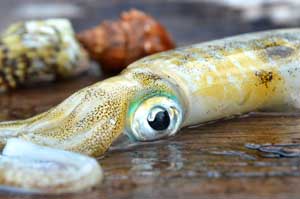
Cuttlefish are marine mollusks closely related to squid and octopus, often recognized by their plump, oval-shaped bodies and the ability to rapidly change colour for camouflage.
They feature 10 arms—two of which are longer and used to catch prey—and a distinct internal shell known as a "cuttlebone".
In terms of taste, cuttlefish are widely regarded as a delicacy with a mild, slightly sweet, and oceanic flavour.
History and Origin
Cuttlefish, members of the class Cephalopoda (specifically the order Sepiida), are among the most ancient living creatures, having evolved from belemnite-like ancestors roughly 100 million years ago.
Known for their unique internal shell (cuttlebone) and high intelligence, they have been a staple food in coastal Mediterranean and Asian cultures for centuries.
Modern consumption is driven by high demand in East Asia, Italy, and Spain, with significant fisheries operating in these regions.
The most common type of cuttlefish sold in Australian stores is the Giant Australian Cuttlefish (Sepia apama), along with other Sepia species.
They are wild caught, primarily in southern Australian coastal waters.
Taste and Texture
- Flavour: Mild, clean, and slightly sweet with a subtle briny, oceanic, or creamy finish.
- Texture: Firmer and more substantial than squid or calamari. It is often described as tender, but it can become tough if overcooked, making it ideal for quick stir-frying or slow braising.
- Appearance: The flesh is white and opaque.
- Comparison: The flavour sits between squid and octopus—fuller-flavoured than calamari, but not as rich as octopus.
Where to Find and How it is Sold
- Seafood Mongers: Available fresh (whole or as fillets) and sometimes as premium sashimi-grade slices.
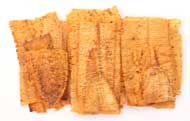
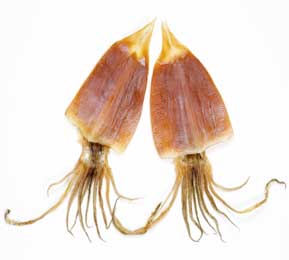
- Asian Grocery Stores: Often sold dried as a popular snack.
- Seasonality: Available year-round but often seen in higher quantities in cooler months.
Culinary Usage
- Raw: Excellent for sashimi, often considered superior to squid, especially when the outer skin is removed.
- Cooked: Ideal for salt-and-pepper calamari (cut into thin strips), stir-fries, risotto, or grilled.
- Ink: Used to add flavour and colour to pasta and risotto dishes.
Cuttlefish ( Nutritional value )
Value per 100 g
Mollusks, cuttlefish, mixed species, cooked, moist heat
|
Nutrient ( Proximate’s )
|
Unit
|
Value
|
Daily Value %
|
|
Energy
|
kcal
|
158
|
7.9%
|
|
Protein
|
g
|
32.48
|
64.9%
|
|
Total lipid (fat)
|
g
|
1.40
|
1.7%
|
|
Carbohydrate, by difference
|
g
|
1.64
|
0.5%
|
|
Fiber, total dietary
|
g
|
0.0
|
0.0
|
|
Minerals
|
|||
|
Calcium, Ca
|
mg
|
180
|
13.8%
|
|
Iron, Fe
|
mg
|
10.84
|
60.2%
|
|
Magnesium, Mg
|
mg
|
60
|
14.2%
|
|
Phosphorus, P
|
mg
|
580
|
46.4%
|
|
Potassium, K
|
mg
|
637
|
13.5%
|
|
Sodium, Na
|
mg
|
744
|
32.3%
|
|
Zinc, Zn
|
mg
|
3.46
|
31.4%
|
|
Copper, Cu
|
mg
|
0.998
|
110.8%
|
|
Manganese, Mn
|
mg
|
0.209
|
9%
|
|
Selenium, Se
|
mcg
|
89.6
|
162.9%
|
|
Vitamins
|
|||
|
Vitamin C, total ascorbic acid
|
mg
|
8.5
|
9.4%
|
|
Thiamin (B-1)
|
mg
|
0.017
|
1.4%
|
|
Riboflavin (B-2)
|
mg
|
1.729
|
133%
|
|
Niacin (B-3)
|
mg
|
2.189
|
13.6%
|
|
Pantothenic acid (B-5)
|
mg
|
0.900
|
18%
|
|
Vitamin (B-6)
|
mg
|
0.270
|
15.8%
|
|
Folate (B-9)
|
mcg
|
24
|
6%
|
|
Vitamin A, RAE
|
mcg
|
203
|
22.5% |
|
Vitamin (B-12)
|
mcg
|
5.40
|
225%
|
|
Vitamin A, IU
|
IU
|
675
|
22.5%
|
|
Lipids
|
|||
|
Saturated Fatty Acids
|
g
|
0.236
|
1.1%
|
|
Monounsaturated Fatty Acids
|
g
|
0.162
|
|
|
Polyunsaturated Fatty Acids
|
g
|
0.268
|
|
|
Cholesterol
|
mg
|
224
|
74.6%
|
Reference Values are based on a 2,000 Calorie Intake, for Adults and Children 4 or More Years of Age. Your daily values may be higher or lower depending on your calorie needs.
Percentages are roughly approximated using (RDA) Recommended Dietary Allowances for adults. Source: USDA United States Department of Agriculture.
Reference Values for Nutrition – FDA U.S. Food and Drug Administration.
Cuttlefish Nutritional Value
Cuttlefish is a nutrient-dense, low-fat, and low-calorie seafood, rich in high-quality protein, omega-3 fatty acids (DHA), and essential minerals like selenium, iron, copper, and iodine.
It promotes heart health, supports weight management, aids in muscle repair, and strengthens the immune system. It is also high in Vitamin B12, supporting nerve and blood cell health.
Important Considerations
Digestive Sensitivity: While high in nutrients, it may not be suitable for people with gout or high uric acid levels due to its composition.
Allergy Risk: It contains proteins like tropomyosin that can cause allergic reactions in some individuals.
Cooking Tips: To maintain its health benefits and ensure better digestion, it is best to avoid overcooking it.
Medicinal Uses of Cuttlebone
The internal shell (cuttlebone) is used in traditional medicine for its rich calcium content and has been studied for use in bone tissue engineering due to its biocompatibility.
It has also been used for its haemostatic properties to stop minor bleeding.
OFFERS SIGNIFICANT HEART HEALTH BENEFITS
Cuttlefish offers significant heart health benefits due to its high levels of omega-3 fatty acids (EPA and DHA), which help reduce blood pressure, lower triglycerides, and prevent blood clots. It is a low-fat, high-protein source of potassium—crucial for maintaining a normal heart rate—and contains antioxidants like selenium that reduce inflammation.METABOLISM HEALTH
Cuttlefish offer significant health benefits, particularly for metabolism, by acting as a nutrient-dense, low-calorie, and high-protein food source. Its high selenium, copper, and vitamin B content supports essential metabolic functions, including energy production and the regulation of thyroid hormones.BRAIN FUNCTION AND ENERGY
Cuttlefish is a highly nutritious, low-fat, and low-calorie seafood option that offers significant health benefits, particularly for brain function and energy levels. It is a rich source of omega-3 fatty acids, choline, vitamins, and minerals that support cognitive health and metabolic function.
IMMUNE SYSTEM AND JOINT HEALTH
Cuttlefish offers significant health benefits, particularly for the immune system and joint health, due to its rich nutrient profile, including high-quality protein, essential minerals (zinc, selenium, copper), and Omega-3 fatty acids. It is a low-calorie, low-fat, and nutrient-dense seafood option that supports tissue repair and reduces inflammation.RICH IN ESSENTIAL MINERALS
Cuttlefish is a nutrient-dense, low-fat seafood packed with essential minerals like selenium, iron, copper, phosphorus, and calcium, which boost immunity, enhance bone health, and support metabolic function. It acts as a potent antioxidant, providing over 200% of daily Vitamin B12 needs, improving heart health, and aiding in oxygen transport.VERSATILE NUTRITIONAL PROFILE
Cuttlefish are a nutrient-dense, low-calorie cephalopod offering significant health benefits, particularly for heart health, immune function, and muscle maintenance. A 100-gram serving typically provides around 16–20 grams of high-quality protein while remaining low in fat and carbohydrates.
References
Nutrient Database – USDA (United States Department of Agriculture)
Reference Values for Nutrition – National Institutes of Health USA
Offers significant heart health benefits - Cuttlefish offers significant heart health benefits due to its high levels of omega-3 fatty acids (EPA and DHA), which help reduce blood pressure, lower triglycerides, and prevent blood clots. It is a low-fat, high-protein source of potassium—crucial for maintaining a normal heart rate—and contains antioxidants like selenium that reduce inflammation.
Metabolism health - Cuttlefish offer significant health benefits, particularly for metabolism, by acting as a nutrient-dense, low-calorie, and high-protein food source. Its high selenium, copper, and vitamin B content supports essential metabolic functions, including energy production and the regulation of thyroid hormones.
Rich in essential minerals - Cuttlefish is a nutrient-dense, low-fat seafood packed with essential minerals like selenium, iron, copper, phosphorus, and calcium, which boost immunity, enhance bone health, and support metabolic function. It acts as a potent antioxidant, providing over 200% of daily Vitamin B12 needs, improving heart health, and aiding in oxygen transport.
Immune system and joint health - Cuttlefish offers significant health benefits, particularly for the immune system and joint health, due to its rich nutrient profile, including high-quality protein, essential minerals (zinc, selenium, copper), and Omega-3 fatty acids. It is a low-calorie, low-fat, and nutrient-dense seafood option that supports tissue repair and reduces inflammation.
Brain function and energy - Cuttlefish is a highly nutritious, low-fat, and low-calorie seafood option that offers significant health benefits, particularly for brain function and energy levels. It is a rich source of omega-3 fatty acids, choline, vitamins, and minerals that support cognitive health and metabolic function.
Versatile nutritional profile - Cuttlefish are a nutrient-dense, low-calorie cephalopod offering significant health benefits, particularly for heart health, immune function, and muscle maintenance. A 100-gram serving typically provides around 16–20 grams of high-quality protein while remaining low in fat and carbohydrates.