


1. Herring Facts
2. Types of Herring
3. Herring Nutritional Value
4. Herring Health Benefits
Herring are small, schooling, oily fish known for their silvery, iridescent skin and high nutritional value. They are found in both the Atlantic and Pacific oceans, with a distinctive, rich, and full-bodied flavour.
Due to their high oil content, herring have a soft, flaky texture that is highly versatile for various preparations, including pickling, smoking, frying, and grilling.
History and Origin
Herring has played a pivotal role in European history and the development of modern commerce, often referred to as "silver darlings" due to their immense economic value.
Their history is closely tied to the rise of the Hanseatic League, the development of the Dutch "herring buss" in the 14th century, and the expansion of maritime trade.
- • Australian Herring (Tommy Ruff/Arripis georgianus)
- • Matjes Herring
- • Bismarck Herring
- • Herring in Sauce/Oil
- • Kippers (Smoked Herring)
In Australia, Herring is sold as fresh Australian Herring (or "Tommy Ruff"), popular for its firm, oily texture and mild-to-strong flavour.
Imported pickled or marinated Herring (e.g., Matjes, Bismarck) is also widely available, offering a soft texture with sweet, sour, or smoky tastes, often used in European-style salads, sandwiches, and spreads.
Types of Herring Available in Australia
- Australian Herring (Tommy Ruff/Arripis georgianus)
- Availability: Mostly in WA and SA, found inshore, often sold fresh, whole, or gutted at fishmongers.
- Taste/Texture: Mild to medium oiliness, strong flavour. The flesh is firm and holds its shape well when cooked.
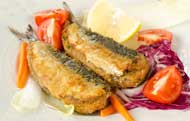
- Culinary Use: Often pan-fried with butter, crumbed, grilled, or smoked.
Imported/Deli Herring (Scandi/European Style)
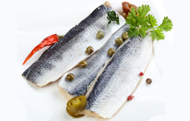
- Matjes Herring: Young, cured herring, often marinated in sugar, salt, and spices like cinnamon or allspice. Very tender and soft, with a distinct, slightly salty, and sweet flavour.
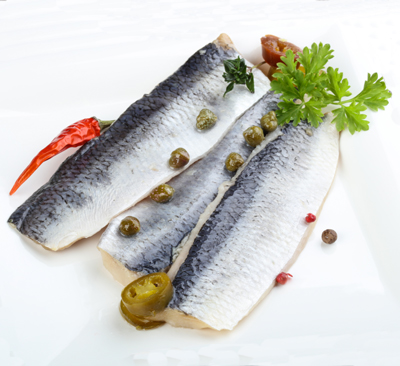
- Bismarck Herring: Fillets pickled in vinegar, sugar, and onions, resulting in a firm, sour-sweet, and tangy taste.
- Herring in Sauce/Oil: Available in cans or jars with sauces like mustard, tomato, or dill.
- Kippers (Smoked Herring): Cold or hot-smoked, offering a firm texture and a bold, smoky, savory flavour.
Common Culinary Preparation
- Fresh: Pan-fried, grilled, or baked with lemon.
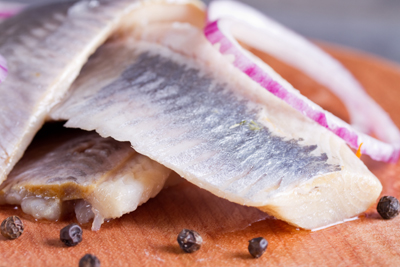
- Pickled: Eaten straight from the jar, often with rye bread, sour cream, boiled potatoes, or in salads.
- Fresh Australian Herring is a "bread and butter" fish in southern Australia, distinct from the Northern Hemisphere herring often found in the deli section.
Herring ( Nutritional value )
Value per 100 g
Fish, herring, Atlantic, cooked, dry heat
|
Nutrient ( Proximate’s )
|
Unit
|
Value
|
Daily Value %
|
|
Energy
|
kcal
|
203
|
10.1%
|
|
Protein
|
g
|
23.03
|
46%
|
|
Total lipid (fat)
|
g
|
11.59
|
14.8%
|
|
Carbohydrate, by difference
|
g
|
0.00
|
0.00
|
|
Fiber, total dietary
|
g
|
0.0
|
0.0
|
|
Sugars, total
|
g
|
0.00
|
0.00
|
|
Minerals
|
|||
|
Calcium, Ca
|
mg
|
74
|
5.6%
|
|
Iron, Fe
|
mg
|
1.41
|
7.8%
|
|
Magnesium, Mg
|
mg
|
41
|
9.7%
|
|
Phosphorus, P
|
mg
|
303
|
24.2%
|
|
Potassium, K
|
mg
|
419
|
8.7%
|
|
Sodium, Na
|
mg
|
115
|
5%
|
|
Zinc, Zn
|
mg
|
1.27
|
11.5%
|
|
Copper, Cu
|
mg
|
0.118
|
13.1%
|
|
Manganese, Mn
|
mg
|
0.040
|
1.7%
|
|
Selenium, Se
|
mcg
|
46.8
|
85%
|
|
Vitamins
|
|||
|
Vitamin C, total ascorbic acid
|
mg
|
0.7
|
0.7%
|
|
Thiamin (B-1)
|
mg
|
0.112
|
9.3%
|
|
Riboflavin (B-2)
|
mg
|
0.299
|
23%
|
|
Niacin (B-3)
|
mg
|
4.124
|
25.7%
|
|
Pantothenic acid (B-5)
|
mg
|
0.740
|
14.8%
|
|
Vitamin (B-6)
|
mg
|
0.348
|
20.4%
|
|
Folate (B-9)
|
mcg
|
12
|
3%
|
|
Choline
|
mg
|
83.3
|
15.1% |
|
Vitamin (B-12)
|
mcg
|
13.1
|
545.8%
|
|
Vitamin A, IU International Units
|
IU
|
120
|
4%
|
|
Vitamin E (alpha-tocopherol)
|
mg
|
1.37
|
9.1%
|
|
Vitamin D (D2 + D3)
|
mcg
|
5.4
|
27%
|
|
Vitamin A RAE
|
mcg
|
36
|
4% |
|
Vitamin D3 (cholecalciferol)
|
mcg
|
5.4
|
|
|
Vitamin K (phylloquinone)
|
mcg
|
0.1
|
0.08%
|
|
Lipids
|
|||
|
Saturated Fatty Acids
|
g
|
2.615
|
13.0%
|
|
Monounsaturated Fatty Acids
|
g
|
4.790
|
|
|
Polyunsaturated Fatty Acids
|
g
|
2.735
|
|
|
Cholesterol
|
mg
|
77
|
25.6%
|
Reference Values are based on a 2,000 Calorie Intake, for Adults and Children 4 or More Years of Age. Your daily values may be higher or lower depending on your calorie needs.
Percentages are roughly approximated using (RDA) Recommended Dietary Allowances for adults. Source: USDA United States Department of Agriculture.
Reference Values for Nutrition – FDA U.S. Food and Drug Administration.
Herring Nutritional Value
Herring provides significant health benefits due to its high concentration of EPA and DHA omega-3 fatty acids, vitamin D, and selenium.
Consuming this oily fish supports heart health by lowering blood pressure and triglycerides, improves brain function, reduces inflammation, and strengthens the immune system.
Note: While fresh herring is low in sodium, pickled or smoked versions can be very high in sodium.
BRAIN AND COGNITIVE FUNCTION
Herring is considered a top "brain food" due to its high concentration of omega-3 fatty acids (DHA and EPA), which build nerve cells and improve cognitive function, learning, and memory. Regular consumption supports structural brain health, helps reduce inflammation, and may delay age-related cognitive decline and reduce dementia risk.INFLAMMATION REDUCTION
Herring is a potent, nutrient-dense oily fish that reduces chronic inflammation, improves heart health, and supports joint function due to its high concentration of long-chain Omega-3 fatty acids (EPA and DHA), selenium, and Vitamin D. Consuming herring, especially fresh or smoked, helps lower inflammation-driven pain and cardiovascular risks.RICH IN VITAMIN D
Herring is an excellent, nutrient-dense source of Vitamin D, providing approximately 167–214 IU (over 20% of the daily value) per 3.5-ounce (100g) serving. As an oily fish, it is highly effective at boosting Vitamin D levels, particularly in smoked or grilled forms. It also provides significant Omega-3 fatty acids, protein, and Vitamin B12.
SUPERFOOD FOR HEART HEALTH
Herring is a potent superfood for heart health, packed with high levels of Omega-3 fatty acids (EPA and DHA), which reduce inflammation, lower blood pressure, decrease triglycerides, and help prevent artery plaque build-up. As a low-mercury, nutrient-dense fish rich in Vitamin D and B12, it is a superior, sustainable alternative to red meat for cardiovascular protection.HIGH QUALITY PROTEIN
Herring is an exceptional source of high-quality protein, providing roughly 15-23 grams per 100g serving, which includes all essential amino acids for muscle maintenance and satiety. Rich in Omega-3 fatty acids (EPA/DHA), Vitamin D, and B12, this oily fish supports cardiovascular and brain health.LOW MERCURY
Herring is an excellent low-mercury, nutrient-dense fish packed with omega-3 fatty acids, protein, and vitamin D, making it a safe and healthy choice for regular consumption. Due to its small size and short lifespan, it accumulates very little mercury (0.04 – 0.08 ppm), generally considered safe to eat 2-3 times per week.
References
Nutrient Database – USDA (United States Department of Agriculture)
Reference Values for Nutrition – National Institutes of Health USA
Superfood for heart health - Herring is a potent superfood for heart health, packed with high levels of Omega-3 fatty acids (EPA and DHA), which reduce inflammation, lower blood pressure, decrease triglycerides, and help prevent artery plaque build-up. As a low-mercury, nutrient-dense fish rich in Vitamin D and B12, it is a superior, sustainable alternative to red meat for cardiovascular protection.
Brain and cognitive function - Herring is considered a top "brain food" due to its high concentration of omega-3 fatty acids (DHA and EPA), which build nerve cells and improve cognitive function, learning, and memory. Regular consumption supports structural brain health, helps reduce inflammation, and may delay age-related cognitive decline and reduce dementia risk.
Rich in vitamin D - Herring is an excellent, nutrient-dense source of Vitamin D, providing approximately 167–214 IU (over 20% of the daily value) per 3.5-ounce (100g) serving. As an oily fish, it is highly effective at boosting Vitamin D levels, particularly in smoked or grilled forms. It also provides significant Omega-3 fatty acids, protein, and Vitamin B12.
Inflammation reduction - Herring is a potent, nutrient-dense oily fish that reduces chronic inflammation, improves heart health, and supports joint function due to its high concentration of long-chain Omega-3 fatty acids (EPA and DHA), selenium, and Vitamin D. Consuming herring, especially fresh or smoked, helps lower inflammation-driven pain and cardiovascular risks.
High quality protein - Herring is an exceptional source of high-quality protein, providing roughly 15-23 grams per 100g serving, which includes all essential amino acids for muscle maintenance and satiety. Rich in Omega-3 fatty acids (EPA/DHA), Vitamin D, and B12, this oily fish supports cardiovascular and brain health.
Low mercury - Herring is an excellent low-mercury, nutrient-dense fish packed with omega-3 fatty acids, protein, and vitamin D, making it a safe and healthy choice for regular consumption. Due to its small size and short lifespan, it accumulates very little mercury (0.04 – 0.08 ppm), generally considered safe to eat 2-3 times per week.