



1. Tuna Facts
2. Types of Tuna
3. Tuna Nutritional Value
4. Tuna Health Benefits
Tuna is a large, migratory, predatory fish with a sleek, torpedo-shaped body, dark blue-black top, and silvery underbelly.
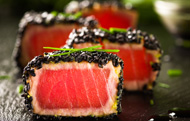
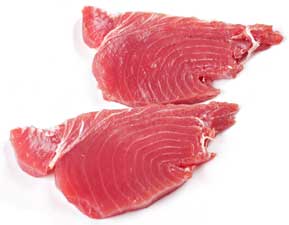
Renowned for its firm, steak-like texture, raw tuna ranges from pink to deep red, offering a mild, buttery, and savory flavour with high umami notes. When cooked, it is rich, meaty, and best served rare to medium-rare.
History and Origin
Tuna, often called the "Ferrari of the ocean" due to its speed and, more recently, its high value, has a history spanning thousands of years, transitioning from an ancient Mediterranean staple to a global, industrialized food commodity.
While tuna has been consumed since the Stone Age, its modern, globalized consumption is a relatively recent phenomenon driven by the invention of canning, refrigeration, and the global popularity of sushi.
- • Southern Bluefin Tuna (Fresh/Frozen)
- • Yellowfin Tuna (Fresh/Frozen/Canned)
- • Albacore Tuna (Canned/Steak)
- • Skipjack Tuna (Canned)
- • Longtail Tuna (Fresh)
- • Mackerel Tuna (Fresh)
In Australia, tuna commonly available includes canned Skipjack (stronger flavour, flaky) and Albacore (milder, firm "white" meat).
Premium fresh/frozen options include Yellowfin (mild, sweet) and prized Southern Bluefin (rich, oily). Other options include Mackerel tuna (stronger) and Bigeye.
Tuna Types commonly available
- Southern Bluefin Tuna (Fresh/Frozen): The premium choice for high-end restaurants, sashimi, and searing, known for its rich flavour and high-fat marbling.
- Yellowfin Tuna (Fresh/Frozen/Canned): A very popular choice, often used for sashimi ("ahi") or searing due to its mild, slightly sweet taste and firm texture.
- Albacore Tuna (Canned/Steak): Referred to as "white tuna," it has a very mild flavour and firm, large flakes.
- Skipjack Tuna (Canned): The most common canned variety, providing a stronger "fishy" taste, ideal for salads and sandwiches.
- Longtail Tuna (Fresh): Mild and sweet with a firm texture, commonly used for grilling.
- Mackerel Tuna (Fresh): A smaller, stronger-flavoured fish often used in curries and stir-fries.
Key Considerations in Australia
- Canned Varieties: Ranging from oil/brine to flavoured (chilli, lemon, oil), often using Skipjack or Yellowfin.
- Sustainability: Greenpeace advises looking for pole-and-line or FAD-free caught Skipjack and Albacore.
- Premium Quality: Walkers Tuna is noted for high-quality, sustainable canned Australian tuna.
Tuna ( Nutritional value )
Value per 100 g
Fish, tuna, white, canned in water, drained solids
|
Nutrient ( Proximate’s )
|
Unit
|
Value
|
Daily Value %
|
|
Energy
|
kcal
|
128
|
6.4%
|
|
Protein
|
g
|
23.62
|
47.2%
|
|
Total lipid (fat)
|
g
|
2.97
|
3.8%
|
|
Carbohydrate, by difference
|
g
|
0.00
|
0.00
|
|
Fiber, total dietary
|
g
|
0.0
|
0.0
|
|
Total Sugars
|
g
|
0.00
|
0.00
|
|
Minerals
|
|||
|
Calcium, Ca
|
mg
|
14
|
1%
|
|
Iron, Fe
|
mg
|
0.97
|
5.3%
|
|
Magnesium, Mg
|
mg
|
33
|
7.8%
|
|
Phosphorus, P
|
mg
|
217
|
17.3%
|
|
Potassium, K
|
mg
|
237
|
5%
|
|
Sodium, Na
|
mg
|
377
|
16.3%
|
|
Zinc, Zn
|
mg
|
0.48
|
4.3%
|
|
Copper, Cu
|
mg
|
0.039
|
4.3%
|
|
Manganese, Mn
|
mg
|
0.019
|
0.8%
|
|
Selenium, Se
|
mcg
|
65.7
|
119.4%
|
|
Vitamins
|
|||
|
Vitamin C, total ascorbic acid
|
mg
|
0.0
|
0.0
|
|
Thiamin (B-1)
|
mg
|
0.008
|
0.6%
|
|
Riboflavin (B-2)
|
mg
|
0.044
|
3.3%
|
|
Niacin (B-3)
|
mg
|
5.799
|
36.2%
|
|
Pantothenic acid (B-5)
|
mg
|
0.124
|
2.4%
|
|
Vitamin (B-6)
|
mg
|
0.217
|
12.7%
|
|
Folate (B-9)
|
mcg
|
2
|
0.5%
|
|
Vitamin (B-12)
|
mcg
|
1.17
|
48.7%
|
|
Vitamin A, IU International Units
|
IU
|
20
|
0.6%
|
|
Vitamin E (alpha-tocopherol)
|
mg
|
0.85
|
5.6%
|
|
Vitamin D (D2 + D3) International Units
|
IU
|
80
|
10%
|
|
Vitamin D (D2 + D3)
|
mcg
|
2.0
|
10% |
|
Vitamin D3 (cholecalciferol)
|
mcg
|
2.0
|
|
|
Vitamin K (phylloquinone)
|
mcg
|
2.5
|
2%
|
|
Lipids
|
|||
|
Saturated Fatty Acids
|
g
|
0.792
|
3.9%
|
|
Monounsaturated Fatty Acids
|
g
|
0.784
|
|
|
Polyunsaturated Fatty Acids
|
g
|
1.109
|
|
|
Cholesterol
|
mg
|
42
|
14%
|
|
Carotenoids
|
|||
|
Beta-Carotene
|
mcg
|
0
|
|
|
Lutein + zeaxanthin
|
mcg
|
0
|
|

Reference Values are based on a 2,000 Calorie Intake, for Adults and Children 4 or More Years of Age. Your daily values may be higher or lower depending on your calorie needs.
Percentages are roughly approximated using (RDA) Recommended Dietary Allowances for adults. Source: USDA United States Department of Agriculture.
Reference Values for Nutrition – FDA U.S. Food and Drug Administration.
Tuna Nutritional Value
Tuna is a highly nutritious, lean protein source packed with omega-3 fatty acids, selenium, and vitamins B12 and D.
Regular consumption supports heart health by lowering LDL cholesterol, aids in weight management due to low calories, improves eye health, and promotes brain function.
Safety Considerations
While healthy, it is advised to consume certain types of tuna in moderation (a few servings per week), particularly for pregnant or breastfeeding individuals, due to potential mercury content. Light canned tuna generally has lower mercury levels than white (Albacore) or bigeye tuna.
HEART HEALTH
Tuna is an excellent, nutrient-dense oily fish for heart health, packed with omega-3 fatty acids, high-quality protein, and selenium, which collectively help lower blood pressure, reduce triglycerides, and decrease cardiovascular disease risk. Regular consumption—particularly baked or broiled—improves heart rate and cardiovascular function while reducing inflammation.PACKED WITH OMEGA-3 FATTY ACIDS
Tuna is a potent source of omega-3 fatty acids, specifically DHA and EPA, which significantly boost heart and brain health by lowering triglycerides, reducing blood pressure, and managing inflammation. Rich in lean protein and nutrients like selenium and Vitamin D, it supports muscle maintenance, eye health, and cognitive function, making it an excellent, low-calorie diet addition.WEIGHT MANAGEMENT
Tuna is an excellent, nutrient-dense food for weight management, providing high-quality protein (23 to 26g per 100g) and Omega-3 fatty acids while being low in calories (100 to 120kcal per 100g). It promotes satiety, reduces cravings, and boosts metabolism, making it ideal for maintaining a calorie-conscious diet, especially when packed in water.STRONGER IMMUNE SYSTEM
Tuna is an excellent, nutrient-dense food for supporting a stronger immune system due to its high levels of selenium, vitamin D, and omega-3 fatty acids. It helps boost immunity by reducing chronic inflammation, promoting the production of immune-supporting cells, and defending against pathogens.LOWER RISK OF CANCER AND CHRONIC DISEASE
Tuna is a nutrient-dense fish that contributes to a lower risk of cancer and various chronic diseases, primarily due to its high levels of omega-3 fatty acids, selenium, and lean protein. Regular consumption, especially of skipjack or light tuna, provides anti-inflammatory and antioxidant benefits that protect against heart disease, cognitive decline, and certain cancers.
IMPROVED CIRCULATION AND BLOOD HEALTH
Tuna is widely recognized as a "superfood" for cardiovascular health, offering significant benefits for blood circulation and overall blood health due to its high concentration of omega-3 fatty acids, iron, and B vitamins. Regular consumption (typically 2-3 times per week) can help reduce blood pressure, decrease inflammation, and improve vascular function.MUSCLE BUILDING AND REPAIR
Tuna is a premier, low-calorie food for muscle building and repair, offering 20-27g of high-quality protein per 3oz serving. Rich in essential amino acids and Omega-3 fatty acids, it supports protein synthesis, reduces exercise-induced muscle inflammation, and speeds up recovery. It is also a key source of B vitamins for energy metabolism and selenium to protect cells.NUTRIENT DENSE
Tuna is a highly nutrient-dense, lean protein source rich in Omega-3 fatty acids, Selenium, and Vitamin B12. Regular consumption supports heart health, reduces inflammation, improves brain function, and aids in weight management. It is a versatile, low-calorie food option, packed with nutrients like vitamin D, iron, and potassium.IMPROVED EYE HEALTH
Tuna is an excellent food for improving eye health due to its high levels of omega-3 fatty acids (specifically DHA), which are essential for retinal health and tear production. Regular consumption of tuna helps reduce the risk of macular degeneration, dry eye syndrome, and cataracts, supporting overall long-term vision.PROMOTES BRAIN FUNCTION
Tuna is an excellent, nutrient-dense food for brain health, primarily due to its high levels of omega-3 fatty acids (DHA and EPA), Vitamin D, and selenium. These nutrients support cognitive function, improve memory and focus, reduce inflammation, and help regulate mood, while also protecting against cognitive decline.
References
Nutrient Database – USDA (United States Department of Agriculture)
Reference Values for Nutrition – National Institutes of Health USA
Heart health - Tuna is an excellent, nutrient-dense oily fish for heart health, packed with omega-3 fatty acids, high-quality protein, and selenium, which collectively help lower blood pressure, reduce triglycerides, and decrease cardiovascular disease risk. Regular consumption—particularly baked or broiled—improves heart rate and cardiovascular function while reducing inflammation.
Packed with omega-3 fatty acids - Tuna is a potent source of omega-3 fatty acids, specifically DHA and EPA, which significantly boost heart and brain health by lowering triglycerides, reducing blood pressure, and managing inflammation. Rich in lean protein and nutrients like selenium and Vitamin D, it supports muscle maintenance, eye health, and cognitive function, making it an excellent, low-calorie diet addition.
Weight management - Tuna is an excellent, nutrient-dense food for weight management, providing high-quality protein (23 to 26g per 100g) and Omega-3 fatty acids while being low in calories (100 to 120kcal per 100g). It promotes satiety, reduces cravings, and boosts metabolism, making it ideal for maintaining a calorie-conscious diet, especially when packed in water.
Promotes brain function - Tuna is an excellent, nutrient-dense food for brain health, primarily due to its high levels of omega-3 fatty acids (DHA and EPA), Vitamin D, and selenium. These nutrients support cognitive function, improve memory and focus, reduce inflammation, and help regulate mood, while also protecting against cognitive decline.
Nutrient dense - Tuna is a highly nutrient-dense, lean protein source rich in Omega-3 fatty acids, Selenium, and Vitamin B12. Regular consumption supports heart health, reduces inflammation, improves brain function, and aids in weight management. It is a versatile, low-calorie food option, packed with nutrients like vitamin D, iron, and potassium.
Lower risk of cancer and chronic disease - Tuna is a nutrient-dense fish that contributes to a lower risk of cancer and various chronic diseases, primarily due to its high levels of omega-3 fatty acids, selenium, and lean protein. Regular consumption, especially of skipjack or light tuna, provides anti-inflammatory and antioxidant benefits that protect against heart disease, cognitive decline, and certain cancers.
Improved eye health - Tuna is an excellent food for improving eye health due to its high levels of omega-3 fatty acids (specifically DHA), which are essential for retinal health and tear production. Regular consumption of tuna helps reduce the risk of macular degeneration, dry eye syndrome, and cataracts, supporting overall long-term vision.
Muscle building and repair - Tuna is a premier, low-calorie food for muscle building and repair, offering 20-27g of high-quality protein per 3oz serving. Rich in essential amino acids and Omega-3 fatty acids, it supports protein synthesis, reduces exercise-induced muscle inflammation, and speeds up recovery. It is also a key source of B vitamins for energy metabolism and selenium to protect cells.
Improved circulation and blood health - Tuna is widely recognized as a "superfood" for cardiovascular health, offering significant benefits for blood circulation and overall blood health due to its high concentration of omega-3 fatty acids, iron, and B vitamins. Regular consumption (typically 2-3 times per week) can help reduce blood pressure, decrease inflammation, and improve vascular function.
Stronger immune system - Tuna is an excellent, nutrient-dense food for supporting a stronger immune system due to its high levels of selenium, vitamin D, and omega-3 fatty acids. It helps boost immunity by reducing chronic inflammation, promoting the production of immune-supporting cells, and defending against pathogens.