





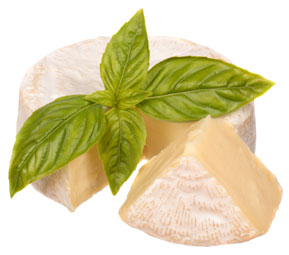
Brie Cheese -
high in essential nutrients

1. Brie Cheese Facts
2. Tips for Cooking and Storage
3. Types of Brie Cheese
4. Brie Cheese Nutritional Value
5. Brie Cheese Health Benefits
Brie Cheese Facts
History and Origin
Types of Brie Cheese
Types of Brie Cheese
Brie Cheese Nutritional Value
Brie Cheese ( Nutritional value )
Value per 100 g
Cheese, brie
|
Nutrient ( Proximate’s )
|
Unit
|
Value
|
Daily Value %
|
|
Energy
|
kcal
|
||
|
Protein
|
g
|
||
|
Total lipid (fat)
|
g
|
||
|
Carbohydrate, by difference
|
g
|
||
|
Fiber, total dietary
|
g
|
||
|
Total Sugars
|
g
|
||
|
Minerals
|
|||
|
Calcium, Ca
|
mg
|
||
|
Iron, Fe
|
mg
|
||
|
Magnesium, Mg
|
mg
|
||
|
Phosphorus, P
|
mg
|
||
|
Potassium, K
|
mg
|
||
|
Sodium, Na
|
mg
|
||
|
Zinc, Zn
|
mg
|
||
|
Copper, Cu
|
mg
|
||
|
Manganese, Mn
|
mg
|
||
|
Selenium, Se
|
µg
|
||
|
Vitamins
|
|||
|
Vitamin C, total ascorbic acid
|
mg
|
||
|
Thiamin (B-1)
|
mg
|
||
|
Riboflavin (B-2)
|
mg
|
||
|
Niacin (B-3)
|
mg
|
||
|
Pantothenic acid (B-5)
|
mg
|
||
|
Vitamin (B-6)
|
mg
|
||
|
Folate (B-9)
|
µg
|
||
|
Choline, total
|
mg
|
||
|
Vitamin (B-12)
|
µg
|
||
|
Vitamin A, RAE
|
µg
|
||
|
Retinol
|
µg
|
||
|
Vitamin A, IU
|
IU
|
||
|
Vitamin E (alpha-tocopherol)
|
mg
|
||
|
Vitamin D
|
IU
|
||
|
Vitamin K (phylloquinone)
|
µg
|
||
|
Carotenoids
|
|||
|
Beta-Carotene
|
µg
|
||
|
Beta-Cryptoxanthin
|
µg
|
||
|
Lutein + zeaxanthin
|
µg
|
||
|
Lipids
|
|||
|
Saturated Fatty Acids
|
g
|
||
|
Monounsaturated Fatty Acids
|
g
|
||
|
Polyunsaturated Fatty Acids
|
g
|
||
|
Cholesterol
|
mg
|
||

|
Reference Values are based on a 2,000 Calorie Intake, for Adults and Children 4 or More Years of Age. Your daily values may be higher or lower depending on your calorie needs.
|
|
Percentages are roughly approximated using (RDA) Recommended Dietary Allowances for adults. Source: USDA United States Department of Agriculture
|
|
Reference Values for Nutrition – National Institutes of Health USA
|
Brie Cheese Nutritional Value
Brie Cheese Health Benefits
Brie Cheese
HEALTH
References
|
Nutrient Database – USDA (United States Department of Agriculture)
|
|
Reference Values for Nutrition – National Institutes of Health USA
|