



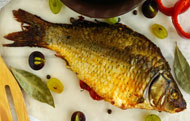


1. Carp Facts
2 Types of Carp
3. Carp Nutritional Value
4. Carp Health Benefits
Carp are large, hardy, freshwater fish known for their adaptability and, in many Western regions, a reputation as a "trash fish" or "muddy" tasting nuisance. However, when caught from clean water, properly handled, and prepared, carp can be a flavourful, oily, and nutritious food source prized in Asian and European cuisines.
History and Origin
Carp (Cyprinus carpio) have a long, well-documented history, originating in Central Asia/China as one of the first fish species to be domesticated for food about 3,000–8,000 years ago. Known for their hardiness and rapid growth, they spread from the Danube region across Europe during the Roman era and through medieval monastery culture, becoming a staple food source. Modern consumption is heavily focused on Asian and Eastern European markets, with recent efforts in Western countries to rebrand them from "trash fish" to sustainable, farmed options.
- • Common/European Carp
- • Koi Carp
- • Mirror/Leather Carp
- • Goldfish Hybrids
In Australia, the primary type of carp available is the introduced European Carp (Cyprinus carpio), which includes variants like Koi, Mirror, and Leather carp. Often considered a pest, they are found in all states except the Northern Territory, with a white flesh that has a mild, pleasant taste if prepared properly to remove the dark, oily mud vein.
Types of Carp in Australia
- Common/European Carp: The most widespread invasive species, often referred to as "Euro".
- Koi Carp: Ornamental, often found in waterways.
- Mirror/Leather Carp: Varieties with large, scattered scales or no scales at all.
- Goldfish Hybrids: Carp often interbreed with goldfish, creating hybrids.
Taste and Culinary Information
- Taste Profile: When prepared correctly, the white meat is often described as mild, similar to other white fish.
- Muddy Flavour: If the dark red meat (mud vein) along the lateral line is not removed, it can taste muddy or earthy.
- Preparation: Popular in some cultures (e.g., Eastern European, Asian) for smoking or minced for fish balls.
- Edibility: They are edible, though not a common staple food for many Australians.
- Note: In many Australian jurisdictions, it is illegal to return live carp to the water; they must be destroyed.
Carp ( Nutritional value )
Value per 100 g
Fish, carp, cooked, dry heat
|
Nutrient ( Proximate’s )
|
Unit
|
Value
|
Daily Value %
|
|
Energy
|
kcal
|
162
|
%
|
|
Protein
|
g
|
22.86
|
45.7%
|
|
Total lipid (fat)
|
g
|
7.17
|
%
|
|
Carbohydrate, by difference
|
g
|
0.00
|
0.00
|
|
Fiber, total dietary
|
g
|
0.0
|
0.0
|
|
Minerals
|
|||
|
Calcium, Ca
|
mg
|
52
|
%
|
|
Iron, Fe
|
mg
|
1.59
|
8.8%
|
|
Magnesium, Mg
|
mg
|
38
|
%
|
|
Phosphorus, P
|
mg
|
531
|
%
|
|
Potassium, K
|
mg
|
427
|
%
|
|
Sodium, Na
|
mg
|
63
|
%
|
|
Zinc, Zn
|
mg
|
1.90
|
%
|
|
Copper, Cu
|
mg
|
0.073
|
%
|
|
Manganese, Mn
|
mg
|
0.050
|
%
|
|
Selenium, Se
|
mcg
|
16.2
|
%
|
|
Vitamins
|
|||
|
Vitamin C, total ascorbic acid
|
mg
|
1.6
|
%
|
|
Thiamin (B-1)
|
mg
|
0.140
|
%
|
|
Riboflavin (B-2)
|
mg
|
0.070
|
%
|
|
Niacin (B-3)
|
mg
|
2.100
|
%
|
|
Pantothenic acid (B-5)
|
mg
|
0.870
|
%
|
|
Vitamin (B-6)
|
mg
|
0.219
|
%
|
|
Folate (B-9)
|
mcg
|
17
|
%
|
|
Vitamin (B-12)
|
mcg
|
1.47
|
%
|
|
Vitamin A, IU
|
mcg
|
32
|
%
|
|
Lipids
|
|||
|
Saturated Fatty Acids
|
g
|
1.388
|
6.9%
|
|
Monounsaturated Fatty Acids
|
g
|
2.985
|
|
|
Polyunsaturated Fatty Acids
|
g
|
1.835
|
|
|
Cholesterol
|
mg
|
84
|
%
|

|
Reference Values are based on a 2,000 Calorie Intake, for Adults and Children 4 or More Years of Age. Your daily values may be higher or lower depending on your calorie needs.
|
|
Percentages are roughly approximated using (RDA) Recommended Dietary Allowances for adults. Source: USDA United States Department of Agriculture
|
|
Reference Values for Nutrition – National Institutes of Health USA
|
Carp Nutritional Value
Carp is a highly nutritious oily freshwater fish offering significant health benefits, including enhanced cardiovascular health, reduced inflammation, improved digestion, and stronger bones. It is a rich source of high-quality protein, omega-3 fatty acids, phosphorus, vitamin B12, and selenium, supporting immunity and overall metabolic function.
HEART HEALTH AND INFLAMMATION
Carp offers significant health benefits, particularly in promoting heart health and reducing inflammation due to its high levels of omega-3 fatty acids. It is often regarded as a nutritious, protein-rich food source that can help manage various bodily functions and improve cardiovascular outcomes.IMMUNE SYSTEM BOOST
Carp provides significant immune system boosts due to its high zinc content—offering over 10% of the daily recommended intake per serving—which is critical for immune cell stimulation. Rich in omega-3 fatty acids, carp helps reduce inflammation and supports immune cell activity, while its high-quality protein, vitamins, and minerals provide essential nutrients for overall health.BONE AND TEETH STRENGTH
Carp (specifically Cyprinus carpio) offers significant health benefits for bone and teeth strength, primarily due to its extremely high phosphorus content and good levels of calcium. A single serving of carp can provide over 50% of the daily recommended intake of phosphorus, which is essential for maintaining bone mineral density, strengthening enamel, and preventing osteoporosis.

HIGH QUALITY PROTEIN
Carp is a highly nutritious freshwater fish, offering a rich source of high-quality, easily digestible protein that supports muscle maintenance and growth. It is an excellent source of essential Omega-3 fatty acids, phosphorus, selenium, and vitamin B12, providing cardiovascular benefits, boosting immunity, and promoting bone health.NUTRIENT DENSE
Carp is a highly nutrient-dense, protein-rich freshwater fish, offering significant amounts of phosphorus, vitamin B12, selenium, and essential omega-3 fatty acids, particularly DHA and EPA. It supports heart health by improving omega-3/6 balance, strengthens immune function, and provides crucial minerals for bone density.EASY TO DIGEST
Carp is widely recognized as a highly nutritious, low-fat fish that is exceptionally easy to digest, making it an excellent protein source for children, the elderly, convalescents, and those with sensitive stomachs. Due to its unique, favourable muscle fiber structure and low levels of indigestible fibrous tissue, carp meat can leave the stomach just two to three hours after consumption.
References
Nutrient Database – USDA (United States Department of Agriculture)
Reference Values for Nutrition – National Institutes of Health USA
Heart health and inflammation - Carp, an oily freshwater fish, offers significant health benefits, particularly in promoting heart health and reducing inflammation due to its high levels of omega-3 fatty acids. It is often regarded as a nutritious, protein-rich food source that can help manage various bodily functions and improve cardiovascular outcomes.
Immune system boost - Carp provides significant immune system boosts due to its high zinc content—offering over 10% of the daily recommended intake per serving—which is critical for immune cell stimulation. Rich in omega-3 fatty acids, carp helps reduce inflammation and supports immune cell activity, while its high-quality protein, vitamins, and minerals provide essential nutrients for overall health.
Bone and teeth strength - Carp (specifically Cyprinus carpio) offers significant health benefits for bone and teeth strength, primarily due to its extremely high phosphorus content and good levels of calcium. A single serving of carp can provide over 50% of the daily recommended intake of phosphorus, which is essential for maintaining bone mineral density, strengthening enamel, and preventing osteoporosis.
High quality protein - Carp is a highly nutritious freshwater fish, offering a rich source of high-quality, easily digestible protein that supports muscle maintenance and growth. It is an excellent source of essential Omega-3 fatty acids, phosphorus, selenium, and vitamin B12, providing cardiovascular benefits, boosting immunity, and promoting bone health.
Nutrient dense - Carp is a highly nutrient-dense, protein-rich freshwater fish, offering significant amounts of phosphorus, vitamin B12, selenium, and essential omega-3 fatty acids, particularly DHA and EPA. It supports heart health by improving omega-3/6 balance, strengthens immune function, and provides crucial minerals for bone density.
Easy to digest - Carp is widely recognized as a highly nutritious, low-fat fish that is exceptionally easy to digest, making it an excellent protein source for children, the elderly, convalescents, and those with sensitive stomachs. Due to its unique, favourable muscle fiber structure and low levels of indigestible fibrous tissue, carp meat can leave the stomach just two to three hours after consumption.