






1. Scallop Facts
2. Types of Scallops
3. Scallop Nutritional Value
4. Scallop Health Benefits
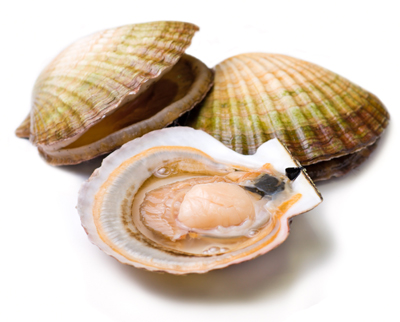
Scallops are highly prized bivalve mollusks with a sweet, delicate, and subtly buttery flavour, often compared to lobster or crab. They have a firm yet tender, creamy, and succulent texture. Typically, they are sold as creamy white to pale pink adductor muscles, lacking the strong "fishy" taste of other seafood, offering a mild, clean ocean taste.
History and Origin
Scallops have a history spanning millions of years, evolving from a prehistoric, staple food source for coastal human communities into a modern, high-value global delicacy. While historically significant as a symbol of pilgrimage in Europe and a, culinary staple in Asia, modern, widespread consumption is driven by advancements in commercial, fishing, and aquaculture, particularly for the, prized adductor muscle.
- • Commercial Scallops (Pecten fumatus)
- • Saucer Scallops (Ylistrum balloti)
- • Queen Scallops (Equichlamys bifrons)
- • Mud Scallop
Australian scallops are prized for their sweet, buttery, and sometimes nutty flavour, with key types including the creamy-roe Commercial scallop, the firm-fleshed Saucer scallop, and the intense Queen scallop. They are widely harvested in cool southern waters and Western Australia, typically served seared, grilled on the half-shell, or raw as sashimi.
Key Australian Scallop Types & Taste Profiles
- Commercial Scallops (Pecten fumatus): Primarily found in VIC, TAS, and NSW. These have a traditional, soft texture and are sold with a creamy-orange roe, offering a rich, sweet, and delicate flavour.
- Saucer Scallops (Ylistrum balloti): Common in Western Australia and Queensland. They are larger, with firm, white, muscular flesh and a nuttier, almost sweet flavour. Generally sold with the roe removed.
- Queen Scallops (Equichlamys bifrons): A smaller, rarer, hand-dived scallop with a distinctive purple roe. Known for a more intense, savoury, and salty flavour.
- Mud Scallops: A small white, delicate, and sweet scallop found in northern Australia.
Australian Scallop Characteristics
- Taste & Texture: Ranging from tender to firm, Australian scallops are consistently sweet and, when fresh, have a pleasant, subtle, creamy, or oceanic scent.
- Wet vs. Dry: High-quality Australian scallops are often sold "dry," meaning they haven't been treated with water or chemicals, resulting in a slightly sticky, translucent flesh that sears perfectly.
- Sustainability: Many Australian scallops, such as those from the Abrolhos Islands fishery, are MSC-certified, often wild-caught via scallop harvesting methods such as dredging or diving.
- Serving: Popularly prepared on the half shell with garlic butter, lightly seared, or in ceviche.
Scallop ( Nutritional value )
Value per 100 g
Mollusks, scallop, mixed species, raw
|
Nutrient ( Proximate’s )
|
Unit
|
Value
|
Daily Value %
|
|
Energy
|
kcal
|
69
|
%
|
|
Protein
|
g
|
12.06
|
24.1%
|
|
Total lipid (fat)
|
g
|
0.49
|
%
|
|
Carbohydrate, by difference
|
g
|
3.18
|
%
|
|
Fiber, total dietary
|
g
|
0.0
|
0.0
|
|
Sugars, total
|
g
|
0.00
|
0.00
|
|
Minerals
|
|||
|
Calcium, Ca
|
mg
|
6
|
%
|
|
Iron, Fe
|
mg
|
0.38
|
2.1%
|
|
Magnesium, Mg
|
mg
|
22
|
%
|
|
Phosphorus, P
|
mg
|
334
|
%
|
|
Potassium, K
|
mg
|
205
|
%
|
|
Sodium, Na
|
mg
|
392
|
%
|
|
Zinc, Zn
|
mg
|
0.91
|
%
|
|
Copper, Cu
|
mg
|
0.023
|
%
|
|
Manganese, Mn
|
mg
|
0.017
|
%
|
|
Selenium, Se
|
mcg
|
12.8
|
%
|
|
Vitamins
|
|||
|
Vitamin C, total ascorbic acid
|
mg
|
0.0
|
0.0
|
|
Thiamin (B-1)
|
mg
|
0.007
|
%
|
|
Riboflavin (B-2)
|
mg
|
0.015
|
%
|
|
Niacin (B-3)
|
mg
|
0.703
|
%
|
|
Pantothenic acid (B-5)
|
mg
|
0.215
|
%
|
|
Vitamin (B-6)
|
mg
|
0.073
|
%
|
|
Folate (B-9)
|
mcg
|
16
|
4%
|
|
Choline
|
mg
|
65.0
|
|
|
Vitamin (B-12)
|
mcg
|
1.41
|
%
|
|
Vitamin A, IU
|
mcg
|
3
|
%
|
|
Vitamin E (alpha-tocopherol)
|
mg
|
0.00
|
0.00
|
|
Vitamin D
|
mcg
|
1
|
%
|
|
Vitamin D (D2 + D3)
|
mcg
|
0.0
|
0.0
|
|
Vitamin D3 (cholecalciferol)
|
mcg
|
0.0
|
0.0
|
|
Vitamin K (phylloquinone)
|
mcg
|
0.0
|
0.0
|
|
Lipids
|
|||
|
Saturated Fatty Acids
|
g
|
0.128
|
0.6%
|
|
Monounsaturated Fatty Acids
|
g
|
0.048
|
|
|
Polyunsaturated Fatty Acids
|
g
|
0.130
|
|
|
Trans Tatty Acids
|
g
|
0.005
|
|
|
Cholesterol
|
mg
|
24
|
%
|

|
Reference Values are based on a 2,000 Calorie Intake, for Adults and Children 4 or More Years of Age. Your daily values may be higher or lower depending on your calorie needs.
|
|
Percentages are roughly approximated using (RDA) Recommended Dietary Allowances for adults. Source: USDA United States Department of Agriculture
|
|
Reference Values for Nutrition – National Institutes of Health USA
|
Scallops Nutritional Value
Scallops are a highly nutritious, low-calorie, and low-fat seafood packed with high-quality protein, omega-3 fatty acids, vitamin B12, and essential minerals like magnesium, potassium, and zinc. They support cardiovascular health, aid in weight management, and promote brain function, making them a dense, healthy, and lean protein source.
Should be considered
Scallops are high in sodium, which should be considered for individuals with dietary restrictions.
AID IN WEIGHT MANAGEMENT
Scallops are an excellent, nutrient-dense seafood for weight management, providing high-quality, lean protein (approx. 24g per 3.5-oz serving) while being low in calories and fat (roughly 94-137 calories). Their high protein content promotes satiety, boosts metabolism, and supports muscle maintenance.PREVENT STROKE
Scallops can contribute to stroke prevention as part of a heart-healthy diet due to their rich content of beneficial nutrients like omega-3 fatty acids, vitamin B12, magnesium, and potassium.HIGH-QUALITY PROTEIN FOR MUSCLE HEALTH
Scallops are an exceptionally healthy, nutrient-dense seafood option, recognized for being nearly 80% protein by dry weight. They are a premier source of high-quality, lean protein that provides all nine essential amino acids needed for muscle repair and maintenance. A 3.5-ounce (100g) serving of cooked scallops delivers approximately 24 grams of protein while remaining very low in fat and calories (roughly 137 kcal).SUPPORT HEART RHYTHM AND LOWER BLOOD PRESSURE
Scallops are a highly nutritious, low-fat, and nutrient-dense seafood option that offer significant cardiovascular benefits, particularly in supporting a healthy heart rhythm and reducing blood pressure. They are rich in Omega-3 fatty acids, magnesium, potassium, and vitamin B12, which collectively contribute to reduced heart disease risk, lower blood pressure, and better blood circulation.
SUPPORT BRAIN HEALTH
Scallops are considered a powerful "brain food" due to their high concentration of nutrients that directly support cognitive function, memory, and nervous system health. They are particularly rich in omega-3 fatty acids, vitamin B12, and unique phospholipids called plasmalogens that help protect against cognitive decline.IMPROVE BONE AND JOINT HEALTH
Scallops are a nutrient-dense, low-fat shellfish that significantly contribute to bone and joint health due to their high concentration of minerals and anti-inflammatory compounds. Regular consumption supports structural integrity in the skeleton and helps reduce joint pain.PROMOTE CARDIOVASCULAR HEALTH
Scallops are a highly nutritious, low-fat, and low-calorie shellfish that actively promote cardiovascular health through a combination of Omega-3 fatty acids, magnesium, potassium, and Vitamin B12. Their nutrient profile helps regulate blood pressure, balance cholesterol levels, and reduce the risk of stroke and heart disease.SUPPORT THYROID AND IMMUNE SYSTEM
Scallops are a highly nutritious, low-fat seafood option that offer significant health benefits, particularly for the immune system and thyroid, due to their high mineral content. They are an excellent source of lean protein, providing approximately 20-24 grams per serving with very little saturated fat.
References
Nutrient Database – USDA (United States Department of Agriculture)
Reference Values for Nutrition – National Institutes of Health USA
Promote cardiovascular health - Scallops are a highly nutritious, low-fat, and low-calorie shellfish that actively promote cardiovascular health through a combination of Omega-3 fatty acids, magnesium, potassium, and Vitamin B12. Their nutrient profile helps regulate blood pressure, balance cholesterol levels, and reduce the risk of stroke and heart disease.
Support heart rhythm and lower blood pressure - Scallops are a highly nutritious, low-fat, and nutrient-dense seafood option that offer significant cardiovascular benefits, particularly in supporting a healthy heart rhythm and reducing blood pressure. They are rich in Omega-3 fatty acids, magnesium, potassium, and vitamin B12, which collectively contribute to reduced heart disease risk, lower blood pressure, and better blood circulation.
Prevent stroke - Scallops can contribute to stroke prevention as part of a heart-healthy diet due to their rich content of beneficial nutrients like omega-3 fatty acids, vitamin B12, magnesium, and potassium.
High-quality protein for muscle health - Scallops are an exceptionally healthy, nutrient-dense seafood option, recognized for being nearly 80% protein by dry weight. They are a premier source of high-quality, lean protein that provides all nine essential amino acids needed for muscle repair and maintenance. A 3.5-ounce (100g) serving of cooked scallops delivers approximately 24 grams of protein while remaining very low in fat and calories (roughly 137 kcal).
Support brain health and cognition - Scallops are considered a powerful "brain food" due to their high concentration of nutrients that directly support cognitive function, memory, and nervous system health. They are particularly rich in omega-3 fatty acids, vitamin B12, and unique phospholipids called plasmalogens that help protect against cognitive decline.
Aid in weight management - Scallops are an excellent, nutrient-dense seafood for weight management, providing high-quality, lean protein (approx. 24g per 3.5-oz serving) while being low in calories and fat (roughly 94-137 calories). Their high protein content promotes satiety, boosts metabolism, and supports muscle maintenance.
Support thyroid and immune system - Scallops are a highly nutritious, low-fat seafood option that offer significant health benefits, particularly for the immune system and thyroid, due to their high mineral content. They are an excellent source of lean protein, providing approximately 20-24 grams per serving with very little saturated fat.
Improve Bone and Joint Health - Scallops are a nutrient-dense, low-fat shellfish that significantly contribute to bone and joint health due to their high concentration of minerals and anti-inflammatory compounds. Regular consumption supports structural integrity in the skeleton and helps reduce joint pain.