
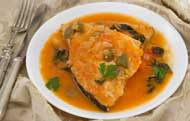

1. Swordfish Facts
2. Types of Swordfish
3. Swordfish Nutritional Value
4. Swordfish Health Benefits
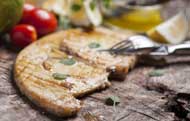
Swordfish is a large, migratory, predatory fish known for its long, sword-like bill, offering a premium culinary experience with a firm, steak-like, and moist texture. It features a mild, slightly sweet, and rich flavour, often compared to chicken or pork, making it ideal for grilling, searing, and baking.
History and Origin
Swordfish (Xiphias gladius) have a long history as a highly prized, albeit challenging, food source, with a consumption origin deeply rooted in Mediterranean coastal cultures. Modern consumption has expanded globally, driven by advancements in commercial fishing, despite significant historical population declines and health-related scares.
Broadbill Swordfish (Xiphias gladius) is the primary species sold in Australia, sourced from sustainable, wild-caught fisheries off the East and West coasts. It is highly regarded for its firm, moist, meat-like texture and mild, slightly sweet flavour. Available fresh or frozen as steaks, cutlets, or fillets, it is perfect for grilling.
Types of Swordfish Available in Australia
- Broadbill Swordfish (Xiphias gladius): Commonly found off both the East and West coasts of Australia, are highly regarded as a premium, "meat-like" eating fish. They are large, migratory, and known for their dense, moist, and slightly sweet-tasting flesh, which is often compared to veal or beef steak in texture.
- Flavour Profile: Mild, subtly sweet, and rich.
- Texture: Firm, dense, and moist, with a fine flake.
- Culinary Use: Often grilled, barbecued, or pan-fried, as the firm flesh holds together well.
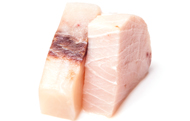
- Pumpkin Swordfish: Not a separate species, but rather a rare, highly prized variant of the standard Broadbill Swordfish (Xiphias gladius). Their flesh turns a distinctive orange or pink colour due to a diet rich in crustaceans (specifically red deep-water prawns or krill), making them a sought-after delicacy with a sweeter flavour than white-fleshed counterparts.
- Origin: Primarily harvested from the Eastern Tuna and Billfish Fishery (ETBF) and Western Australian waters.
Taste and Culinary Characteristics
- Flavour: Mild, clean, and slightly sweet.
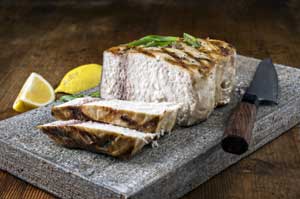
- Texture: Firm, moist, and dense, often described as similar to beef steak.
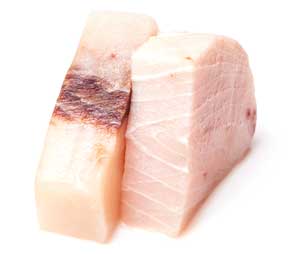
- Raw Appearance: Ranges from white to beige to pinkish-orange.
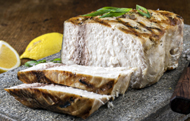
- Cooked Appearance: Turns beige to off-white.
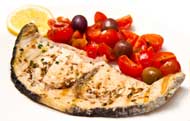
- Cooking Methods: Excellent for grilling, barbecuing, baking, or pan-searing, as the firm flesh holds up well.
- Swordfish is a rich source of omega-3 fatty acids and is best eaten when not overcooked, to maintain its moisture.
Swordfish ( Nutritional value )
Value per 100 g
Fish, swordfish, cooked, dry heat
|
Nutrient ( Proximate’s )
|
Unit
|
Value
|
Daily Value %
|
|
Energy
|
kcal
|
172
|
8.6%
|
|
Protein
|
g
|
23.45
|
46.9%
|
|
Total lipid (fat)
|
g
|
7.93
|
10.1%
|
|
Carbohydrate, by difference
|
g
|
0.00
|
0.00
|
|
Fiber, total dietary
|
g
|
0.0
|
0.0
|
|
Sugars, total
|
g
|
0.00
|
0.00
|
|
Minerals
|
|||
|
Calcium, Ca
|
mg
|
6
|
0.4%
|
|
Iron, Fe
|
mg
|
0.45
|
2.5%
|
|
Magnesium, Mg
|
mg
|
35
|
8.3%
|
|
Phosphorus, P
|
mg
|
304
|
24.3%
|
|
Potassium, K
|
mg
|
499
|
10.6%
|
|
Sodium, Na
|
mg
|
97
|
4.2%
|
|
Zinc, Zn
|
mg
|
0.78
|
7%
|
|
Copper, Cu
|
mg
|
0.046
|
5.1%
|
|
Manganese, Mn
|
mg
|
0.013
|
0.5%
|
|
Selenium, Se
|
mcg
|
68.5
|
124.5%
|
|
Vitamins
|
|||
|
Vitamin C, total ascorbic acid
|
mg
|
0.0
|
0.0
|
|
Thiamin (B-1)
|
mg
|
0.089
|
7.4%
|
|
Riboflavin (B-2)
|
mg
|
0.063
|
4.8%
|
|
Niacin (B-3)
|
mg
|
9.254
|
57.8%
|
|
Pantothenic acid (B-5)
|
mg
|
0.417
|
8.3%
|
|
Vitamin (B-6)
|
mg
|
0.615
|
25.6%
|
|
Folate (B-9)
|
mcg
|
2
|
0.5%
|
|
Choline
|
mg
|
77.5
|
14% |
|
Vitamin (B-12)
|
mcg
|
1.62
|
67.5%
|
|
Vitamin A, RAE
|
mcg
|
23
|
2.5%
|
|
Vitamin E (alpha-tocopherol)
|
mg
|
2.41
|
16%
|
| Vitamin A IU |
IU
|
129
|
4.3% |
|
Vitamin D (D2 + D3) International units
|
IU
|
666
|
22.2%
|
|
Vitamin D (D2 + D3)
|
mcg
|
16.6
|
18.4% |
|
Vitamin D3 (cholecalciferol)
|
mcg
|
16.6
|
|
|
Vitamin K (phylloquinone)
|
mcg
|
0.1
|
0.8%
|
|
Lipids
|
|||
|
Saturated Fatty Acids
|
g
|
1.911
|
9.5%
|
|
Monounsaturated Fatty Acids
|
g
|
3.544
|
|
|
Polyunsaturated Fatty Acids
|
g
|
1.368
|
|
|
Trans Tatty Acids
|
g
|
0.056
|
|
|
Cholesterol
|
mg
|
78
|
26%
|
|
Reference Values are based on a 2,000 Calorie Intake, for Adults and Children 4 or More Years of Age. Your daily values may be higher or lower depending on your calorie needs.
|
|
Percentages are roughly approximated using (RDA) Recommended Dietary Allowances for adults. Source: USDA United States Department of Agriculture
|
|
Reference Values for Nutrition – National Institutes of Health USA
|
Swordfish Nutritional Value
Swordfish is a nutrient-dense, high-protein, and low-carb fish that provides significant heart, bone, and immune health benefits. It is an excellent source of selenium, omega-3 fatty acids, vitamin D, and vitamin B12, supporting cardiovascular health, reducing inflammation, and potentially lowering cancer risk. Due to higher mercury levels, it is best consumed in moderation (1-2 times per month), with pregnant women and children advised to avoid it.
Important Safety Considerations
Mercury Content: Swordfish is a large predatory fish that accumulates higher levels of methylmercury.
Consumption Advice: While generally safe for adults in moderation, it should be avoided by pregnant people, nursing mothers, and young children.
Preparation: Cooking the fish (grilling, baking, or broiling) is recommended, as it can reduce mercury content by up to 30%.
HIGH PROTEIN AND NUTRIENT DENSE
Swordfish is a highly nutritious, nutrient-dense, and lean, high-protein fish providing roughly 20-25g of protein per 100g serving. Rich in Omega-3 fatty acids, selenium, and Vitamin D, it supports heart health, reduces inflammation, boosts immune function, and strengthens bones. Due to high mercury levels, it should be consumed in moderation, particularly by pregnant women.HEART HEALTH AND REDUCED INFLAMMATION
Swordfish offers significant health benefits, particularly for heart health and reducing inflammation, primarily due to its high levels of omega-3 fatty acids, vitamin D, and selenium.SUPPORTS BONE HEALTH
Swordfish supports bone health primarily through high levels of Vitamin D and selenium, which promote bone mineral density and reduce fracture risk. A 3-ounce serving provides nearly the full daily value of vitamin D for calcium absorption, while selenium helps balance bone metabolism by regulating bone-forming cells.POTENTIAL FOR LOWERING CANCER RISK
Swordfish is a nutrient-dense, oily fish that offers significant health benefits, particularly regarding heart health, bone health, and potentially lowering the risk of certain cancers due to its high levels of selenium, vitamin D, and omega-3 fatty acids. However, it is also known for having high mercury levels, which requires moderate consumption.
SUPPORTS COGNITIVE FUNCTION
Swordfish is a nutrient-dense fish that offers significant, though cautionary, benefits for cognitive function due to its high levels of omega-3 fatty acids, vitamin D, and selenium. While it supports brain health, its high mercury content requires limited consumption, particularly for vulnerable populations.HIGH IN SELENIUM
Swordfish is an exceptionally nutrient-dense, high-protein fish that provides over 100% of the daily recommended intake of selenium in a single serving. This high selenium content helps strengthen the immune system, supports thyroid function, and provides antioxidant protection against oxidative stress. It is also rich in omega-3 fatty acids and vitamin D, promoting heart health and reduced inflammation.OFFERS SIGNIFICANT CARDIOVASCULAR BENEFITS
Swordfish offers significant cardiovascular benefits, primarily through its high content of omega-3 fatty acids (EPA and DHA), selenium, and vitamin D, which help lower blood pressure, reduce inflammation, and improve heart health. Regular consumption—about two servings per week—is linked to lower triglycerides and a reduced risk of heart disease and stroke.SUPPORTS THE IMMUNE SYSTEM
Swordfish offers several health benefits that support the immune system, primarily driven by its high content of selenium, vitamin D, and omega-3 fatty acids. These nutrients work together to reduce inflammation and enhance the body's ability to fight infection.
References
Nutrient Database – USDA (United States Department of Agriculture)
Reference Values for Nutrition – National Institutes of Health USA
Heart health and reduced inflammation - Swordfish is a nutrient-dense fish that offers significant health benefits, particularly for heart health and reducing inflammation, primarily due to its high levels of omega-3 fatty acids, vitamin D, and selenium.
High in Selenium - Swordfish is an exceptionally nutrient-dense, high-protein fish that provides over 100% of the daily recommended intake of selenium in a single serving. This high selenium content helps strengthen the immune system, supports thyroid function, and provides antioxidant protection against oxidative stress. It is also rich in omega-3 fatty acids and vitamin D, promoting heart health and reduced inflammation.
Supports bone health - Swordfish supports bone health primarily through high levels of Vitamin D and selenium, which promote bone mineral density and reduce fracture risk. A 3-ounce serving provides nearly the full daily value of vitamin D for calcium absorption, while selenium helps balance bone metabolism by regulating bone-forming cells.
Supports the immune system - Swordfish offers several health benefits that support the immune system, primarily driven by its high content of selenium, vitamin D, and omega-3 fatty acids. These nutrients work together to reduce inflammation and enhance the body's ability to fight infection.
High protein and nutrient dense - Swordfish is a highly nutritious, nutrient-dense, and lean, high-protein fish providing roughly 20-25g of protein per 100g serving. Rich in Omega-3 fatty acids, selenium, and Vitamin D, it supports heart health, reduces inflammation, boosts immune function, and strengthens bones. Due to high mercury levels, it should be consumed in moderation, particularly by pregnant women.
Supports cognitive function - Swordfish is a nutrient-dense fish that offers significant, though cautionary, benefits for cognitive function due to its high levels of omega-3 fatty acids, vitamin D, and selenium. While it supports brain health, its high mercury content requires limited consumption, particularly for vulnerable populations.
Offers significant cardiovascular benefits - Swordfish offers significant cardiovascular benefits, primarily through its high content of omega-3 fatty acids (EPA and DHA), selenium, and vitamin D, which help lower blood pressure, reduce inflammation, and improve heart health. Regular consumption—about two servings per week—is linked to lower triglycerides and a reduced risk of heart disease and stroke.
Potential for lowering cancer risk - Swordfish is a nutrient-dense, oily fish that offers significant health benefits, particularly regarding heart health, bone health, and potentially lowering the risk of certain cancers due to its high levels of selenium, vitamin D, and omega-3 fatty acids. However, it is also known for having high mercury levels, which requires moderate consumption.