




1. Barley Facts
2. Types of Barley
3. Barley Nutritional Value
4. Barley Health Benefits
Barley is one of the world's oldest cereal grains, known for its high fiber content and diverse uses in food, beverages, and livestock feed. It is a nutritious grain that provides vitamins, minerals, and beneficial plant compounds, and its consumption is linked to improved heart health and digestion. Barley is used to make pearl barley for soups, barley flour for flatbreads, and is a key ingredient in beer.
History and Origin
Barley was first domesticated in the Fertile Crescent around 10,000 years ago from its wild ancestor, Hordeum spontaneum. It is one of the earliest cultivated grains and a foundational crop of early agriculture. Evidence of barley use has been found as far back as 23,000 BC in the form of wild barley. Its cultivation then spread to other parts of the world, including Egypt, Mesopotamia, China, and Europe
- • Hulled barley
- • Pearl barley
- • Pot barley
- • Hulless barley
- • Barley flakes
- • Barley grits:
- • Barley flour
- • Quick-cooking barley
Barley types can be broadly categorized by processing level, with hulled barley being a whole grain with the outer hull removed, and pearl barley being a refined form with the hull and bran polished away. Other varieties include pot barley, which is minimally processed, and various processed forms like barley grits, barley flakes, and barley flour.
By processing method
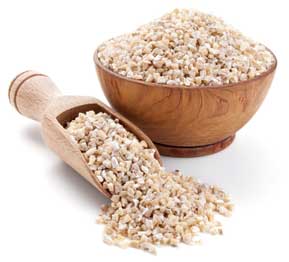
- Hulled barley: This is a whole grain that has only had its inedible outer hull removed. It is also known as barley groats, is chewy, and takes longer to cook.
- Pearl barley: This is the most common type and has had its outer hull and bran layers polished off, making it lighter in colour and faster to cook than hulled barley.
- Pot barley: This is less refined than pearl barley, with only the outermost hull removed. It retains more of its bran and has a nuttier flavour but takes longer to cook than pearl barley.
- Hulless barley: This variety is a whole grain where the hull is less tough and often separates from the grain during harvesting.
Other forms
- Barley flakes: Made by steaming, rolling, and drying the kernels, similar to rolled oats.
- Barley grits: The whole barley kernels are cut into smaller pieces.
- Barley flour: Made from ground barley kernels; used for baking and thickening.
- Quick-cooking barley: A refined type, often made from pearl barley flakes, that has been par-cooked to reduce its cooking time.
Grains ” Barley ” ( Nutritional value )
Nutritional Value per 100 g
Barley, pearled, cooked
|
Nutrient ( Proximate’s )
|
Unit
|
Value
|
Daily Value %
|
|
Energy
|
kcal
|
123
|
6.1%
|
|
Protein
|
g
|
2.26
|
4.5%
|
|
Total lipid (fat)
|
g
|
0.44
|
0.5%
|
|
Carbohydrate, by difference
|
g
|
28.22
|
10.2%
|
|
Fiber, total dietary
|
g
|
3.8
|
13.5%
|
|
Sugars, total
|
g
|
0.28
|
|
|
Minerals
|
|||
|
Calcium, Ca
|
mg
|
11
|
0.8%
|
|
Iron, Fe
|
mg
|
1.33
|
7.3%
|
|
Magnesium, Mg
|
mg
|
22
|
5.2%
|
|
Phosphorus, P
|
mg
|
54
|
4.3%
|
|
Potassium, K
|
mg
|
93
|
1.9%
|
|
Sodium, Na
|
mg
|
3
|
.001%
|
|
Zinc, Zn
|
mg
|
0.82
|
7.4%
|
|
Copper, Cu
|
mg
|
0.105
|
11.6%
|
|
Manganese, Mn
|
mg
|
0.259
|
11.2%
|
|
Selenium, Se
|
mcg
|
8.6
|
15.6%
|
|
Vitamins
|
|||
|
Vitamin C, total ascorbic acid
|
mg
|
0.0
|
0.0
|
|
Thiamin (B-1)
|
mg
|
0.083
|
6.9%
|
|
Riboflavin (B-2)
|
mg
|
0.062
|
4.7%
|
|
Niacin (B-3)
|
mg
|
2.063
|
12.8%
|
|
Pantothenic acid
|
mg
|
0.135
|
2.7%
|
|
Vitamin (B-6)
|
mg
|
0.115
|
6.7%
|
|
Folate DFE (dietary folate) (B-9)
|
mcg
|
16
|
4%
|
|
Vitamin (B-12)
|
mcg
|
0.00
|
|
|
Vitamin A, RAE (retinol)
|
mcg
|
0
|
|
|
Vitamin E (alpha-tocopherol)
|
mg
|
0.01
|
0.06%
|
|
Vitamin D (D2 + D3)
|
mcg
|
0
|
|
|
Vitamin K (phylloquinone)
|
mcg
|
0.8
|
0.6%
|
|
Lipids
|
|||
|
Saturated Fatty Acids
|
g
|
0.093
|
0.4%
|
|
Monounsaturated Fatty Acids
|
g
|
0.057
|
|
|
Polyunsaturated Fatty Acids
|
g
|
0.214
|
|
|
Cholesterol
|
mg
|
0
|
|
|
Carotenoids
|
|||
|
Beta-Carotene
|
mcg
|
5
|
|
|
Alpha-Carotene
|
mcg
|
0
|
|
|
Beta-Cryptoxanthin
|
mcg
|
0
|
|
|
Lutein + zeaxanthin
|
mcg
|
56
|
|

|
Reference Values are based on a 2,000 Calorie Intake, for Adults and Children 4 or More Years of Age. Your daily values may be higher or lower depending on your calorie needs.
|
|
Percentages are roughly approximated using (RDA) Recommended Dietary Allowances for adults. Source: Nutrient Database – USDA (United States Department of Agriculture)
|
|
Reference Values for Nutrition – FDA U.S. Food and Drug Administration
|
Barley Nutritional Value
Barley offers numerous health benefits, including lowering LDL cholesterol and the risk of heart disease, improving blood sugar and insulin levels due to its low glycaemic index and high fiber content, and promoting gut health by acting as a prebiotic. It is also rich in nutrients like fiber, manganese, selenium, and copper, and its antioxidants and zinc can contribute to stronger bones and better skin health. Its high fiber content can also help with weight management by increasing feelings of fullness.
ANTIOXIDANTS
Barley contains a variety of antioxidants, including vitamin E, phenolic acids, flavonoids, lignans, and tocols (tocopherols and tocotrienols). These compounds help protect cells from damage caused by oxidative stress and may offer anti-inflammatory and potential anticancer benefits.BLOOD SUGAR CONTROL
Barley helps control blood sugar due to its high soluble fiber, particularly beta-glucan, which slows down sugar absorption and lowers postprandial blood glucose levels. Other contributing factors include its low glycaemic index and high magnesium content. Barley also promotes a healthy gut microbiome, which further supports blood sugar regulation.ESSENTIAL MINERALS
Barley is rich in essential minerals including magnesium, phosphorus, potassium, and zinc, along with other nutrients like iron and selenium. These minerals support a wide range of bodily functions, from bone health and nerve function to oxygen transport and wound healing.GUT HEALTH
Barley supports gut health by feeding beneficial gut bacteria and promoting regular bowel movements due to its high content of soluble and insoluble fiber. Its beta-glucan fiber acts as a prebiotic, increasing good bacteria like Bifidobacterium and helping the gut produce helpful short-chain fatty acids. This can lead to a stronger gut lining, reduced inflammation, and improved digestion, including relief from constipation.PROMOTES BOWEL REGULARITY
Barley promotes bowel regularity due to its high content of both soluble and insoluble dietary fiber. Insoluble fiber adds bulk to stool, speeding up intestinal movement, while soluble fiber, like beta-glucan, softens stool and feeds beneficial gut bacteria. This combination increases stool volume, improves intestinal motility, and helps prevent or alleviate constipation.
STRONGER BONES
Barley supports stronger bones by providing essential minerals like calcium, phosphorus, copper, magnesium, and zinc. These minerals are crucial for bone structure and strength, with calcium and phosphorus being key building blocks, and zinc playing a role in bone mineralization.NUTRIENT-RICH
Barley is nutrient-rich due to its high content of fiber, especially the soluble fiber beta-glucan, as well as essential vitamins and minerals like manganese, selenium, copper, magnesium, iron, and B vitamins. This combination supports digestive health, helps lower cholesterol and blood sugar levels, and promotes bone and immune function.WEIGHT MANAGEMENT
Barley supports weight management primarily due to its high fiber content, which promotes fullness, reduces overall calorie consumption, and improves digestion. It can be a good substitute for refined grains like white rice, helping you feel fuller longer and reducing hunger later in the day. Additionally, barley contains protein and can help with metabolism.LOWERS CHOLESTEROL
Barley lowers cholesterol because of its high content of a soluble fiber called beta-glucan. This fiber forms a gel in your gut, which prevents cholesterol from being absorbed into the bloodstream, leading to lower "bad" LDL cholesterol levels. Consuming at least 3 grams of beta-glucan per day from barley can help maintain healthy cholesterol levels and reduce the risk of heart disease.HEALTHIER SKIN
Barley promotes healthier skin by providing antioxidants that protect against damage, minerals like selenium and copper that support cell health and even skin tone, and amino acids such as lysine that are crucial for collagen production. It can be incorporated into routines through dietary intake or topical application, offering benefits like hydration, reduced inflammation, and a more radiant complexion.
References
Nutrient Database – USDA (United States Department of Agriculture)
Reference Values for Nutrition – FDA U.S. Food and Drug Administration
Lowers cholesterol - Barley lowers cholesterol because of its high content of a soluble fiber called beta-glucan. This fiber forms a gel in your gut, which prevents cholesterol from being absorbed into the bloodstream, leading to lower "bad" LDL cholesterol levels. Consuming at least 3 grams of beta-glucan per day from barley can help maintain healthy cholesterol levels and reduce the risk of heart disease.
Blood sugar control - Barley helps control blood sugar due to its high soluble fiber, particularly beta-glucan, which slows down sugar absorption and lowers postprandial blood glucose levels. Other contributing factors include its low glycaemic index and high magnesium content. Barley also promotes a healthy gut microbiome, which further supports blood sugar regulation.
Weight management - Barley supports weight management primarily due to its high fiber content, which promotes fullness, reduces overall calorie consumption, and improves digestion. It can be a good substitute for refined grains like white rice, helping you feel fuller longer and reducing hunger later in the day. Additionally, barley contains protein and can help with metabolism.
Gut health - Barley supports gut health by feeding beneficial gut bacteria and promoting regular bowel movements due to its high content of soluble and insoluble fiber. Its beta-glucan fiber acts as a prebiotic, increasing good bacteria like Bifidobacterium and helping the gut produce helpful short-chain fatty acids. This can lead to a stronger gut lining, reduced inflammation, and improved digestion, including relief from constipation.
Promotes bowel regularity - Barley promotes bowel regularity due to its high content of both soluble and insoluble dietary fiber. Insoluble fiber adds bulk to stool, speeding up intestinal movement, while soluble fiber, like beta-glucan, softens stool and feeds beneficial gut bacteria. This combination increases stool volume, improves intestinal motility, and helps prevent or alleviate constipation.
Nutrient-rich - Barley is nutrient-rich due to its high content of fiber, especially the soluble fiber beta-glucan, as well as essential vitamins and minerals like manganese, selenium, copper, magnesium, iron, and B vitamins. This combination supports digestive health, helps lower cholesterol and blood sugar levels, and promotes bone and immune function.
Essential minerals - Barley is rich in essential minerals including magnesium, phosphorus, potassium, and zinc, along with other nutrients like iron and selenium. These minerals support a wide range of bodily functions, from bone health and nerve function to oxygen transport and wound healing.
Antioxidants - Barley contains a variety of antioxidants, including vitamin E, phenolic acids, flavonoids, lignans, and tocols (tocopherols and tocotrienols). These compounds help protect cells from damage caused by oxidative stress and may offer anti-inflammatory and potential anticancer benefits.
Stronger bones - Barley supports stronger bones by providing essential minerals like calcium, phosphorus, copper, magnesium, and zinc. These minerals are crucial for bone structure and strength, with calcium and phosphorus being key building blocks, and zinc playing a role in bone mineralization.
Healthier skin - Barley promotes healthier skin by providing antioxidants that protect against damage, minerals like selenium and copper that support cell health and even skin tone, and amino acids such as lysine that are crucial for collagen production. It can be incorporated into routines through dietary intake or topical application, offering benefits like hydration, reduced inflammation, and a more radiant complexion.
Reduced risk of certain cancers - A diet rich in barley, as part of a healthy lifestyle, is associated with a reduced risk of certain cancers, particularly colorectal cancer. The potential benefits are primarily linked to its high fiber content and various phytochemicals, which exhibit antioxidant and anti-inflammatory properties.