





1. Buckwheat Facts
2. Types of Buckwheat
3. Buckwheat Nutritional Value
4. Buckwheat Health Benefits
Buckwheat (Fagopyrum esculentum) or common buckwheat is a flowering plant in the knotweed family Polygonaceae cultivated for its grain-like seeds and as a cover crop. Buckwheat originated around the 6th millennium BC in the region of what is now Yunnan Province in southwestern China. The name "buckwheat" is used for several other species, such as Fagopyrum tataricum, a domesticated food plant raised in Asia.
Despite its name, buckwheat is not closely related to wheat, nor is it a cereal or a member of the grass family. It is related to sorrel, knotweed, and rhubarb. Buckwheat is considered a pseudocereal because the high starch content of the seeds enables buckwheat to be cooked and consumed like a cereal.
History and Origin
Buckwheat originated in China, specifically in the southwestern region around 6,000 BCE, and was domesticated around 3,000 BCE. It spread from there across Asia and eventually reached Europe via trade routes, such as the Silk Road. In Europe, it became an important food source, especially in Eastern and Northern regions, before declining in Western Europe with the rise of other cereals.
- • Sweet buckwheat
- • Tartary buckwheat
- • Buckwheat groats
- • Sprouting buckwheat
- • Kasha
- • Buckwheat flour
The main types of buckwheat are common buckwheat (F𝑎𝑔𝑜𝑝𝑦𝑟𝑢𝑚𝑒𝑠𝑐𝑢𝑙𝑒𝑛𝑡𝑢𝑚) and tartary buckwheat (F𝑎𝑔𝑜𝑝𝑦𝑟𝑢𝑚𝑡𝑎𝑡𝑎𝑟𝑖𝑐𝑢𝑚), but it is also sold in various forms like hulled groats, kasha (roasted groats), and buckwheat flour. Tartary buckwheat has a higher antioxidant content, while common buckwheat is more widely cultivated and can be better for certain products like starch.
Types of buckwheat
- Sweet buckwheat (F𝑎𝑔𝑜𝑝𝑦𝑟𝑢𝑚𝑒𝑠𝑐𝑢𝑙𝑒𝑛𝑡𝑢𝑚): A common species. It is the most widely cultivated species for food but is not as high in antioxidants as Tartary buckwheat.
- Tartary buckwheat (F𝑎𝑔𝑜𝑝𝑦𝑟𝑢𝑚𝑡𝑎𝑡𝑎𝑟𝑖𝑐𝑢𝑚): Also known as "bitter buckwheat,". It has a higher antioxidant content, particularly the flavonoid rutin.
Forms of buckwheat
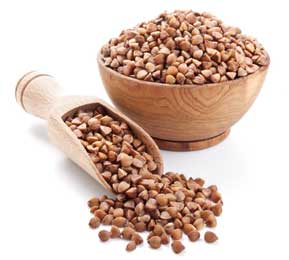
- Buckwheat groats: These are the hulled kernels of the buckwheat seed, which are lighter in colour and milder in flavour. They can be eaten whole or ground into flour and are a good alternative to rice or quinoa.
- Sprouting buckwheat: is a specific type of groat that is darker and has a hole in the centre.
- Kasha: This is the roasted form of buckwheat groats, which is darker brown and has a stronger, more nutty flavour. It is a good choice for porridge and can be used in savoury dishes like stir-fries.
- Buckwheat flour: Buckwheat flour can be made from hulled or un-hulled groats. Light flour is made from hulled kernels, while dark flour includes the hull, giving it a darker colour and earthy flavour.
Grains ” Buckwheat ” ( Nutritional value )
Nutritional Value per 100 g
Buckwheat
|
Nutrient ( Proximate’s )
|
Unit
|
Value
|
Daily Value %
|
|
Energy
|
kcal
|
343
|
17.1%
|
|
Protein
|
g
|
13.25
|
26.5%
|
|
Total lipid (fat)
|
g
|
3.40
|
4.3%
|
|
Carbohydrate, by difference
|
g
|
71.50
|
26%
|
|
Fiber, total dietary
|
g
|
10.0
|
35.7%
|
|
Minerals
|
|||
|
Calcium, Ca
|
mg
|
18
|
1.3%
|
|
Iron, Fe
|
mg
|
2.20
|
12.2%
|
|
Magnesium, Mg
|
mg
|
231
|
55%
|
|
Phosphorus, P
|
mg
|
347
|
27.7%
|
|
Potassium, K
|
mg
|
460
|
9.7%
|
|
Sodium, Na
|
mg
|
1
|
.0004%
|
|
Zinc, Zn
|
mg
|
2.40
|
21.8%
|
|
Copper, Cu
|
mg
|
1.100
|
122.2%
|
|
Manganese, Mn
|
mg
|
1.300
|
56.5%
|
|
Selenium, Se
|
mcg
|
8.3
|
15%
|
|
Vitamins
|
|||
|
Vitamin C, total ascorbic acid
|
mg
|
0.0
|
0.0
|
|
Thiamin (B-1)
|
mg
|
0.101
|
8.4%
|
|
Riboflavin (B-2)
|
mg
|
0.425
|
32.6%
|
|
Niacin (B-3)
|
mg
|
7.020
|
43.8%
|
|
Pantothenic acid
|
mg
|
1.233
|
24.6%
|
|
Vitamin (B-6)
|
mg
|
0.210
|
12.3%
|
|
Folate DFE (dietary folate) (B-9)
|
mg
|
30
|
7.5%
|
| Vitamin B-12 |
mcg
|
0.00
|
|
|
Vitamin A, RAE (retinol)
|
mcg
|
||
|
Vitamin D (D2 + D3)
|
mcg
|
0
|
|
|
Lipids
|
|||
|
Saturated Fatty Acids
|
g
|
0.741
|
3.7%
|
|
Monounsaturated Fatty Acids
|
g
|
1.040
|
|
|
Polyunsaturated Fatty Acids
|
g
|
1.039
|
|
|
Cholesterol
|
mg
|
0
|
|
|
Flavonoids
|
|||
|
Quercetin
|
mg
|
15.4
|
|
|
Proanthocyanidin dimers
|
mg
|
5.8
|
|
|
Proanthocyanidin trimers
|
mg
|
1.6
|
|

|
Reference Values are based on a 2,000 Calorie Intake, for Adults and Children 4 or More Years of Age. Your daily values may be higher or lower depending on your calorie needs.
|
|
Percentages are roughly approximated using (RDA) Recommended Dietary Allowances for adults. Source: Nutrient Database – USDA (United States Department of Agriculture)
|
|
Reference Values for Nutrition – FDA U.S. Food and Drug Administration
|
Buckwheat Nutritional Value
Buckwheat offers numerous health benefits, including improved heart health, better blood sugar management, and enhanced digestion. It is naturally gluten-free and rich in antioxidants, fiber, and complete protein, which help reduce inflammation, protect against oxidative stress, and promote gut health. It is also a good source of essential minerals like magnesium, manganese, and copper.
HEART HEALTH
Buckwheat supports heart health by improving cholesterol and blood lipid profiles, helping to regulate blood pressure, and reducing blood sugar levels. It contains beneficial compounds like fiber, magnesium, and rutin, which promote better cardiovascular health.AIDS DIGESTION
Buckwheat aids digestion due to its high fiber content, which promotes regular bowel movements and feeds beneficial gut bacteria. It is naturally gluten-free, making it a good option for those with digestive issues like celiac disease, and its resistant starch can help regulate intestinal transit time.REGULATES BLOOD PRESSURE
Buckwheat helps regulate blood pressure due to its high levels of magnesium, which relaxes blood vessels, and the antioxidant rutin, which may decrease inflammation and support blood vessel function. Additionally, other bioactive compounds in buckwheat, such as those in fermented buckwheat sprouts, have been shown to inhibit ACE, an enzyme involved in blood pressure regulation.INSULIN-LIKE ACTIVITY
Buckwheat has an insulin-like activity due to its high content of D-chiro-inositol, which may improve insulin sensitivity and lower blood glucose levels. This compound can mimic insulin, making cells more responsive to it and helping to regulate glucose metabolism. Additionally, buckwheat contains flavonoids and fiber that help to lower the glycaemic index, further contributing to its ability to manage blood sugar levels.AIDS WEIGHT LOSS
Buckwheat is high in protein and fiber, which increase feelings of fullness and satiety, reducing overall calorie intake. It also has a low glycaemic index, providing slow-release energy that helps regulate blood sugar and curb cravings. Incorporating buckwheat into a balanced diet can aid weight management, though a restrictive "buckwheat diet" may not be sustainable in the long term.
GLUTEN-FREE
Buckwheat is naturally gluten-free, as it is a seed from a plant related to rhubarb, not a grain like wheat. However, cross-contamination can occur during processing, so for those with celiac disease or severe gluten allergies, it's crucial to choose products that are certified gluten-free or processed in dedicated gluten-free facilities.STRENGTHENS BLOOD VESSELS
Buckwheat strengthens blood vessels primarily due to its high content of rutin, a flavonoid that makes blood vessels and capillaries stronger and more flexible. It also contains quercetin, another flavonoid that helps reduce inflammation, and high levels of antioxidants, which protect vascular tissues from damage. Additionally, magnesium and fiber in buckwheat support overall cardiovascular health by helping to regulate blood pressure and improve circulation.ACTS AS A PREBIOTIC
Buckwheat acts as a prebiotic because its fiber and resistant starch are indigestible by humans but can be fermented by beneficial gut bacteria, such as Bifidobacteria and Lactobacilli. This process nourishes the gut microbiome, which can improve overall digestive health, help balance blood sugar, and may contribute to other health benefits like lower cholesterol.RICH IN ANTIOXIDANTS
Buckwheat is rich in antioxidants, particularly flavonoids like rutin, quercetin, and vitexin, which can help fight oxidative stress and may protect against diseases linked to free radicals. This antioxidant content is often higher than in other grains like oats and wheat.COMPLETE PROTEIN
Buckwheat is a complete protein, meaning it contains all nine essential amino acids that the human body needs. It is one of the few plant-based foods that provide these essential amino acids in balanced amounts, making it a valuable protein source, especially for those following a plant-based diet.
References
Nutrient Database – USDA (United States Department of Agriculture)
Reference Values for Nutrition – FDA U.S. Food and Drug Administration
Heart health - Buckwheat supports heart health by improving cholesterol and blood lipid profiles, helping to regulate blood pressure, and reducing blood sugar levels. It contains beneficial compounds like fiber, magnesium, and rutin, which promote better cardiovascular health.
Strengthens blood vessels - Buckwheat strengthens blood vessels primarily due to its high content of rutin, a flavonoid that makes blood vessels and capillaries stronger and more flexible. It also contains quercetin, another flavonoid that helps reduce inflammation, and high levels of antioxidants, which protect vascular tissues from damage. Additionally, magnesium and fiber in buckwheat support overall cardiovascular health by helping to regulate blood pressure and improve circulation.
Regulates blood pressure - Buckwheat helps regulate blood pressure due to its high levels of magnesium, which relaxes blood vessels, and the antioxidant rutin, which may decrease inflammation and support blood vessel function. Additionally, other bioactive compounds in buckwheat, such as those in fermented buckwheat sprouts, have been shown to inhibit ACE, an enzyme involved in blood pressure regulation.
Insulin-like activity - Buckwheat has an insulin-like activity due to its high content of D-chiro-inositol, which may improve insulin sensitivity and lower blood glucose levels. This compound can mimic insulin, making cells more responsive to it and helping to regulate glucose metabolism. Additionally, buckwheat contains flavonoids and fiber that help to lower the glycaemic index, further contributing to its ability to manage blood sugar levels.
Aids weight loss - Buckwheat can support weight loss because it is high in protein and fiber, which increase feelings of fullness and satiety, reducing overall calorie intake. It also has a low glycaemic index, providing slow-release energy that helps regulate blood sugar and curb cravings. Incorporating buckwheat into a balanced diet can aid weight management, though a restrictive "buckwheat diet" may not be sustainable in the long term.
Aids digestion - Buckwheat aids digestion due to its high fiber content, which promotes regular bowel movements and feeds beneficial gut bacteria. It is naturally gluten-free, making it a good option for those with digestive issues like celiac disease, and its resistant starch can help regulate intestinal transit time.
Acts as a prebiotic - Buckwheat acts as a prebiotic because its fiber and resistant starch are indigestible by humans but can be fermented by beneficial gut bacteria, such as Bifidobacteria and Lactobacilli. This process nourishes the gut microbiome, which can improve overall digestive health, help balance blood sugar, and may contribute to other health benefits like lower cholesterol.
Gluten-free - Buckwheat is naturally gluten-free, as it is a seed from a plant related to rhubarb, not a grain like wheat. However, cross-contamination can occur during processing, so for those with celiac disease or severe gluten allergies, it's crucial to choose products that are certified gluten-free or processed in dedicated gluten-free facilities.
Rich in antioxidants - Buckwheat is rich in antioxidants, particularly flavonoids like rutin, quercetin, and vitexin, which can help fight oxidative stress and may protect against diseases linked to free radicals. This antioxidant content is often higher than in other grains like oats and wheat.
Complete protein - Buckwheat is a complete protein, meaning it contains all nine essential amino acids that the human body needs. It is one of the few plant-based foods that provide these essential amino acids in balanced amounts, making it a valuable protein source, especially for those following a plant-based diet.
Excellent source of minerals - Buckwheat is an excellent source of minerals like manganese, magnesium, copper, phosphorus, and zinc. These minerals are essential for various bodily functions, including bone health, energy production, immune function, and metabolism. Buckwheat is also noted for its high mineral content compared to many other grains, and its minerals can be easily absorbed because it is low in phytic acid.