



1. Millet Facts
2. Types of Millet
3. Millet Nutritional Value
4. Millet Health Benefits
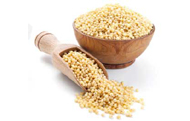
Millets are important crops in the semiarid tropics of Asia and Africa, especially in India, Mali, Nigeria, and Niger, with 97% of production in developing countries. The crop is favoured for its productivity and short growing season under hot dry conditions. The millets are sometimes understood to include the widely cultivated sorghum; apart from that, pearl millet is the most commonly cultivated of the millets. Finger millet, proso millet, barnyard millet, little millet, kodo millet, browntop millet and foxtail millet are other important crop species. Millets may have been consumed by humans for about 7,000 years and potentially had "a pivotal role in the rise of multi-crop agriculture and settled farming societies".
History and Origin
Millet's history dates back over 7,000 years, with origins in different parts of the world, including northern China, Africa, the Middle East, and Europe. It is one of the earliest cultivated cereal grains, with evidence of its cultivation found in early Neolithic sites in China dating to approximately 8350–6750 BC. From these regions, millet spread across the globe and played a significant role in the diets of prehistoric communities.
- • Pearl Millet
- • Finger millet
- • Foxtail millet
- • Proso millet
- • Barnyard Millet
- • Browntop Millet
- • Little Millet
- • Kodo Millet
- • Native Panic
- • Panicum
- • Shirohie
- • White French Millet
The types of millet sold in Australia include both imported and native varieties. Common types sold are Foxtail, Finger, and Pearl millet, alongside Australian native types like native panic (Panicumdecompositum) which is also known as native millet or papa grass.
Common (imported) types
- Foxtail Millet: Gaining popularity for its nutritional value.
- Finger Millet: Also known as ragi.
- Pearl Millet: Also known as bajra.
- Sorghum: Sometimes referred to as sorghum millet.
- Proso Millet: Available from brands like Aachi and Manna.
- Little Millet: Available from brands like Aachi and Manna and often sourced from Indian farmers.
- Barnyard Millet: Available from brands like Aachi and Manna.
- Kodo Millet: Available from brands like Aachi and Manna.
Native Australian types
- Native Panic: (Panicumdecompositum), which is also called Australian millet or papa grass.
- Panicum: This genus includes native panic and other native species.
- Shirohie: This is a specific variety of millet.
- White French Millet: Another type of millet available.
Grains ” Millet ” ( Nutritional value )
Nutritional Value per 100 g
Millet, cooked
|
Nutrient ( Proximate’s )
|
Unit
|
Value
|
Daily Value %
|
|
Energy
|
kcal
|
119
|
5.9%
|
|
Protein
|
g
|
3.51
|
7%
|
|
Total lipid (fat)
|
g
|
1.00
|
1.2%
|
|
Carbohydrate, by difference
|
g
|
23.67
|
8.6%
|
|
Fiber, total dietary
|
g
|
1.3
|
4.6%
|
|
Sugars, total
|
g
|
0.13
|
|
|
Minerals
|
|||
|
Calcium, Ca
|
mg
|
3
|
0.2%
|
|
Iron, Fe
|
mg
|
0.63
|
3.5%
|
|
Magnesium, Mg
|
mg
|
44
|
10.4%
|
|
Phosphorus, P
|
mg
|
100
|
8%
|
|
Potassium, K
|
mg
|
62
|
1.3%
|
|
Sodium, Na
|
mg
|
2
|
.008%
|
|
Zinc, Zn
|
mg
|
0.91
|
8.2%
|
|
Copper, Cu
|
mg
|
0.161
|
17.8%
|
|
Manganese, Mn
|
mg
|
0.272
|
11.8%
|
|
Selenium, Se
|
mcg
|
0.9
|
1.6%
|
|
Vitamins
|
|||
|
Vitamin C, total ascorbic acid
|
mg
|
0.0
|
0.0
|
|
Thiamin (B-1)
|
mg
|
0.106
|
8.8%
|
|
Riboflavin (B-2)
|
mg
|
0.082
|
6.3%
|
|
Niacin (B-3)
|
mg
|
1.330
|
8.3%
|
|
Pantothenic acid
|
mg
|
0.171
|
1.4%
|
|
Vitamin (B-6)
|
mg
|
0.108
|
6.3%
|
|
Folate DFE (dietary folate) (B-9)
|
mg
|
19
|
4.7%
|
| Vitamin B-12 |
mcg
|
0.00
|
|
|
Choline, total
|
mg
|
11.2
|
2% |
|
Vitamin A, RAE (retinol)
|
mcg
|
||
|
Vitamin E (alpha-tocopherol)
|
mg
|
0.02
|
0.1%
|
|
Vitamin D (D2 + D3)
|
mcg
|
0
|
|
|
Vitamin K (phylloquinone)
|
mcg
|
0.3
|
%
|
|
Lipids
|
|||
|
Saturated Fatty Acids
|
g
|
0.172
|
0.8%
|
|
Monounsaturated Fatty Acids
|
g
|
0.184
|
|
|
Polyunsaturated Fatty Acids
|
g
|
0.508
|
|
|
Cholesterol
|
mg
|
0
|
|
|
Carotenoids
|
|||
|
Beta-Carotene
|
mcg
|
2
|
|
|
Alpha-Carotene
|
mcg
|
0
|
|
|
Beta-Cryptoxanthin
|
mcg
|
0
|
|
|
Lutein + zeaxanthin
|
mcg
|
70
|
|

|
Reference Values are based on a 2,000 Calorie Intake, for Adults and Children 4 or More Years of Age. Your daily values may be higher or lower depending on your calorie needs.
|
|
Percentages are roughly approximated using (RDA) Recommended Dietary Allowances for adults. Source: Nutrient Database – USDA (United States Department of Agriculture)
|
|
Reference Values for Nutrition – FDA U.S. Food and Drug Administration
|
Millet Nutritional Value
Millet provides numerous health benefits, including supporting digestion, managing blood sugar and cholesterol, and being a good source of essential nutrients like fiber, protein, iron, and magnesium. As a gluten-free grain, it is suitable for those with celiac disease or gluten sensitivity, and its antioxidants can help protect against chronic diseases.
SUPPORTS HEART HEALTH
Millet supports heart health by lowering cholesterol, triglycerides, and blood pressure, and by improving blood sugar control. It is rich in fiber and beneficial nutrients like magnesium, which help manage blood pressure, and antioxidants that reduce inflammation. Studies show that regular millet consumption can lead to significant reductions in total cholesterol (by 8%), triglycerides (by 9.5%), and diastolic blood pressure (by 5%).MAY REDUCE CANCER RISK
Millets may reduce cancer risk due to their high content of fiber, antioxidants, and other bioactive compounds, which can inhibit cancer cell proliferation and promote cell death. These properties can help maintain a healthy digestive system, reduce inflammation, and may even alleviate some negative effects of chemotherapy.AIDS DIGESTION
Millet aids digestion by providing fiber and prebiotics, which promotes regular bowel movements and supports a healthy gut microbiome. Its high fiber content adds bulk to stool, which helps prevent constipation and reduce bloating. Additionally, millets are naturally gluten-free, making them a good option for those with gluten sensitivity or celiac disease, as they can be enjoyed without digestive discomfort.GLUTEN-FREE
Millet is naturally gluten-free and is a safe grain for those with celiac disease or gluten sensitivity. It is a versatile ancient grain that can be used in many dishes, such as porridge, pilafs, and as a substitute for rice or quinoa. However, always check labels to avoid cross-contamination, as some millet products might be processed with gluten-containing grains.RICH IN MINERALS
Millet is rich in minerals, including magnesium, phosphorus, copper, manganese, calcium, potassium, and iron. These minerals are essential for numerous bodily functions, such as bone health, energy production, nerve and muscle function, and maintaining healthy blood pressure.

SUPPORTS WEIGHT MANAGEMENT
Millet supports weight management by promoting satiety, stabilizing blood sugar, and boosting metabolism due to its high fiber, protein, and complex carbohydrate content. This combination helps you feel fuller for longer, which reduces overall calorie intake. Its low glycaemic index prevents energy crashes and cravings for sugary foods, while its protein helps preserve muscle mass, supporting a healthy metabolic rate for fat burning.BOOSTS BONE HEALTH
Millets boost bone health by being rich in calcium, magnesium, and phosphorus, which are all vital for building and maintaining strong bones. Specifically, finger millet (r𝑎𝑔𝑖) is exceptionally high in calcium, and other nutrients like protein, iron, and vitamin K found in millets also support bone health.MAY LOWER RISK OF CHRONIC DISEASES
Millet consumption may lower the risk of chronic diseases due to its high content of fiber, antioxidants, and other beneficial compounds that help manage blood sugar, cholesterol, and blood pressure. Incorporating millet into the diet may help lower the risk of heart disease, diabetes, and certain cancers.BLOOD SUGAR AND CHOLESTEROL
Millet can help lower blood sugar and cholesterol due to its high fiber content, low glycaemic index (GI), and specific compounds. It raises blood sugar slowly and steadily, and studies show that incorporating millet into the diet can lead to lower fasting blood sugar, improved cholesterol levels (like reduced LDL and triglycerides), and increased good cholesterol (HDL). The benefits can vary by type of millet, with some, like foxtail and barnyard, showing particularly strong results.PROVIDES ANTIOXIDANTS
Millets provide antioxidants due to their high content of phenolic compounds like ferulic acid and catechins, which help protect the body from oxidative stress and reduce the risk of chronic diseases. These antioxidants combat free radicals and have anti-inflammatory properties, which contributes to overall health and well-being.
References
Nutrient Database – USDA (United States Department of Agriculture)
Reference Values for Nutrition – FDA U.S. Food and Drug Administration
Aids digestion - Millet aids digestion by providing fiber and prebiotics, which promotes regular bowel movements and supports a healthy gut microbiome. Its high fiber content adds bulk to stool, which helps prevent constipation and reduce bloating. Additionally, millets are naturally gluten-free, making them a good option for those with gluten sensitivity or celiac disease, as they can be enjoyed without digestive discomfort.
Supports weight management - Millet supports weight management by promoting satiety, stabilizing blood sugar, and boosting metabolism due to its high fiber, protein, and complex carbohydrate content. This combination helps you feel fuller for longer, which reduces overall calorie intake. Its low glycaemic index prevents energy crashes and cravings for sugary foods, while its protein helps preserve muscle mass, supporting a healthy metabolic rate for fat burning.
May reduce cancer risk - Millets may reduce cancer risk due to their high content of fiber, antioxidants, and other bioactive compounds, which can inhibit cancer cell proliferation and promote cell death. These properties can help maintain a healthy digestive system, reduce inflammation, and may even alleviate some negative effects of chemotherapy.
Blood sugar and cholesterol - Millet can help lower blood sugar and cholesterol due to its high fiber content, low glycaemic index (GI), and specific compounds. It raises blood sugar slowly and steadily, and studies show that incorporating millet into the diet can lead to lower fasting blood sugar, improved cholesterol levels (like reduced LDL and triglycerides), and increased good cholesterol (HDL). The benefits can vary by type of millet, with some, like foxtail and barnyard, showing particularly strong results.
Nutrient-rich - Millet is a nutrient-rich grain that is high in fiber, protein, and B vitamins, and a good source of minerals like iron, magnesium, and zinc. It is also naturally gluten-free, has a lower glycaemic index than rice or wheat, and contains beneficial phytochemicals that offer antioxidant, anti-inflammatory, and anti-diabetic properties.
Gluten-free - Millet is naturally gluten-free and is a safe grain for those with celiac disease or gluten sensitivity. It is a versatile ancient grain that can be used in many dishes, such as porridge, pilafs, and as a substitute for rice or quinoa. However, always check labels to avoid cross-contamination, as some millet products might be processed with gluten-containing grains.
Rich in minerals - Millet is rich in minerals, including magnesium, phosphorus, copper, manganese, calcium, potassium, and iron. These minerals are essential for numerous bodily functions, such as bone health, energy production, nerve and muscle function, and maintaining healthy blood pressure.
Provides antioxidants - Millets provide antioxidants due to their high content of phenolic compounds like ferulic acid and catechins, which help protect the body from oxidative stress and reduce the risk of chronic diseases. These antioxidants combat free radicals and have anti-inflammatory properties, which contributes to overall health and well-being.
Boosts bone health - Millets boost bone health by being rich in calcium, magnesium, and phosphorus, which are all vital for building and maintaining strong bones. Specifically, finger millet (r𝑎𝑔𝑖) is exceptionally high in calcium, and other nutrients like protein, iron, and vitamin K found in millets also support bone health.
May lower risk of chronic diseases - Millet consumption may lower the risk of chronic diseases due to its high content of fiber, antioxidants, and other beneficial compounds that help manage blood sugar, cholesterol, and blood pressure. Incorporating millet into the diet may help lower the risk of heart disease, diabetes, and certain cancers.
Supports heart health - Millet supports heart health by lowering cholesterol, triglycerides, and blood pressure, and by improving blood sugar control. It is rich in fiber and beneficial nutrients like magnesium, which help manage blood pressure, and antioxidants that reduce inflammation. Studies show that regular millet consumption can lead to significant reductions in total cholesterol (by 8%), triglycerides (by 9.5%), and diastolic blood pressure (by 5%).