



1. Quinoa Facts
2. Types of Quinoa
3. Quinoa Nutritional Value
4. Quinoa Health Benefits
Quinoa (Chenopodium quinoa); is a flowering plant in the amaranth family. It is a herbaceous annual plant grown as a crop primarily for its edible seeds. Quinoa is not a grass but rather a pseudocereal botanically related to spinach and amaranth (Amaranthus spp.). It was first used to feed livestock 5,200–7,000 years ago, and for human consumption 3,000–4,000 years ago in the Lake Titicaca basin of Bolivia and Peru.
The plant thrives at high elevations and produces seeds that are rich in protein. Almost all production in the Andean region is done by small farms and associations. Its cultivation has spread to more than 70 countries, including Kenya, India, the United States, and European countries. As a result of increased consumption in North America, Europe, and Australasia, quinoa crop prices tripled between 2006 and 2014, entering a boom-and-bust cycle.
History and Origin
Quinoa originated in the Andes Mountains of South America, where it was first domesticated around 7,000 years ago. The Inca civilization considered it a sacred "mother of all grains," but Spanish colonists suppressed its production, causing it to be largely preserved only in remote, high-altitude communities. In recent decades, quinoa has experienced a resurgence in global popularity as a nutrient-dense "superfood".
- • White Quinoa
- • Red Quinoa
- • Black Quinoa
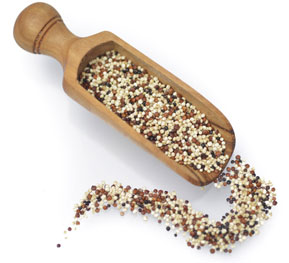
- • Tricolour/Rainbow Quinoa
- • Quinoa Flakes
- • Quinoa Flour
Australia sells several types of Quinoa, including white, red, and black varieties, often available as whole grains, flour, or flakes. Tricolour and rainbow blends are also common, and there is even some Australian-grown organic white quinoa from Tasmania.
Common types
- White Quinoa: The most common type, it cooks up light and fluffy and is very versatile.
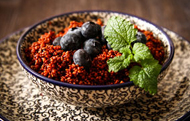
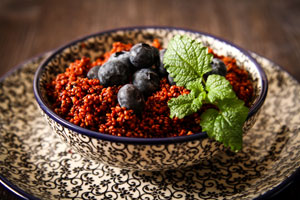
- Red Quinoa: Has a crunchier texture and holds its shape well after cooking.
- Black Quinoa: Similar to red quinoa, it has a slightly more robust flavour and a crunchy texture.
- Tricolour/Rainbow Quinoa: A mix of white, red, and black quinoa for visual appeal and a blend of textures.
Other forms
- Quinoa Flakes: Rolled and flattened quinoa, often used for porridge or in baking.
- Quinoa Flour: Milled into a fine powder, suitable for gluten-free baking.
- Australian-grown Quinoa: A small but growing market, particularly for organic white quinoa grown in Tasmania.
Grains ” Quinoa ” ( Nutritional value )
Nutritional Value per 100 g
Quinoa, cooked
|
Nutrient ( Proximate’s )
|
Unit
|
Value
|
Daily Value %
|
|
Energy
|
kcal
|
120
|
6%
|
|
Protein
|
g
|
4.40
|
8.8%
|
|
Total lipid (fat)
|
g
|
1.92
|
2.4%
|
|
Carbohydrate, by difference
|
g
|
21.30
|
7.7%
|
|
Fiber, total dietary
|
g
|
2.8
|
10%
|
|
Sugars, total
|
g
|
0.87
|
|
|
Minerals
|
|||
|
Calcium, Ca
|
mg
|
17
|
1.3%
|
|
Iron, Fe
|
mg
|
1.49
|
8.2%
|
|
Magnesium, Mg
|
mg
|
64
|
15.2%
|
|
Phosphorus, P
|
mg
|
152
|
12.1%
|
|
Potassium, K
|
mg
|
172
|
3.6%
|
|
Sodium, Na
|
mg
|
7
|
.003%
|
|
Zinc, Zn
|
mg
|
1.09
|
9.9%
|
|
Copper, Cu
|
mg
|
0.192
|
21.3%
|
|
Manganese, Mn
|
mg
|
0.631
|
27.4%
|
|
Selenium, Se
|
mcg
|
2.8
|
5%
|
|
Vitamins
|
|||
|
Vitamin C, total ascorbic acid
|
mg
|
0.0
|
0.0
|
|
Thiamin (B-1)
|
mg
|
0.107
|
8.9%
|
|
Riboflavin (B-2)
|
mg
|
0.110
|
8.4%
|
|
Niacin (B-3)
|
mg
|
0.412
|
2.5%
|
|
Vitamin (B-6)
|
mg
|
0.123
|
7.2%
|
|
Folate DFE (dietary folate) (B-9)
|
mg
|
42
|
10.5%
|
|
Choline, total
|
mg
|
23.0
|
4.1% |
| Vitamin B-12 |
mcg
|
0.00
|
|
|
Vitamin A, RAE (retinol)
|
mcg
|
0
|
|
|
Vitamin E (alpha-tocopherol)
|
mg
|
0.63
|
4.2%
|
|
Beta-Tocopherol
|
mg
|
0.03
|
|
|
Gamma-Tocopherol
|
mg
|
1.19
|
|
|
Delta-Tocopherol
|
mg
|
0.11
|
|
|
Vitamin D (D2 + D3)
|
mcg
|
0
|
|
|
Vitamin K (phylloquinone)
|
mcg
|
0.0
|
|
|
Lipids
|
|||
|
Saturated Fatty Acids
|
g
|
0.231
|
1.1%
|
|
Monounsaturated Fatty Acids
|
g
|
0.528
|
|
|
Polyunsaturated Fatty Acids
|
g
|
1.078
|
|
|
Cholesterol
|
mg
|
0
|
|
|
Carotenoids
|
|||
|
Beta-Carotene
|
mcg
|
3
|
|
|
Alpha-Carotene
|
mcg
|
0
|
|
|
Beta-Cryptoxanthin
|
mcg
|
0
|
|
|
Lutein + Zeaxanthin
|
mcg
|
53
|
|
|
Reference Values are based on a 2,000 Calorie Intake, for Adults and Children 4 or More Years of Age. Your daily values may be higher or lower depending on your calorie needs.
|
|
Percentages are roughly approximated using (RDA) Recommended Dietary Allowances for adults. Source: Nutrient Database – USDA (United States Department of Agriculture)
|
|
Reference Values for Nutrition – FDA U.S. Food and Drug Administration
|
Quinoa Nutritional Value
Quinoa offers significant health benefits, including being a complete plant-based protein, high in fiber, and rich in essential vitamins and minerals like iron, magnesium, and folate. Its high fiber and antioxidant content may help regulate blood sugar, lower cholesterol, and support heart health, while its natural gluten-free status makes it a great option for those with celiac disease or gluten sensitivities.
COMPLETE PROTEIN
Quinoa is considered a complete protein because it contains all nine essential amino acids that the human body cannot produce on its own. This makes it a valuable protein source, especially for those following a plant-based diet. Quinoa is an exception to most plant proteins, which are typically incomplete, and it is particularly high in amino acids like lysine, methionine, and histidine that are often low in other plant foods.HEART HEALTH SUPPORT
Quinoa supports heart health by providing fiber, which helps lower cholesterol and triglycerides, and contains magnesium, which supports healthy blood pressure. It also offers antioxidants that protect cells from damage and monounsaturated fatty acids that can help reduce "bad" LDL cholesterol. Daily consumption has been linked to a reduced risk of cardiovascular disease, particularly in people at risk.RICH IN VITAMINS AND MINERALS
Quinoa is rich in vitamins and minerals, including a high amount of magnesium, iron, manganese, and folate, as well as B vitamins like thiamin, riboflavin, and vitamin B6. It also provides other important minerals such as phosphorus, copper, potassium, and zinc. Soaking or sprouting quinoa can improve the body's absorption of these minerals by reducing phytic acid.GLUTEN-FREE
Quinoa is naturally gluten-free and a safe option for those with celiac disease or gluten sensitivity. It's a nutritionally dense seed-like crop that can be used as a replacement for gluten-containing grains like wheat, barley, and rye. To be certain, check the product packaging to ensure it is free from cross-contamination from other grains
SIGNIFICANT ANTIOXIDANT PROPERTIES
Quinoa has significant antioxidant properties due to its rich content of polyphenols, especially flavonoids like quercetin and kaempferol. These compounds protect cells from damage by unstable molecules called free radicals, which helps reduce oxidative stress. Other antioxidants in quinoa include phenolic acids, saponins, bioactive peptides, and tocopherols (like vitamin E).HIGH IN FIBER
Quinoa is high in fiber, with about 5 grams per one-cup serving, which is more than many other grains like brown rice. This high fiber content helps with digestive health, can lower cholesterol and blood sugar, and contributes to feelings of fullness, which may aid in weight management.HELPS REGULATE BLOOD SUGAR
Quinoa helps regulate blood sugar because of its low glycaemic index, high fiber content, and slow release of glucose into the bloodstream. It is considered a healthy alternative to grains like white rice and can improve insulin sensitivity and other metabolic markers in people with diabetes and pre-diabetes, although portion control is still important.IMPORTANT CONSIDERATIONS
Before cooking, it's crucial to rinse the seeds thoroughly to remove saponin, a bitter, soapy coating that can cause an unpleasant taste. When preparing, season with salt to enhance flavour and rinse with a ratio of 1.25 cups of water to 1 cup of quinoa to prevent it from becoming soggy. Store quinoa in a cool, dry place in an airtight container, especially if bought in bulk, and consider refrigeration or freezing for long-term storage to prevent rancidity.
References
Nutrient Database – USDA (United States Department of Agriculture)
Reference Values for Nutrition – FDA U.S. Food and Drug Administration
Complete protein - Quinoa is considered a complete protein because it contains all nine essential amino acids that the human body cannot produce on its own. This makes it a valuable protein source, especially for those following a plant-based diet. Quinoa is an exception to most plant proteins, which are typically incomplete, and it is particularly high in amino acids like lysine, methionine, and histidine that are often low in other plant foods.
Rich in vitamins and minerals - Quinoa is rich in vitamins and minerals, including a high amount of magnesium, iron, manganese, and folate, as well as B vitamins like thiamin, riboflavin, and vitamin B6. It also provides other important minerals such as phosphorus, copper, potassium, and zinc. Soaking or sprouting quinoa can improve the body's absorption of these minerals by reducing phytic acid.
Helps regulate blood sugar - Quinoa helps regulate blood sugar because of its low glycaemic index, high fiber content, and slow release of glucose into the bloodstream. It is considered a healthy alternative to grains like white rice and can improve insulin sensitivity and other metabolic markers in people with diabetes and pre-diabetes, although portion control is still important.
Heart health support - Quinoa supports heart health by providing fiber, which helps lower cholesterol and triglycerides, and contains magnesium, which supports healthy blood pressure. It also offers antioxidants that protect cells from damage and monounsaturated fatty acids that can help reduce "bad" LDL cholesterol. Daily consumption has been linked to a reduced risk of cardiovascular disease, particularly in people at risk.
Gluten-free - Quinoa is naturally gluten-free and a safe option for those with celiac disease or gluten sensitivity. It's a nutritionally dense seed-like crop that can be used as a replacement for gluten-containing grains like wheat, barley, and rye. To be certain, check the product packaging to ensure it is free from cross-contamination from other grains.
Significant antioxidant properties - Quinoa has significant antioxidant properties due to its rich content of polyphenols, especially flavonoids like quercetin and kaempferol. These compounds protect cells from damage by unstable molecules called free radicals, which helps reduce oxidative stress. Other antioxidants in quinoa include phenolic acids, saponins, bioactive peptides, and tocopherols (like vitamin E).
High in fiber - Quinoa is high in fiber, with about 5 grams per one-cup serving, which is more than many other grains like brown rice. This high fiber content helps with digestive health, can lower cholesterol and blood sugar, and contributes to feelings of fullness, which may aid in weight management.
Important considerations - Before cooking, it's crucial to rinse the seeds thoroughly to remove saponin, a bitter, soapy coating that can cause an unpleasant taste. When preparing, season with salt to enhance flavour and rinse with a ratio of 1.25 cups of water to 1 cup of quinoa to prevent it from becoming soggy. Store quinoa in a cool, dry place in an airtight container, especially if bought in bulk, and consider refrigeration or freezing for long-term storage to prevent rancidity.