





1. Sorghum Facts
2. Types of Sorghum
3. Sorghum Nutritional Value
4. Sorghum Health Benefits
Sorghum (Sorghum bicolor) is a versatile C4 grass cultivated for its grain, which is a gluten-free staple used for human food and alcoholic beverages, as well as for animal feed and ethanol production. Native to Africa, it is a hardy crop that grows well in warm, dry climates and is a major summer crop in Australia.
History and Origin
Sorghum originated in Africa, with domestication occurring approximately 8,000 years ago in the region of modern-day Ethiopia and Sudan. It then spread through trade and exploration to the Middle East, India, and China, arriving in the Americas in the 16th century via European explorers. The plant's name is thought to derive from Italian and Latin words related to its journey through the Middle East.
- • White Sorghum
- • Gold Sorghum
- • Other varieties
While most Australian-grown sorghum is for animal feed, human-consumable varieties include white sorghum and gold sorghum, which are used for gluten-free products like flour, porridge, and snacks. These grain sorghums are sometimes found in Australian supermarkets, particularly in breakfast cereals and snack bars, and can be used for baking, or as an alternative to rice.
Types of human-editable sorghum
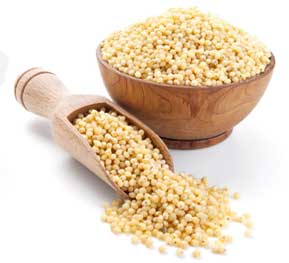
- White Sorghum: Has a mild, neutral flavour and a slightly softer texture when cooked. It is a popular choice for baking and light dishes.
- Gold Sorghum: Boasts a slightly sweet, nutty flavour and a golden colour. It is a good option for grain bowls, porridge, and hearty sides.
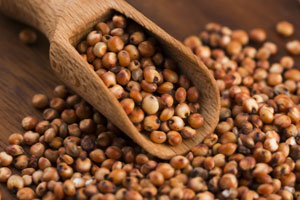
- Other varieties: Sorghum comes in other colours like brown, purple, and red, which contain different levels of polyphenols. These can be used in a variety of dishes and are often found in gluten-free alternatives to bread, pasta, and biscuits.
Grains ” Sorghum ” ( Nutritional value )
Nutritional Value per 100 g
Sorghum grain
|
Nutrient ( Proximate’s )
|
Unit
|
Value
|
Daily Value %
|
|
Energy
|
kcal
|
329
|
16.4%
|
|
Protein
|
g
|
10.62
|
21.2%
|
|
Total lipid (fat)
|
g
|
3.46
|
4.4%
|
|
Carbohydrate, by difference
|
g
|
72.09
|
26.2%
|
|
Fiber, total dietary
|
g
|
6.7
|
23.9%
|
|
Sugars, total
|
g
|
2.53
|
|
|
Minerals
|
|||
|
Calcium, Ca
|
mg
|
13
|
1%
|
|
Iron, Fe
|
mg
|
3.36
|
18.6%
|
|
Magnesium, Mg
|
mg
|
165
|
39.2%
|
|
Phosphorus, P
|
mg
|
289
|
23.1%
|
|
Potassium, K
|
mg
|
363
|
7.7%
|
|
Sodium, Na
|
mg
|
2
|
0.8%
|
|
Zinc, Zn
|
mg
|
1.67
|
15.1%
|
|
Copper, Cu
|
mg
|
0.284
|
31.5%
|
|
Manganese, Mn
|
mg
|
1.605
|
69.6%
|
|
Selenium, Se
|
mcg
|
12.2
|
22.1%
|
|
Vitamins
|
|||
|
Vitamin C, total ascorbic acid
|
mg
|
0.0
|
0.0
|
|
Thiamin (B-1)
|
mg
|
0.332
|
27.6%
|
|
Riboflavin (B-2)
|
mg
|
0.096
|
7.3%
|
|
Niacin (B-3)
|
mg
|
3.688
|
23%
|
|
Pantothenic acid
|
mg
|
0.367
|
7.3%
|
|
Vitamin (B-6)
|
mg
|
0.443
|
26%
|
|
Folate (B-9)
|
mg
|
20
|
5%
|
| Vitamin B-12 |
mcg
|
0.00
|
|
|
Vitamin A, RAE
|
mcg
|
0
|
|
|
Vitamin E (alpha-tocopherol)
|
mg
|
0.50
|
3.3%
|
|
Vitamin D (D2 + D3)
|
mcg
|
0
|
|
|
Lipids
|
|||
|
Saturated Fatty Acids
|
g
|
0.610
|
3%
|
|
Monounsaturated Fatty Acids
|
g
|
1.131
|
|
|
Polyunsaturated Fatty Acids
|
g
|
1.558
|
|
|
Trans Fatty Acids
|
g
|
0.005
|
|
|
Cholesterol
|
mg
|
0
|
|
|
Flavonoids
|
|||
|
Proanthocyanidin dimers
|
mg
|
36.1
|
|
|
Proanthocyanidin trimers
|
mg
|
46.2
|
|
|
Proanthocyanidin 4-6mers
|
mg
|
228.1
|
|
|
Proanthocyanidin 7-10mers
|
mg
|
293.8
|
|
|
Proanthocyanidin polymers (>10mers)
|
mg
|
1346.3
|
|
|
Reference Values are based on a 2,000 Calorie Intake, for Adults and Children 4 or More Years of Age. Your daily values may be higher or lower depending on your calorie needs.
|
|
Percentages are roughly approximated using (RDA) Recommended Dietary Allowances for adults. Source: Nutrient Database – USDA (United States Department of Agriculture)
|
|
Reference Values for Nutrition – FDA U.S. Food and Drug Administration
|
Sorghum Nutritional Value
Sorghum offers numerous health benefits, including being naturally gluten-free, high in fiber, antioxidants, and protein, and a source of important vitamins and minerals like B vitamins, magnesium, and phosphorus. It can support a healthy weight, aid in blood sugar control, promote heart health, and contribute to better gut and bone health.
GLUTEN-FREE
Sorghum is a naturally gluten-free grain and is a safe alternative for people with celiac disease or gluten intolerance. It is a nutritious whole grain that is high in fiber, protein, and various vitamins and minerals. However, it's important to buy products that are specifically labelled gluten-free to avoid cross-contact with gluten-containing grains during processing.HIGH IN FIBER
Sorghum is high in fiber, providing approximately 7 grams in half a cup, which is about 25% of the recommended daily intake. This high fiber content aids in digestion, helps regulate blood sugar levels, and can contribute to a feeling of fullness, potentially supporting weight management.AIDS BLOOD SUGAR CONTROL
Sorghum can help control blood sugar due to its high fiber content, low glycaemic index, and abundance of antioxidants and phytochemicals. It may suppress post-meal blood glucose spikes, increase satiety, and reduce oxidative stress, making it a potentially beneficial food for managing diabetes and related metabolic diseases.FIGHTS OXIDATIVE STRESS
Sorghum combats oxidative stress due to its high concentration of polyphenols, especially in pigmented varieties. These compounds act as powerful antioxidants that scavenge free radicals, reduce inflammation, and can protect against cell damage that contributes to various diseases. Research shows that consuming sorghum can increase antioxidant levels and decrease oxidative stress markers, though more human studies are needed.
RICH IN ANTIOXIDANTS
Sorghum is rich in antioxidants, including flavonoids, phenolic acids, and tannins, which can help protect the body from cell damage and lower oxidative stress and inflammation. The antioxidant content is particularly high in darker-coloured varieties like red and black sorghum, which are rich in unique compounds like 3-deoxyanthocyanins that provide a "medicinal punch" similar to blueberries.NUTRIENT-DENSE
Sorghum is a nutrient-dense whole grain that is rich in protein, fiber, and B vitamins, along with important minerals like magnesium, potassium, phosphorus, and iron. It is also packed with antioxidants, is naturally gluten-free, and has a low glycaemic index, which helps manage blood sugar levels.GOOD SOURCE OF PLANT-BASED PROTEIN
Sorghum is a good source of plant-based protein, containing about 10 grams per cooked cup, which is more than double that of quinoa. It also provides a significant amount of fiber and is rich in other essential nutrients like magnesium, phosphorus, and B vitamins.SUPPORTS HEART HEALTH
Sorghum supports heart health by being low in saturated fat and high in fiber, magnesium, and antioxidants, which can help lower cholesterol, regulate blood pressure, and reduce inflammation. Specifically, its high fiber content helps manage cholesterol, while magnesium is crucial for maintaining normal heart rhythm and healthy blood pressure. Antioxidants like polyphenols further protect the heart by reducing oxidative stress and inflammation, which are linked to cardiovascular disease.
References
Nutrient Database – USDA (United States Department of Agriculture)
Reference Values for Nutrition – FDA U.S. Food and Drug Administration
Gluten-free - Sorghum is a naturally gluten-free grain and is a safe alternative for people with celiac disease or gluten intolerance. It is a nutritious whole grain that is high in fiber, protein, and various vitamins and minerals. However, it's important to buy products that are specifically labelled gluten-free to avoid cross-contact with gluten-containing grains during processing.
High in fiber - Sorghum is high in fiber, providing approximately 7 grams in half a cup, which is about 25% of the recommended daily intake. This high fiber content aids in digestion, helps regulate blood sugar levels, and can contribute to a feeling of fullness, potentially supporting weight management.
Rich in antioxidants - Sorghum is rich in antioxidants, including flavonoids, phenolic acids, and tannins, which can help protect the body from cell damage and lower oxidative stress and inflammation. The antioxidant content is particularly high in darker-coloured varieties like red and black sorghum, which are rich in unique compounds like 3-deoxyanthocyanins that provide a "medicinal punch" similar to blueberries.
Fights oxidative stress - Sorghum combats oxidative stress due to its high concentration of polyphenols, especially in pigmented varieties. These compounds act as powerful antioxidants that scavenge free radicals, reduce inflammation, and can protect against cell damage that contributes to various diseases. Research shows that consuming sorghum can increase antioxidant levels and decrease oxidative stress markers, though more human studies are needed.
Supports heart health - Sorghum supports heart health by being low in saturated fat and high in fiber, magnesium, and antioxidants, which can help lower cholesterol, regulate blood pressure, and reduce inflammation. Specifically, its high fiber content helps manage cholesterol, while magnesium is crucial for maintaining normal heart rhythm and healthy blood pressure. Antioxidants like polyphenols further protect the heart by reducing oxidative stress and inflammation, which are linked to cardiovascular disease.
Aids blood sugar control - Sorghum can help control blood sugar due to its high fiber content, low glycaemic index, and abundance of antioxidants and phytochemicals. It may suppress post-meal blood glucose spikes, increase satiety, and reduce oxidative stress, making it a potentially beneficial food for managing diabetes and related metabolic diseases.
Nutrient-dense - Sorghum is a nutrient-dense whole grain that is rich in protein, fiber, and B vitamins, along with important minerals like magnesium, potassium, phosphorus, and iron. It is also packed with antioxidants, is naturally gluten-free, and has a low glycaemic index, which helps manage blood sugar levels.
Good source of plant-based protein - Sorghum is a good source of plant-based protein, containing about 10 grams per cooked cup, which is more than double that of quinoa. It also provides a significant amount of fiber and is rich in other essential nutrients like magnesium, phosphorus, and B vitamins.