



1. Spelt Facts
2. Types of Spelt
3. Spelt Nutritional Value
4. Spelt Health Benefits
Spelt (Triticum spelta) is a nutritious ancient grain, a primitive relative of modern wheat, that can be eaten as a whole grain or milled into flour. It has a nutty and slightly sweet flavour and is a good source of fiber, protein, B vitamins, and minerals like manganese and magnesium. Although it contains gluten, some people with mild gluten sensitivities may find it easier to digest due to its different protein structure.
History and Origin
Spelt is an ancient grain (Triticum spelta) that originated in the Fertile Crescent of the Middle East and has been cultivated since at least 5000 BCE. It was a staple crop in many parts of Europe during the Middle Ages, but its cultivation was largely replaced by modern wheat in the 20th century. Spelt is known for its unique nutty flavour and is experiencing a modern resurgence due to its nutritional benefits and suitability for organic farming.
- • Spelt Grain
- • White Spelt Flour
- • Wholemeal Spelt Flour
Spelt sold in Australia is primarily available in two main forms: whole spelt grain and spelt flour, which can be either white or wholemeal. Other forms include specific products like wholemeal bread mixes and, in some cases, other processed items like spelt noodles.
Whole grain
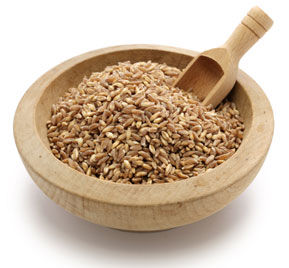
- Spelt Grain: This is the raw, whole kernel of the spelt wheat. It can be used to cook whole in dishes like salads, stews, or curries, or milled at home into flour.
- Flour
- White Spelt Flour: A lighter flour made from the endosperm of the spelt grain, suitable for a wide range of baked goods, including pastries, biscuits, and cakes.
- Wholemeal Spelt Flour: A wholemeal or wholegrain flour that includes the bran and germ of the spelt grain, resulting in a darker colour and nuttier flavour. It is often used for baking bread.
Other types
- Spelt Bread Mix: Pre-made mixes that contain spelt flour and other ingredients to make it easier to bake spelt bread at home.
- Spelt Noodles: Some products, like those imported, are available as processed items such as noodles made from spelt.
Grains ” Spelt ” ( Nutritional value )
Nutritional Value per 100 g
Spelt, uncooked
|
Nutrient ( Proximate’s )
|
Unit
|
Value
|
Daily Value %
|
|
Energy
|
kcal
|
338
|
16.9%
|
|
Protein
|
g
|
14.57
|
29.1%
|
|
Total lipid (fat)
|
g
|
2.43
|
3.1%
|
|
Carbohydrate, by difference
|
g
|
70.19
|
25.5%
|
|
Fiber, total dietary
|
g
|
10.7
|
38.2%
|
|
Sugars, total
|
g
|
6.82
|
|
|
Minerals
|
|||
|
Calcium, Ca
|
mg
|
27
|
2%
|
|
Iron, Fe
|
mg
|
4.44
|
24.6%
|
|
Magnesium, Mg
|
mg
|
136
|
32.3%
|
|
Phosphorus, P
|
mg
|
||
|
Potassium, K
|
mg
|
388
|
8.2%
|
|
Sodium, Na
|
mg
|
8
|
0.3%
|
|
Zinc, Zn
|
mg
|
3.28
|
29.8%
|
|
Copper, Cu
|
mg
|
0.511
|
56.7%
|
|
Manganese, Mn
|
mg
|
2.98
|
129.5%
|
|
Selenium, Se
|
mcg
|
11.7
|
21.2%
|
|
Vitamins
|
|||
|
Vitamin C, total ascorbic acid
|
mg
|
0.0
|
0.0
|
|
Thiamin (B-1)
|
mg
|
0.364
|
30.3%
|
|
Riboflavin (B-2)
|
mg
|
0.113
|
8.6%
|
|
Niacin (B-3)
|
mg
|
6.843
|
42.7%
|
|
Pantothenic acid
|
mg
|
1.068
|
21.3%
|
|
Vitamin (B-6)
|
mg
|
0.230
|
13.5%
|
|
Folate DFE (dietary folate) (B-9)
|
mcg
|
45
|
11.2%
|
|
Vitamin (B-12)
|
mcg
|
0.00
|
|
|
Vitamin A, RAE (retinol)
|
mcg
|
||
|
Vitamin E (alpha-tocopherol)
|
mg
|
0.79
|
5.2%
|
|
Beta-Tocopherol
|
mg
|
0.25
|
|
|
Gamma-Tocopherol
|
mg
|
1.71
|
|
|
Delta-Tocopherol
|
mg
|
0.00
|
|
|
Vitamin K (phylloquinone)
|
mcg
|
3.6
|
3%
|
|
Lipids
|
|||
|
Saturated Fatty Acids
|
g
|
0.406
|
2%
|
|
Monounsaturated Fatty Acids
|
g
|
0.445
|
|
|
Polyunsaturated Fatty Acids
|
g
|
1.258
|
|
|
Cholesterol
|
mg
|
0
|
|
|
Carotenoids
|
|||
|
Beta-Carotene
|
mcg
|
5
|
|
|
Alpha-Carotene
|
mcg
|
0
|
|
|
Beta-Cryptoxanthin
|
mcg
|
0
|
|
|
Lutein + zeaxanthin
|
mcg
|
169
|
|
|
Reference Values are based on a 2,000 Calorie Intake, for Adults and Children 4 or More Years of Age. Your daily values may be higher or lower depending on your calorie needs.
|
|
Percentages are roughly approximated using (RDA) Recommended Dietary Allowances for adults. Source: Nutrient Database – USDA (United States Department of Agriculture)
|
|
Reference Values for Nutrition – FDA U.S. Food and Drug Administration
|
Spelt Nutritional Value
Spelt offers numerous health benefits, including aiding digestion, improving heart health, and helping to manage blood sugar levels due to its high fiber content. It is also a good source of essential nutrients like iron, magnesium, zinc, and B vitamins, which support bone health, immune function, and energy production. While beneficial, it is unsuitable for individuals with celiac disease or a gluten intolerance because it contains gluten.
GOOD SOURCE OF ANTIOXIDANTS
Spelt is a good source of antioxidants, primarily due to its high content of phenolic compounds, particularly ferulic acid. These antioxidants, which are found in the bran and flour, can help scavenge free radicals and may reduce the risk of chronic diseases like heart disease and cancer. While whole grain spelt has a higher antioxidant capacity than white flour, the bioavailability of some compounds can be affected by processing.PREVENTS CARDIOVASCULAR ISSUES
Eating spelt and other whole grains may reduce hypertension due to the grains' high dietary fiber content. A 2005 analysis of 24 studies found that fiber supplementation reduces blood pressure. This benefit was greater in adults over 40 years of age and in younger adults with high blood pressure.RICH IN ESSENTIAL NUTRIENTS
Spelt is rich in essential nutrients like iron, magnesium, phosphorus, zinc, and B vitamins, which support energy levels, blood health, and nerve function. It is also an excellent source of dietary fiber, which aids digestion, helps regulate blood sugar, and can contribute to heart health by lowering cholesterol. Spelt's nutritional profile makes it a beneficial whole grain alternative to modern wheat.BOOSTS IMMUNE FUNCTION
Spelt boosts immune function by providing essential vitamins and minerals like zinc, iron, and B vitamins that are crucial for immune health. It also contains manganese, which supports digestion and bone health, and copper, which aids in blood circulation, creating a better environment for the immune system to function optimally.
DIGESTIVE AND METABOLIC HEALTH
Spelt supports digestive and metabolic health through its high fiber and nutrient content, which promotes a healthy gut, regulates blood sugar, and aids in weight management. It is easier for some people to digest than common wheat due to its different gluten structure. Spelt is also rich in B vitamins, iron, and magnesium, all of which are essential for energy production, red blood cell formation, and overall metabolic function.INCREASES ENERGY
Spelt increases energy by providing sustained energy through its high content of complex carbohydrates and fiber, and by containing B vitamins and other nutrients that are crucial for energy production. It helps prevent energy crashes by slowing the release of sugar into the bloodstream and provides sustained energy release due to its complex carbohydrates.HEART HEALTH
Spelt supports heart health by lowering cholesterol, reducing blood pressure, and regulating blood sugar, thanks to its high fiber, magnesium, and niacin content. The fiber in spelt helps reduce total and LDL ("bad") cholesterol, while magnesium can help regulate heart rhythm and blood pressure. Additionally, niacin supports cardiovascular function and may help prevent conditions like heart attack and angina.SUPPORTS BONE HEALTH
Spelt supports bone health because it is a rich source of essential minerals like phosphorus, magnesium, zinc, and copper, which are crucial for building and maintaining strong bones. These minerals play a key role in bone tissue formation and can help prevent age-related bone degradation.
References
Nutrient Database – USDA (United States Department of Agriculture)
Reference Values for Nutrition – FDA U.S. Food and Drug Administration
Digestive and metabolic health - Spelt supports digestive and metabolic health through its high fiber and nutrient content, which promotes a healthy gut, regulates blood sugar, and aids in weight management. It is easier for some people to digest than common wheat due to its different gluten structure. Spelt is also rich in B vitamins, iron, and magnesium, all of which are essential for energy production, red blood cell formation, and overall metabolic function.
Heart health - Spelt supports heart health by lowering cholesterol, reducing blood pressure, and regulating blood sugar, thanks to its high fiber, magnesium, and niacin content. The fiber in spelt helps reduce total and LDL ("bad") cholesterol, while magnesium can help regulate heart rhythm and blood pressure. Additionally, niacin supports cardiovascular function and may help prevent conditions like heart attack and angina.
Prevents cardiovascular issues - Eating spelt and other whole grains may reduce hypertension due to the grains' high dietary fiber content. A 2005 analysis of 24 studies found that fiber supplementation reduces blood pressure. This benefit was greater in adults over 40 years of age and in younger adults with high blood pressure.
Good source of antioxidants - Spelt is a good source of antioxidants, primarily due to its high content of phenolic compounds, particularly ferulic acid. These antioxidants, which are found in the bran and flour, can help scavenge free radicals and may reduce the risk of chronic diseases like heart disease and cancer. While whole grain spelt has a higher antioxidant capacity than white flour, the bioavailability of some compounds can be affected by processing.
Increases energy - Spelt increases energy by providing sustained energy through its high content of complex carbohydrates and fiber, and by containing B vitamins and other nutrients that are crucial for energy production. It helps prevent energy crashes by slowing the release of sugar into the bloodstream and provides sustained energy release due to its complex carbohydrates.
Boosts immune function - Spelt boosts immune function by providing essential vitamins and minerals like zinc, iron, and B vitamins that are crucial for immune health. It also contains manganese, which supports digestion and bone health, and copper, which aids in blood circulation, creating a better environment for the immune system to function optimally.
Supports bone health - Spelt supports bone health because it is a rich source of essential minerals like phosphorus, magnesium, zinc, and copper, which are crucial for building and maintaining strong bones. These minerals play a key role in bone tissue formation and can help prevent age-related bone degradation.
Rich in essential nutrients - Spelt is rich in essential nutrients like iron, magnesium, phosphorus, zinc, and B vitamins, which support energy levels, blood health, and nerve function. It is also an excellent source of dietary fiber, which aids digestion, helps regulate blood sugar, and can contribute to heart health by lowering cholesterol. Spelt's nutritional profile makes it a beneficial whole grain alternative to modern wheat.