



1. Teff Facts
2. Types of Teff
3. Teff Nutritional Value
4. Teff Health Benefits
Teff (Eragrostis tef) is a highly nutritious whole grain. It is a species of lovegrass native to Ethiopia that has been cultivated for thousands of years.
History and Origin
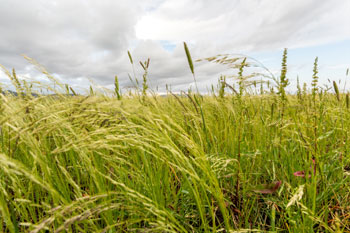
Teff (Eragrostis tef) originated in the Ethiopian Highlands, where it began to be cultivated for its seeds between 4000 and 1000 BCE and has been a crucial staple crop ever since. The name "teff" comes from the Ethiopian Amharic word "teffa," meaning "lost," because of its very small grain size. As a resilient and adaptable cereal, teff's cultivation played a significant role in the development of Ethiopian civilization and is still a cornerstone of the country's cuisine, famously used to make the flatbread injera
- • White/Ivory Teff
- • Brown/Red Teff
- • Teff Seeds
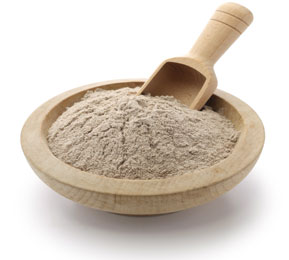
The main types of teff sold in Australia are white (or ivory) teff and brown (or red) teff, which are available as whole grains or as flour. Both are naturally gluten-free and are used interchangeably in recipes, though they have slightly different flavours: white/ivory teff has a more subtle and slightly sweet taste, while brown teff has an earthier, nuttier flavour.
Teff types
- White/Ivory Teff: A lighter-coloured grain with a subtle and slightly sweet flavour. It is often processed into a fine flour for baking gluten-free goods like breads, pancakes, and muffins.
- Brown/Red Teff: A darker-coloured grain that has an earthier, nuttier flavour. It is also a popular choice for gluten-free baking and can be used as a substitute for wheat flour.
Other forms of teff sold in Australia
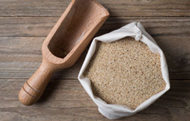
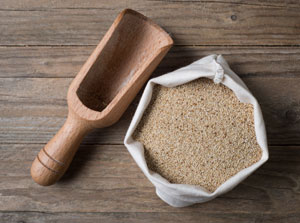
- Teff Seeds: Both white and brown teff are available as whole seeds, which can be cooked whole or ground into flour.
Grains ” Teff ” ( Nutritional value )
Nutritional Value per 100 g
Teff, uncooked
|
Nutrient ( Proximate’s )
|
Unit
|
Value
|
Daily Value %
|
|
Energy
|
kcal
|
367
|
18.3%
|
|
Protein
|
g
|
13.30
|
26.6%
|
|
Total lipid (fat)
|
g
|
2.38
|
3%
|
|
Carbohydrate, by difference
|
g
|
73.13
|
26.5%
|
|
Fiber, total dietary
|
g
|
8.0
|
28.5%
|
|
Sugars, total
|
g
|
1.84
|
|
|
Minerals
|
|||
|
Calcium, Ca
|
mg
|
180
|
13.8%
|
|
Iron, Fe
|
mg
|
7.63
|
42.3%
|
|
Magnesium, Mg
|
mg
|
184
|
43.8%
|
|
Phosphorus, P
|
mg
|
429
|
34.3%
|
|
Potassium, K
|
mg
|
427
|
9%
|
|
Sodium, Na
|
mg
|
12
|
0.5%
|
|
Zinc, Zn
|
mg
|
3.63
|
33%
|
|
Copper, Cu
|
mg
|
0.810
|
90%
|
|
Manganese, Mn
|
mg
|
9.240
|
401%
|
|
Selenium, Se
|
mcg
|
4.4
|
8%
|
|
Vitamins
|
|||
|
Vitamin C, total ascorbic acid
|
mg
|
0.0
|
0.0
|
|
Thiamin (B-1)
|
mg
|
0.390
|
39.1%
|
|
Riboflavin (B-2)
|
mg
|
0.270
|
20.7%
|
|
Niacin (B-3)
|
mg
|
3.363
|
21%
|
|
Pantothenic acid
|
mg
|
0.942
|
18.8%
|
|
Vitamin (B-6)
|
mg
|
0.482
|
28.3%
|
|
Choline, total
|
mg
|
13.1
|
|
|
Betaine
|
mg
|
2.3
|
|
|
Vitamin A, RAE (retinol)
|
mcg
|
0
|
|
|
Vitamin E (alpha-tocopherol)
|
mg
|
0.08
|
0.5%
|
|
Beta-Tocopherol
|
mg
|
0.02
|
|
|
Gamma-Tocopherol
|
mg
|
5.04
|
|
|
Delta-Tocopherol
|
mg
|
0.07
|
|
|
Vitamin K (phylloquinone)
|
mcg
|
1.9
|
1.5%
|
|
Lipids
|
|||
|
Saturated Fatty Acids
|
g
|
0.449
|
2.2%
|
|
Monounsaturated Fatty Acids
|
g
|
0.589
|
|
|
Polyunsaturated Fatty Acids
|
g
|
1.071
|
|
|
Carotenoids
|
|||
|
Beta-Carotene
|
mcg
|
5
|
|
|
Alpha-Carotene
|
mcg
|
0
|
|
|
Beta-Cryptoxanthin
|
mcg
|
0
|
|
|
Lutein + zeaxanthin
|
mcg
|
66
|
|
|
Reference Values are based on a 2,000 Calorie Intake, for Adults and Children 4 or More Years of Age. Your daily values may be higher or lower depending on your calorie needs.
|
|
Percentages are roughly approximated using (RDA) Recommended Dietary Allowances for adults. Source: Nutrient Database – USDA (United States Department of Agriculture)
|
|
Reference Values for Nutrition – FDA U.S. Food and Drug Administration
|
Teff Nutritional Value
Teff offers numerous health benefits due to its high content of fiber, protein, and essential nutrients like iron, calcium, and magnesium. It supports digestive health, provides sustainable energy, is naturally gluten-free, and may help with weight management, blood sugar control, and bone health.
SUPPORTS BONE HEALTH
Teff supports bone health due to its high content of essential minerals like calcium, magnesium, and phosphorus. These nutrients work together to help build and maintain strong bones, reduce the risk of fractures, and support proper bone mineralization. Teff also contains manganese and zinc, which are important for collagen production and bone tissue repair, respectively.EXCELLENT SOURCE OF ESSENTIAL NUTRIENTS
Teff has high levels of iron and thiamine (B1), and significant amounts of magnesium, phosphorus, calcium, zinc, and potassium. It also contains all the essential amino acids, with a high concentration of lysine, making it a complete protein. Teff is rich in fiber and other beneficial compounds like polyphenols, and its high nutrient density makes it a valuable staple, especially for those needing gluten-free options.EXCELLENT SOURCE OF IRON
Teff is an excellent source of iron, which is crucial for energy, oxygen transport, and preventing iron deficiency anaemia. A single half-cup serving of cooked teff can provide about 20% of the daily iron requirement, with some estimates suggesting even higher iron content compared to other grains like wheat and rice. While iron absorption from teff may be limited by phytic acid, its overall iron content is still significant.GLUTEN-FREE
Teff is a naturally gluten-free grain, making it a suitable alternative to wheat for people with celiac disease or gluten sensitivities. It can be used in place of wheat flour in baking and cooking, though cross-contamination can occur depending on the production facility.
STEADY ENERGY RELEASE
Teff provides steady energy release due to its high content of resistant starches and complex carbohydrates, which are digested slowly, preventing blood sugar spikes and crashes. This sustained release provides long-lasting fuel for both physical and mental performance and helps prevent the energy fluctuations often caused by refined carbohydrates.DIGESTIVE AND GUT HEALTH
Teff supports digestive and gut health due to its high content of both dietary fiber and resistant starch. This promotes regular bowel movements, prevents constipation and bloating, and feeds beneficial gut bacteria, acting as a prebiotic that improves overall gut microbiome health. Being naturally gluten-free, it is also an easy-to-digest and anti-inflammatory alternative to other grains for those with digestive sensitivities.LOW GLYCAEMIC INDEX
Teff has a low glycaemic index (GI), typically around 35.6 for injera and around 55 for unfermented teff, meaning it causes a slow and gradual rise in blood sugar levels. This is beneficial for blood sugar control, making it a good option for people with diabetes. The low GI is attributed to its high fiber content and the type of complex carbohydrates it contains, which are digested slowly.COMPLETE PROTEIN
Teff is a complete protein, meaning it contains all nine essential amino acids necessary for human health. This makes it a valuable protein source, particularly for vegetarians, vegans, and those seeking alternatives to animal-based proteins. In addition to being a complete protein, teff is also rich in fiber, iron, calcium, and other essential minerals.
References
Nutrient Database – USDA (United States Department of Agriculture)
Reference Values for Nutrition – FDA U.S. Food and Drug Administration
Digestive and gut health - Teff supports digestive and gut health due to its high content of both dietary fiber and resistant starch. This promotes regular bowel movements, prevents constipation and bloating, and feeds beneficial gut bacteria, acting as a prebiotic that improves overall gut microbiome health. Being naturally gluten-free, it is also an easy-to-digest and anti-inflammatory alternative to other grains for those with digestive sensitivities.
Steady energy release - Teff provides steady energy release due to its high content of resistant starches and complex carbohydrates, which are digested slowly, preventing blood sugar spikes and crashes. This sustained release provides long-lasting fuel for both physical and mental performance and helps prevent the energy fluctuations often caused by refined carbohydrates.
Low glycaemic index - Teff has a low glycaemic index (GI), typically around 35.6 for injera and around 55 for unfermented teff, meaning it causes a slow and gradual rise in blood sugar levels. This is beneficial for blood sugar control, making it a good option for people with diabetes. The low GI is attributed to its high fiber content and the type of complex carbohydrates it contains, which are digested slowly.
Excellent source of essential nutrients - Teff is an excellent source of essential nutrients, including high levels of iron and thiamine (B1), and significant amounts of magnesium, phosphorus, calcium, zinc, and potassium. It also contains all the essential amino acids, with a high concentration of lysine, making it a complete protein. Teff is rich in fiber and other beneficial compounds like polyphenols, and its high nutrient density makes it a valuable staple, especially for those needing gluten-free options.
Gluten-free - Teff is a naturally gluten-free grain, making it a suitable alternative to wheat for people with celiac disease or gluten sensitivities. It can be used in place of wheat flour in baking and cooking, though cross-contamination can occur depending on the production facility.
Supports bone health - Teff supports bone health due to its high content of essential minerals like calcium, magnesium, and phosphorus. These nutrients work together to help build and maintain strong bones, reduce the risk of fractures, and support proper bone mineralization. Teff also contains manganese and zinc, which are important for collagen production and bone tissue repair, respectively.
Excellent source of iron - Teff is an excellent source of iron, which is crucial for energy, oxygen transport, and preventing iron deficiency anemia. A single half-cup serving of cooked teff can provide about 20% of the daily iron requirement, with some estimates suggesting even higher iron content compared to other grains like wheat and rice. While iron absorption from teff may be limited by phytic acid, its overall iron content is still significant.
Complete protein - Teff is a complete protein, meaning it contains all nine essential amino acids necessary for human health. This makes it a valuable protein source, particularly for vegetarians, vegans, and those seeking alternatives to animal-based proteins. In addition to being a complete protein, teff is also rich in fiber, iron, calcium, and other essential minerals.