

1. Wild Rice Facts
2. Types of Wild Rice
3. Wild Rice Nutritional Value
4. Wild Rice Health Benefits
Wild rice is an aquatic grass, not a true rice, and is a nutrient-dense food that is high in protein, fiber, and several minerals while being naturally gluten-free. It was a staple for many indigenous North American tribes and is now cultivated in places like Minnesota, California, and Canada. Many species are considered invasive weeds in regions like Tasmania and New Zealand, where they can damage freshwater ecosystems.
History and Origin
Wild rice, also called manoomin, mnomen, psíŋ, Canada rice, Indian rice, or water oats, is any of four species of grasses that form the genus Zizania, and the grain that can be harvested from them. The grain was historically and is still gathered and eaten in North America and, to a lesser extent, China, where the plant's stem is used as a vegetable.
Wild rice and domesticated rice (Oryza sativa and Oryza glaberrima), are in the same botanical tribe Oryzeae. Wild-rice grains have a chewy outer sheath with a tender inner grain that has a slightly vegetal taste. The plants grow in shallow water in small lakes and slow-flowing streams; often, only the flowering head of wild rice rises above the water. The grain is eaten by dabbling ducks and other aquatic wildlife.
- • Northern wild rice (Zizania palustris)
- • Eastern wild rice (Zizania aquatica)
- • Texas wild rice (Zizania texana)
- • Manchurian wild rice (Zizania latifolia)
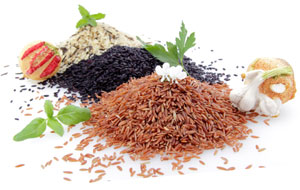
- • Black rice
- • Cultivated wild rice
There are four main species of wild rice: Northern wild rice (Zizania palustris), Eastern wild rice (Zizania aquatica), Texas wild rice (Zizania texana), and Manchurian wild rice (Zizania latifolia). Northern wild rice is the most common type for food, while Manchurian wild rice is primarily used for its stems as a vegetable. It's also important to distinguish true wild rice from similar looking, but botanically different, "black rice".
North American species
- Northern wild rice (Zizania palustris): The most commercially harvested species, native to the Great Lakes region of North America and cultivated for its grain.
- Eastern wild rice (Zizania aquatica): Found along the Atlantic and Gulf coasts and the St. Lawrence River. It is edible but not typically harvested for food.
- Texas wild rice (Zizania texana): An endangered, perennial species found only along the San Marcos River in Texas.
- Manchurian wild rice (Zizania latifolia): Native to Asia, this plant is more valued for its swollen, vegetable-like stems rather than its grain.
Other considerations
- Black rice: Often confused with wild rice, "black rice" or "forbidden rice" is a different variety of true rice (from the Oryza genus) and is not the same as true wild rice, though it is often used in similar dishes.
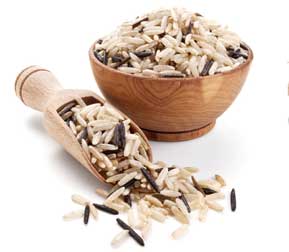
- Cultivated wild rice: While often referred to as wild rice, the type sold in stores is frequently cultivated in man-made paddies to mimic its natural habitat.
Grains ” Wild Rice ” ( Nutritional value )
Nutritional Value per 100 g
Wild rice, cooked
|
Nutrient ( Proximate’s )
|
Unit
|
Value
|
Daily Value %
|
|
Energy
|
kcal
|
101
|
5%
|
|
Protein
|
g
|
3.99
|
7.9%
|
|
Total lipid (fat)
|
g
|
0.34
|
0.4%
|
|
Carbohydrate, by difference
|
g
|
21.34
|
7.7%
|
|
Fiber, total dietary
|
g
|
1.8
|
6.4%
|
|
Sugars, total
|
g
|
0.73
|
|
|
Minerals
|
|||
|
Calcium, Ca
|
mg
|
3
|
0.2%
|
|
Iron, Fe
|
mg
|
0.60
|
3.3%
|
|
Magnesium, Mg
|
mg
|
32
|
7.6%
|
|
Phosphorus, P
|
mg
|
82
|
6.5%
|
|
Potassium, K
|
mg
|
101
|
2.1%
|
|
Sodium, Na
|
mg
|
3
|
0.1%
|
|
Zinc, Zn
|
mg
|
1.34
|
12.1%
|
|
Copper, Cu
|
mg
|
0.121
|
13.4%
|
|
Manganese, Mn
|
mg
|
0.282
|
12.2%
|
|
Selenium, Se
|
mcg
|
0.8
|
1.4%
|
|
Vitamins
|
|||
|
Vitamin C, total ascorbic acid
|
mg
|
0.0
|
0.0
|
|
Thiamin (B-1)
|
mg
|
0.052
|
4.3%
|
|
Riboflavin (B-2)
|
mg
|
0.087
|
6.6%
|
|
Niacin (B-3)
|
mg
|
1.287
|
8%
|
|
Pantothenic acid (B-5)
|
mg
|
0.154
|
3%
|
|
Vitamin (B-6)
|
mg
|
0.135
|
7.9%
|
|
Folate DFE (dietary folate) (B-9)
|
mcg
|
26
|
6.5%
|
|
Choline, total
|
mg
|
10.2
|
|
|
Vitamin B-12
|
mcg
|
0.00
|
|
|
Vitamin A, RAE (retinol)
|
mcg
|
||
|
Vitamin E (alpha-tocopherol)
|
mg
|
0.24
|
1.6%
|
|
Vitamin D (D2 + D3)
|
mcg
|
0
|
|
|
Vitamin K (phylloquinone)
|
mcg
|
0.5
|
0.4%
|
|
Lipids
|
|||
|
Saturated Fatty Acids
|
g
|
0.049
|
0.2%
|
|
Monounsaturated Fatty Acids
|
g
|
0.050
|
|
|
Polyunsaturated Fatty Acids
|
g
|
0.213
|
|
|
Cholesterol
|
mg
|
0
|
|
|
Carotenoids
|
|||
|
Beta-Carotene
|
mcg
|
2
|
|
|
Carotene, alpha
|
mcg
|
0
|
|
|
Cryptoxanthin, beta
|
mcg
|
0
|
|
|
Lutein + zeaxanthin
|
mcg
|
64
|
|
|
Reference Values are based on a 2,000 Calorie Intake, for Adults and Children 4 or More Years of Age. Your daily values may be higher or lower depending on your calorie needs.
|
|
Percentages are roughly approximated using (RDA) Recommended Dietary Allowances for adults. Source: Nutrient Database – USDA (United States Department of Agriculture)
|
|
Reference Values for Nutrition – FDA U.S. Food and Drug Administration
|
Wild Rice Nutritional Value
Wild rice offers numerous health benefits, including being a good source of protein and fiber, rich in essential minerals like manganese and phosphorus, and high in antioxidants that help protect against cell damage. It is also naturally gluten-free and has a slower effect on blood sugar compared to white rice, making it a nutritious and filling choice that can support heart health.
RICH IN ANTIOXIDANTS
Wild rice is rich in antioxidants, which contribute to its potential health benefits like protecting against chronic diseases. It contains phenolic acids and flavonoids, including anthocyanins, which are potent antioxidants. Some studies show wild rice has significantly more antioxidant activity than white rice.GOOD SOURCE OF FIBER
Wild rice is a good source of fiber, containing more fiber than white rice and nearly double the protein of white rice. Classified as a whole grain, it provides a more filling and nutrient-dense option compared to refined grains because it includes all three parts of the grain: the bran, germ, and endosperm.EXCELLENT SOURCE OF MINERALS
Wild rice is an excellent source of minerals like zinc, phosphorus, and magnesium, and is also rich in other important nutrients such as iron, folate, manganese, copper, and B vitamins. These minerals are essential for functions like energy metabolism, bone health, and immune function.HEART HEALTH
Wild rice is beneficial for heart health because it can help lower cholesterol, reduce atherosclerosis (plaque build-up in arteries), and decrease risk factors like high triglycerides and insulin resistance, though most of this evidence comes from animal studies. It also provides fiber and magnesium, which are good for cardiovascular health, and its nutrient density is higher than refined grains like white rice.
GLUTEN-FREE
Wild rice is naturally gluten-free. However, people with celiac disease or gluten sensitivity should be careful of potential cross-contamination, which can occur if it is processed on the same equipment as gluten-containing grains or sold in bulk bins where scoops may be mixed. It's best to choose packaged wild rice and check for labels that confirm it is certified gluten-free or processed in a dedicated facility.HIGH IN PROTEIN
Wild rice is high in protein, providing about twice the amount of protein as white or brown rice. It is a complete protein, containing all nine essential amino acids, and also boasts high levels of fiber, antioxidants, and minerals like zinc and magnesium. This makes it a nutritious choice for boosting protein intake, supporting muscle health, and promoting feelings of fullness.GOOD SOURCE OF B VITAMINS
Wild rice is a good source of several B vitamins, including thiamin, riboflavin, niacin, and folate, as well as vitamin B6. It also contains other micronutrients like vitamin E and vitamin K.BLOOD SUGAR MANAGEMENT
Wild rice helps manage blood sugar due to its low glycaemic index (GI) and high fiber and protein content, which slow carbohydrate absorption and prevent rapid spikes. It can also improve metabolic health by potentially increasing insulin sensitivity, and its high fiber content promotes fullness and digestive health.
References
Nutrient Database – USDA (United States Department of Agriculture)
Reference Values for Nutrition – FDA U.S. Food and Drug Administration
High in protein - Wild rice is high in protein, providing about twice the amount of protein as white or brown rice. It is a complete protein, containing all nine essential amino acids, and also boasts high levels of fiber, antioxidants, and minerals like zinc and magnesium. This makes it a nutritious choice for boosting protein intake, supporting muscle health, and promoting feelings of fullness.
Good source of fiber - Wild rice is a good source of fiber, containing more fiber than white rice and nearly double the protein of white rice. Classified as a whole grain, it provides a more filling and nutrient-dense option compared to refined grains because it includes all three parts of the grain: the bran, germ, and endosperm.
Excellent source of minerals - Wild rice is an excellent source of minerals like zinc, phosphorus, and magnesium, and is also rich in other important nutrients such as iron, folate, manganese, copper, and B vitamins. These minerals are essential for functions like energy metabolism, bone health, and immune function.
Good source of B vitamins - Wild rice is a good source of several B vitamins, including thiamin, riboflavin, niacin, and folate, as well as vitamin B6. It also contains other micronutrients like vitamin E and vitamin K.
Gluten-free - Wild rice is naturally gluten-free. However, people with celiac disease or gluten sensitivity should be careful of potential cross-contamination, which can occur if it is processed on the same equipment as gluten-containing grains or sold in bulk bins where scoops may be mixed. It's best to choose packaged wild rice and check for labels that confirm it is certified gluten-free or processed in a dedicated facility.
Rich in antioxidants - Wild rice is rich in antioxidants, which contribute to its potential health benefits like protecting against chronic diseases. It contains phenolic acids and flavonoids, including anthocyanins, which are potent antioxidants. Some studies show wild rice has significantly more antioxidant activity than white rice.
Heart health - Wild rice is beneficial for heart health because it can help lower cholesterol, reduce atherosclerosis (plaque buildup in arteries), and decrease risk factors like high triglycerides and insulin resistance, though most of this evidence comes from animal studies. It also provides fiber and magnesium, which are good for cardiovascular health, and its nutrient density is higher than refined grains like white rice.
Blood sugar management - Wild rice helps manage blood sugar due to its low glycaemic index (GI) and high fiber and protein content, which slow carbohydrate absorption and prevent rapid spikes. It can also improve metabolic health by potentially increasing insulin sensitivity, and its high fiber content promotes fullness and digestive health.