


1. Mace Facts
2. Types of Mace
3. Mace Nutritional Value
4. Mace Health Benefits
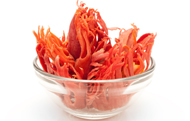
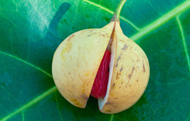
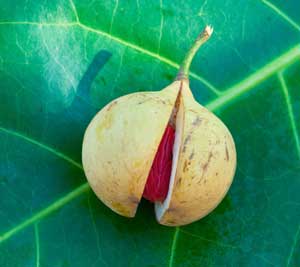
Mace is a delicate, yet intensely aromatic spice derived from the crimson-red, lacy covering (aril) of the Myristica fragrans (nutmeg) seed. It offers a warmer, sharper, and more refined flavour than nutmeg, featuring notes of cinnamon, pepper, and citrus.
Primarily cultivated in Indonesia and Grenada, it is used whole (blades) or ground in savory dishes, baking, and pickling.
It's used in both sweet (custards, baked goods) and savory (stews, curries, seafood) dishes across various cuisines like Indian, Asian, European, and Caribbean.
Available whole as delicate blades or ground, it adds a sophisticated depth to dishes.
History and Origin
Mace, the lacy red covering of the nutmeg seed native to Indonesia’s Banda Islands, became a premier, highly valuable spice in medieval Europe, often worth more than gold.
Known for its unique flavour and perceived medicinal properties, the Dutch East India Company (VOC) secured a brutal monopoly over its trade in the 17th century by seizing the islands and destroying unauthorized trees, dominating the market for 200 years until it spread to the Caribbean.
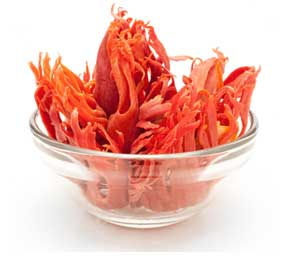
- • Mace Blades/Flower (Whole)
- • Ground Mace/Powder
- • .
The main "types" of mace spice refer to its form (whole blades or ground powder) and quality grade, not different botanical varieties, though Myristica fragrans (nutmeg's aril) is standard, while Papua mace is inferior.
You'll find mace as delicate, rusty-orange Mace Blades (mace flower) for infusing, or as fine Ground Mace for baking and sauces, with premium grades being bright orange with strong aroma, and lower grades being duller or yellowish.
By Form
- Mace Blades/Flower (Whole): The whole, dried, lacy aril (outer covering of the nutmeg seed). Best for long cooking times, used like a bay leaf in stocks, stews, or rice dishes to impart subtle flavour, then removed.
- Ground Mace/Powder: The dried blades ground into a powder. Easier to use in baking (pies, cakes), custards, spice rubs, and quick dishes, adding a warm, delicate, slightly sweet, and spicy flavour (like cinnamon and pepper).
By Quality/Grade (Based on Grenadian System)
- 1 Grade: Bright orange-red, strong citrus aroma, minimal breaks. Premium quality for fine dining.
- 2 Grade: Duller red, more broken pieces, moderate aroma. Good for general home use.
- 3 Grade: Yellowish, many fragments, faint scent. Lower quality, often older.
Other Considerations
- Flavour: Mace is milder, more floral, and citrusy than nutmeg, which is earthier and more robust.
- Source: Authentic culinary mace comes from Myristica fragrans (nutmeg tree), mainly from Indonesia and Grenada.
- Papua-type mace: An inferior type from Myristica argentea that lacks the true mace flavour and is often found in bulk blends.
Spices ” Mace ” ( Nutritional value )
Nutritional value per 1.7 g – 1 Teaspoon
Spices, mace, ground
|
Nutrient ( Proximate’s )
|
Unit
|
Value
|
Daily Value %
|
|
Energy
|
kcal
|
8
|
0.4%
|
|
Protein
|
g
|
0.11
|
0.2%
|
|
Total lipid (fat)
|
g
|
0.55
|
0.7%
|
|
Carbohydrate, by difference
|
g
|
0.86
|
0.3%
|
|
Fiber, total dietary
|
g
|
0.3
|
1%
|
|
Minerals
|
|||
|
Calcium, Ca
|
mg
|
4
|
0.3%
|
|
Iron, Fe
|
mg
|
0.24
|
1.3%
|
|
Magnesium, Mg
|
mg
|
3
|
0.7%
|
|
Phosphorus, P
|
mg
|
2
|
0.1%
|
|
Potassium, K
|
mg
|
8
|
0.1%
|
|
Sodium, Na
|
mg
|
1
|
.004%
|
|
Zinc, Zn
|
mg
|
0.04
|
0.3%
|
|
Copper, Cu
|
mg
|
0.042
|
4.6%
|
|
Manganese, Mn
|
mg
|
0.026
|
1.1%
|
|
Selenium, Se
|
mcg
|
0.0
|
|
|
Vitamins
|
|||
|
Vitamin C, total ascorbic acid
|
mg
|
0.4
|
0.4%
|
|
Thiamin (B-1)
|
mg
|
0.005
|
0.4%
|
|
Riboflavin (B-2)
|
mg
|
0.008
|
0.6%
|
|
Niacin (B-3)
|
mg
|
0.023
|
0.1%
|
|
Vitamin (B-6)
|
mg
|
0.003
|
0.1%
|
|
Folate (B-9)
|
mcg
|
1
|
0.2%
|
|
Vitamin (B-12)
|
mcg
|
0.00
|
|
|
Vitamin A, RAE
|
mcg
|
||
|
Vitamin D (D2 + D3)
|
mcg
|
0
|
|
|
Lipids
|
|||
|
Saturated Fatty Acids
|
g
|
0.162
|
0.8%
|
|
Monounsaturated Fatty Acids
|
g
|
0.190
|
|
|
Polyunsaturated Fatty Acids
|
g
|
0.075
|
|
|
Cholesterol
|
mg
|
0
|
|
Reference Values are based on a 2,000 Calorie Intake, for Adults and Children 4 or More Years of Age. Your daily values may be higher or lower depending on your calorie needs
Percentages are roughly approximated using (RDA) Recommended Dietary Allowances for adults. Source: USDA United States Department of Agriculture.
Reference Values for Nutrition – FDA U.S. Food and Drug Administration.
Mace Nutritional Value
Mace spice, derived from the nutmeg tree, offers antioxidant, antimicrobial, and anti-inflammatory properties, supporting digestion, heart health, and potentially boosting blood flow and brain function, thanks to compounds like myristicin and eugenol; it's rich in vitamins (A, C) and minerals (iron, calcium, potassium) and traditionally used to aid digestion, relieve pain, and combat stress, though more human research is needed for definitive medical claims.
SIGNIFICANT ANTIMICROBIAL PROPERTIES
Mace spice (from Myristica fragrans) has significant antimicrobial properties, showing strong activity against various bacteria (like E. coli, S. aureus, H. pylori, Salmonella) and fungi, potentially acting as a natural preservative and supporting oral/gut health, thanks to compounds like terpenoids, lignans, and phenols.NUTRIENT-DENSE
Mace is considered nutrient-dense as a spice, packed with antioxidants, essential minerals like iron, magnesium, potassium, and vitamins A & C, plus beneficial compounds (myristicin, elemicin) that support digestion, boost immunity, reduce inflammation, and offer pain relief, making it a flavourful addition for both health and culinary purposes.SUPPORT KIDNEY HEALTH
Mace derived from the nutmeg seed's covering, is traditionally believed to support kidney health by potentially treating kidney stones, infections, and related issues, though more research is needed, notes Lybrate and Triveni Impex Pvt Ltd.. It's considered a low-sodium spice, making it generally safe for kidney patients, and used in traditional medicine for digestion and inflammation, but high doses (of nutmeg/mace) can be problematic, so use it as a flavouring.SUPPORTS HEART HEALTH
Mace spice (Javitri) supports heart health by providing potassium to relax blood vessels and control blood pressure, while its antioxidants fight inflammation and cholesterol, improving circulation and overall cardiovascular function. It's rich in vitamins, minerals, and anti-inflammatory compounds, helping with circulation and reducing risks associated with hypertension and oxidative stress, though large doses of related spices can cause adverse effects like dizziness.
RICH IN ANTIOXIDANTS
Mace is rich in antioxidants, containing beneficial compounds like phenolics, flavonoids, and essential oils (myristicin, elemicin) that combat free radicals, reduce oxidative stress, and offer anti-inflammatory, digestive, and antimicrobial support, making it a flavourful addition to food for overall wellness.DIGESTIVE AID
Mace acts as a digestive aid by stimulating digestive enzymes, reducing gas, bloating, and indigestion, and soothing the stomach, with compounds like myristicin and eugenol potentially easing discomfort, though scientific backing is mostly traditional or from lab studies, not large human trials. It's used in Ayurvedic and Unani medicine for gut health, improving appetite, and helping with nausea and diarrhoea, but more robust clinical evidence in humans is needed to fully support these claims.ANTI-INFLAMMATORY
Mace (the lacy covering of the nutmeg seed) has well-documented anti-inflammatory properties, primarily due to compounds like myristicin and other phenolics, which help reduce inflammation and possess antioxidant, antibacterial, and potential anticancer effects, making it useful in traditional medicine for digestive and pain issues, though more clinical research is ongoing.BLOOD CIRCULATION
Mace spice is traditionally used in herbal medicine to support blood circulation, believed to warm the body and stimulate flow due to its antioxidants, vitamins (A, C), and essential oils like myristicin, which also offer anti-inflammatory and digestive benefits, but strong scientific backing for circulation is limited, with most evidence being anecdotal or from traditional use, so caution is advised with large doses due to potential CNS effects.
References
Nutrient Database – USDA (United States Department of Agriculture)
Reference Values for Nutrition – FDA U.S. Food and Drug Administration
Rich in antioxidants - Mace is rich in antioxidants, containing beneficial compounds like phenolics, flavonoids, and essential oils (myristicin, elemicin) that combat free radicals, reduce oxidative stress, and offer anti-inflammatory, digestive, and antimicrobial support, making it a flavourful addition to food for overall wellness.
Digestive aid - Mace, the lacy covering of the nutmeg seed, acts as a digestive aid by stimulating digestive enzymes, reducing gas, bloating, and indigestion, and soothing the stomach, with compounds like myristicin and eugenol potentially easing discomfort, though scientific backing is mostly traditional or from lab studies, not large human trials. It's used in Ayurvedic and Unani medicine for gut health, improving appetite, and helping with nausea and diarrhoea, but more robust clinical evidence in humans is needed to fully support these claims.
Anti-inflammatory - Mace (the lacy covering of the nutmeg seed) has well-documented anti-inflammatory properties, primarily due to compounds like myristicin and other phenolics, which help reduce inflammation and possess antioxidant, antibacterial, and potential anticancer effects, making it useful in traditional medicine for digestive and pain issues, though more clinical research is ongoing.
Supports heart health - Mace spice (Javitri) supports heart health by providing potassium to relax blood vessels and control blood pressure, while its antioxidants fight inflammation and cholesterol, improving circulation and overall cardiovascular function. It's rich in vitamins, minerals, and anti-inflammatory compounds, helping with circulation and reducing risks associated with hypertension and oxidative stress, though large doses of related spices can cause adverse effects like dizziness.
Significant antimicrobial properties - Mace spice (from Myristica fragrans) has significant antimicrobial properties, showing strong activity against various bacteria (like E. coli, S. aureus, H. pylori, Salmonella) and fungi, potentially acting as a natural preservative and supporting oral/gut health, thanks to compounds like terpenoids, lignans, and phenols.
Nutrient-Dense - Mace is considered nutrient-dense as a spice, packed with antioxidants, essential minerals like iron, magnesium, potassium, and vitamins A & C, plus beneficial compounds (myristicin, elemicin) that support digestion, boost immunity, reduce inflammation, and offer pain relief, making it a flavourful addition for both health and culinary purposes.
Support kidney health - Mace derived from the nutmeg seed's covering, is traditionally believed to support kidney health by potentially treating kidney stones, infections, and related issues, though more research is needed, notes Lybrate and Triveni Impex Pvt Ltd.. It's considered a low-sodium spice, making it generally safe for kidney patients, and used in traditional medicine for digestion and inflammation, but high doses (of nutmeg/mace) can be problematic, so use it as a flavouring.
Blood circulation - Mace spice is traditionally used in herbal medicine to support blood circulation, believed to warm the body and stimulate flow due to its antioxidants, vitamins (A, C), and essential oils like myristicin, which also offer anti-inflammatory and digestive benefits, but strong scientific backing for circulation is limited, with most evidence being anecdotal or from traditional use, so caution is advised with large doses due to potential CNS effects.