


1. Nutmeg Facts
2. Types of Nutmeg
3. Nutmeg Nutritional Value
4. Nutmeg Health Benefits
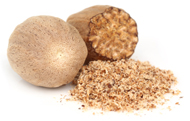
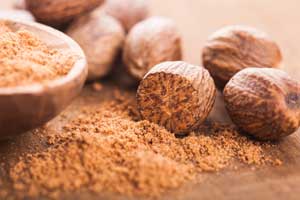
Ground nutmeg is the powdered form of the hard seed from the Myristica fragrans tree, a spice known for its warm, sweet, and aromatic flavour, used in both sweet dishes like cakes and savoury dishes like soups, sauces, and with vegetables.
Nutmeg is a versatile ingredient that adds depth to custards, baked goods, eggnog, and even certain drinks, providing a comforting, spicy-sweet taste.
History and Origin
Nutmeg, native exclusively to Indonesia's Banda Islands, was a highly prized, rare commodity traded for centuries before Arab traders revealed its source.
The Dutch East India Company (VOC) ruthlessly colonized Indonesia's Banda Islands, perpetrating the 1621 Banda Massacre to secure a global monopoly. This brutal control prompted efforts to transplant nutmeg, famously leading to British smuggling and cultivation in Grenada after trading Manhattan for Run Island.
- • East Indian Nutmeg
- • West Indian Nutmeg
- • Calabash Nutmeg
- • Papua Nutmeg / Macassar Nutmeg
- • Malabar Nutmeg / Bombay Nutmeg
- • Madagascar Nutmeg / Clove Nutmeg
- • Australian Nutmeg
Nutmeg primarily refers to the seed of the Myristica fragrans tree, with key commercial types being East Indian (higher quality, sweeter) and West Indian (stronger, pungent), from different plants (M. fragrans vs. M. malabarica).
Beyond the true nutmeg, other plants yield "nutmegs," like Calabash (African/Jamaican), Papua/Macassar, and Malabar nutmeg, offering diverse flavours and appearances, while mace is the lacy covering of the true nutmeg seed.
Main Types of True Nutmeg
- East Indian Nutmeg: From Myristica fragrans, considered the standard, with a sweet, delicate flavour; grown in Indonesia, Grenada.
- West Indian Nutmeg: From Myristica malabarica, with a stronger, more pungent taste, grown in India/Bangladesh.
Other "Nutmegs" (From Different Plants)
- Calabash Nutmeg: From Monodora myristica, known as African or Jamaican nutmeg.
- Papua Nutmeg / Macassar Nutmeg: From Myristica argentea, with a different flavour profile.
- Malabar Nutmeg / Bombay Nutmeg: From Myristica malabarica, distinct from true nutmeg.
- Madagascar Nutmeg / Clove Nutmeg: From Agathophyllum aromaticum or Ravensara aromatica.
- Australian Nutmeg: From Myristica insipida, related to true nutmeg.
Forms of Nutmeg
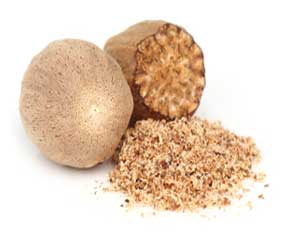
- Whole Nutmeg: The dried seed kernel, offering the freshest, strongest flavour when grated fresh.
- Ground Nutmeg: Pre-ground powder, convenient but loses potency faster than whole seeds.
- Mace: The reddish, lacy aril (covering) of the Myristica fragrans seed, sold separately and used as a spice.
Spices ” Nutmeg ” ( Nutritional value )
Nutritional value per 2.2 g – 1 Teaspoon
Spices, nutmeg, ground
|
Nutrient ( Proximate’s )
|
Unit
|
Value
|
Daily Value %
|
|
Energy
|
kcal
|
12
|
0.6%
|
|
Protein
|
g
|
0.13
|
0.2%
|
|
Total lipid (fat)
|
g
|
0.80
|
1%
|
|
Carbohydrate, by difference
|
g
|
1.08
|
0.3%
|
|
Fiber, total dietary
|
g
|
0.5
|
1.7%
|
|
Sugars, total
|
g
|
0.07
|
|
|
Minerals
|
|||
|
Calcium, Ca
|
mg
|
4
|
0.3%
|
|
Iron, Fe
|
mg
|
0.07
|
0.3%
|
|
Magnesium, Mg
|
mg
|
4
|
0.9%
|
|
Phosphorus, P
|
mg
|
5
|
0.4%
|
|
Potassium, K
|
mg
|
8
|
0.1%
|
|
Sodium, Na
|
mg
|
0
|
|
|
Zinc, Zn
|
mg
|
0.05
|
0.4%
|
|
Copper, Cu
|
mg
|
0.023
|
2.5%
|
|
Manganese, Mn
|
mg
|
0.064
|
2.7%
|
|
Selenium, Se
|
mcg |
0.0
|
|
|
Vitamins
|
|||
|
Vitamin C, total ascorbic acid
|
mg
|
0.1
|
0.1%
|
|
Thiamin (B-1)
|
mg
|
0.008
|
0.6%
|
|
Riboflavin (B-2)
|
mg
|
0.001
|
.007%
|
|
Niacin (B-3)
|
mg
|
0.029
|
0.1%
|
|
Vitamin (B-6)
|
mg
|
0.004
|
0.2%
|
|
Folate (B-9)
|
mcg
|
2
|
0.5%
|
|
Vitamin (B-12)
|
mcg
|
0.00
|
|
|
Vitamin A, RAE
|
mcg
|
||
|
Vitamin D (D2 + D3)
|
mcg
|
0
|
|
|
Vitamin E (alpha-tocopherol)
|
mg
|
0.00
|
|
|
Vitamin K (phylloquinone)
|
mcg
|
0.0
|
|
|
Carotenoids
|
|||
|
Beta-Carotene
|
mcg
|
1
|
|
|
Beta-Cryptoxanthin
|
mcg
|
1
|
|
|
Lutein + zeaxanthin
|
µg
|
0
|
|
|
Lipids
|
|||
|
Saturated Fatty Acids
|
g
|
0.571
|
2.8%
|
|
Monounsaturated Fatty Acids
|
g
|
0.071
|
|
|
Polyunsaturated Fatty Acids
|
g
|
0.008
|
|
|
Cholesterol
|
mg
|
0
|
|
Reference Values are based on a 2,000 Calorie Intake, for Adults and Children 4 or More Years of Age. Your daily values may be higher or lower depending on your calorie needs.
Percentages are roughly approximated using (RDA) Recommended Dietary Allowances for adults. Source: USDA United States Department of Agriculture.
Reference Values for Nutrition – FDA U.S. Food and Drug Administration.
Nutmeg, Ground Nutritional Value
Nutmeg has potential health benefits, including supporting brain health, aiding digestion, reducing inflammation, and improving sleep. It is rich in antioxidants and contains compounds that may have antibacterial and neuroprotective effects.
However, these benefits are associated with consuming nutmeg in moderation, as high doses can be toxic.
SUPPORT BRAIN HEALTH
Nutmeg can support brain health in moderation by acting as a brain tonic, boosting focus, memory, and mood through compounds like myristicin, which may slow cognitive decline, relieve stress, and fight oxidative damage, while also promoting relaxation and sleep. However, it's crucial to use it sparingly, as high doses are toxic, causing hallucinations and severe side effects, so culinary amounts are safe, but large quantities or extracts are dangerous.DIGESTIVE BENEFITS
Nutmeg is widely recognized in traditional medicine for its various digestive benefits, primarily when consumed in small, culinary amounts. Its properties can help alleviate common gastrointestinal issues.ANTI-INFLAMMATORY PROPERTIES
Nutmeg (Myristica fragrans) possesses significant anti-inflammatory properties, largely attributed to its various bioactive compounds and essential oils. These properties are supported primarily by in vitro and animal studies, which show potential for use in traditional and modern medicine.IMPROVED SLEEP
Nutmeg can improve sleep by calming the nervous system, reducing anxiety, and promoting relaxation through compounds like myristicin, often used in traditional remedies like warm milk before bed. It works by influencing neurotransmitters (like GABA) and providing mild sedative effects, helping you fall asleep faster and enjoy better quality rest, but should be used in small, measured doses (a pinch to 1/4 tsp) as large amounts can have adverse effects.
GOOD SOURCE OF ANTIOXIDANTS
Nutmeg is a good source of antioxidants, containing beneficial plant compounds like phenolics, lignans, and essential oils (e.g., myristicin, eugenol) that fight cellular damage from free radicals, support anti-inflammatory effects, and help protect against chronic diseases.SIGNIFICANT ANTIBACTERIAL EFFECTS
Nutmeg possesses significant antibacterial effects, demonstrated in studies against harmful bacteria like E. coli, S. aureus, and oral pathogens, acting as a natural preservative and potential ingredient in oral care. Its active compounds (phenolics, terpenes, lignans) disrupt bacterial cell membranes, inhibit DNA synthesis, and interfere with metabolism, showing promise for food safety and treating infections.HEART HEALTH
Nutmeg shows potential for heart health due to its antioxidants, anti-inflammatory properties, and minerals (potassium, magnesium) that may help lower blood pressure and cholesterol, as seen in animal studies. It may also help prevent blood clots, but human clinical trials are lacking, and while it supports heart function, large doses can be toxic, so moderation and medical advice are crucial for any therapeutic use.IMPORTANT CONSIDERATIONS
When using nutmeg, the most important considerations relate to dosage and potential toxicity, as large amounts can be harmful. It is also essential to consider its culinary uses, storage, and the distinction between whole and ground forms for optimal flavour.
References
Nutrient Database – USDA (United States Department of Agriculture)
Reference Values for Nutrition – FDA U.S. Food and Drug Administration
Support brain health - Nutmeg can support brain health in moderation by acting as a brain tonic, boosting focus, memory, and mood through compounds like myristicin, which may slow cognitive decline, relieve stress, and fight oxidative damage, while also promoting relaxation and sleep. However, it's crucial to use it sparingly, as high doses are toxic, causing hallucinations and severe side effects, so culinary amounts are safe, but large quantities or extracts are dangerous.
Digestive benefits - Nutmeg is widely recognized in traditional medicine for its various digestive benefits, primarily when consumed in small, culinary amounts. Its properties can help alleviate common gastrointestinal issues, though large doses should be avoided due to potential toxicity.
Anti-inflammatory properties - Nutmeg (Myristica fragrans) possesses significant anti-inflammatory properties, largely attributed to its various bioactive compounds and essential oils. These properties are supported primarily by in vitro and animal studies, which show potential for use in traditional and modern medicine.
Improved sleep - Nutmeg can improve sleep by calming the nervous system, reducing anxiety, and promoting relaxation through compounds like myristicin, often used in traditional remedies like warm milk before bed. It works by influencing neurotransmitters (like GABA) and providing mild sedative effects, helping you fall asleep faster and enjoy better quality rest, but should be used in small, measured doses (a pinch to 1/4 tsp) as large amounts can have adverse effects.
Good source of antioxidants - Nutmeg is a good source of antioxidants, containing beneficial plant compounds like phenolics, lignans, and essential oils (e.g., myristicin, eugenol) that fight cellular damage from free radicals, support anti-inflammatory effects, and help protect against chronic diseases, but it's important to consume it in small culinary amounts due to potential toxicity in large doses.
Significant antibacterial effects - Nutmeg possesses significant antibacterial effects, demonstrated in studies against harmful bacteria like E. coli, S. aureus, and oral pathogens, acting as a natural preservative and potential ingredient in oral care. Its active compounds (phenolics, terpenes, lignans) disrupt bacterial cell membranes, inhibit DNA synthesis, and interfere with metabolism, showing promise for food safety and treating infections.
Heart health - Nutmeg shows potential for heart health due to its antioxidants, anti-inflammatory properties, and minerals (potassium, magnesium) that may help lower blood pressure and cholesterol, as seen in animal studies. It may also help prevent blood clots, but human clinical trials are lacking, and while it supports heart function, large doses can be toxic, so moderation and medical advice are crucial for any therapeutic use.
Moderation is key - When using nutmeg, the most important considerations relate to dosage and potential toxicity, as large amounts can be harmful. It is also essential to consider its culinary uses, storage, and the distinction between whole and ground forms for optimal flavour.