




1. Parsley Facts
2. Types of Parsley
3. Parsley Nutritional Value
4. Parsley Health Benefits
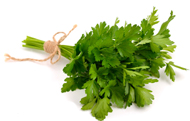
Parsley (Petroselinum crispum) is a hardy biennial plant from the carrot family (Apiaceae), commonly grown for its flavourful leaves in the first year before developing flowering stems and a tough taproot in the second year.
Parsley is a widely cultivated, nutrient-rich biennial herb used globally as a fresh garnish, culinary flavouring, and leafy vegetable. Primarily featuring curly or flat-leaf varieties, it enhances soups, salads, sauces, and meat dishes, often added at the end of cooking, while root parsley serves as a root vegetable.
History and Origin
Parsley (Petroselinum crispum), originating in the Mediterranean (Sardinia/Lebanon) over 2,000 years ago, was initially used by Greeks and Romans in funeral rites, to treat injuries, and mask Odors before becoming a staple herb.
Popularized in Europe during the Middle Ages by Charlemagne, it later spread globally for its culinary versatility, high vitamin C, and iron content.
- • Flat-Leaf
- • Curly-Leaf Parsley
- • Hamburg Parsley
- • Mitsuba
- • Chinese Parsley
The main types of parsley are Flat-Leaf (Italian), known for its robust, earthy flavour and broad leaves; Curly-Leaf, used for mild taste and as a decorative garnish; and Hamburg Root, prized for its parsnip-like root in soups and stews, with milder leaves. Japanese Parsley (Mitsuba) is another variety, offering celery-like notes for Asian dishes, while Chinese Parsley is cilantro.
Parsley Types Common
- Flat-Leaf (Italian Parsley)
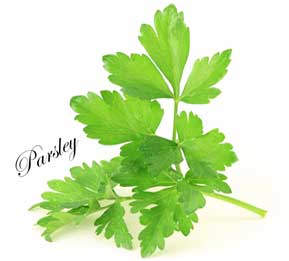
- Leaves: Broad, sleek, dark green.
- Flavour: Strong, peppery, and earthy; great for cooking.
- Uses: Sauces, marinades, Mediterranean dishes, tabbouleh.
- Curly-Leaf Parsley
- Leaves: Ruffled, crinkled, bright green.
- Flavour: Mild, grassy, slightly bitter.
- Uses: Garnish, soups, potato salads (best for presentation).
- Hamburg Parsley (Root Parsley)
- Leaves: Similar to flat-leaf but can be ornamental.
- Flavour: Root tastes like celery/parsnip; leaves are milder.
- Uses: Root used in soups, stews, and casseroles; leaves used as a herb.
Other Varieties
- Mitsuba (Japanese Parsley): Distinctive triple-leaflet shape, celery/clove flavour, used in Japanese cuisine.
- Chinese Parsley (Cilantro/Coriander): Aromatic, strong flavour, essential in Asian and Mexican cooking.
Herbs ” Parsley ” ( Nutritional value )
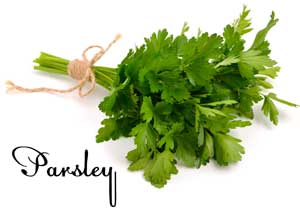
Nutritional Value per 1.6 g – 1 Tablespoon
Parsley, dried
|
Nutrient ( Proximate’s )
|
Unit
|
Value
|
Daily Value %
|
|
Energy
|
kcal
|
5
|
0.2%
|
|
Protein
|
g
|
0.43
|
0.8%
|
|
Total lipid (fat)
|
g
|
0.09
|
0.1%
|
|
Carbohydrate, by difference
|
g
|
0.81
|
0.2%
|
|
Fiber, total dietary
|
g
|
0.4
|
1.6%
|
|
Total Sugars
|
g
|
0.12
|
|
|
Minerals
|
|||
|
Calcium, Ca
|
mg
|
18
|
1.3%
|
|
Iron, Fe
|
mg
|
0.35
|
1.9%
|
|
Magnesium, Mg
|
mg
|
6
|
1.4%
|
|
Phosphorus, P
|
mg
|
7
|
0.5%
|
|
Potassium, K
|
mg
|
43
|
0.9%
|
|
Sodium, Na
|
mg
|
7
|
0.3%
|
|
Zinc, Zn
|
mg
|
0.09
|
0.8%
|
|
Copper, Cu
|
mg
|
0.012
|
1.3%
|
|
Manganese, Mn
|
mg
|
0.157
|
6.8%
|
|
Selenium, Se
|
mcg
|
0.2
|
0.3%
|
|
Vitamins
|
|||
|
Vitamin C, total ascorbic acid
|
mg
|
2.0
|
2.2%
|
|
Thiamin (B-1)
|
mg
|
0.003
|
0.2%
|
|
Riboflavin (B-2)
|
mg
|
0.038
|
2.9%
|
|
Niacin (B-3)
|
mg
|
0.159
|
0.9%
|
|
Pantothenic acid (B-5)
|
mg
|
0.017
|
0.3%
|
|
Vitamin (B-6)
|
mg
|
0.014
|
0.8%
|
|
Folate (B-9)
|
mcg
|
3
|
0.7%
|
|
Choline
|
mg
|
1.6
|
0.2% |
|
Vitamin (B-12)
|
mcg
|
0.00
|
|
|
Vitamin A, RAE (retinol)
|
mcg
|
||
|
Vitamin E (alpha-tocopherol)
|
mg
|
0.14
|
0.9%
|
|
Vitamin D (D2 + D3)
|
mcg
|
0
|
|
|
Vitamin K (phylloquinone)
|
mcg
|
21.8
|
18.1%
|
|
Lipids
|
|||
|
Saturated Fatty Acids
|
g
|
0.022
|
0.1%
|
|
Monounsaturated Fatty Acids
|
g
|
0.012
|
|
|
Polyunsaturated Fatty Acids
|
g
|
0.050
|
|
|
Trans Fatty Acids
|
g
|
0.000
|
|
|
Cholesterol
|
mg
|
0
|
|
|
Carotenoids
|
|||
|
Beta-Carotene
|
mcg
|
18
|
|
|
Alpha-Carotene
|
mcg
|
0
|
|
|
Beta-Cryptoxanthin
|
mcg
|
0
|
|
|
Lutein + Zeaxanthin
|
mcg
|
39
|
|
Reference Values are based on a 2,000 Calorie Intake, for Adults and Children 4 or More Years of Age. Your daily values may be higher or lower depending on your calorie needs.
Percentages are roughly approximated using (RDA) Recommended Dietary Allowances for adults. Source: Nutrient Database – USDA (United States Department of Agriculture).
Reference Values for Nutrition – FDA U.S. Food and Drug Administration.
Parsley Nutritional Value
Parsley is a highly nutritious herb rich in vitamins, promoting bone health, immune function, and vision. Its high antioxidant content (flavonoids, carotenoids) combats oxidative stress, reduces chronic disease risk, and supports heart health. It also acts as a natural diuretic, aiding detoxification and kidney health.
PACKED WITH VITAMINS
Parsley is packed with vitamins, especially Vitamins K, A, and C, making it a nutrient powerhouse for bone health, immunity, and antioxidant protection, also providing B vitamins, folate, and minerals like potassium, iron, and magnesium. Just two tablespoons can offer more than your daily Vitamin K requirement, supporting blood clotting and heart health, while its antioxidants fight cell damage, making it a beneficial addition to meals for overall wellness.PACKED WITH ANTIOXIDANTS
Parsley is packed with antioxidants like flavonoids (apigenin, luteolin, quercetin) and carotenoids (beta-carotene), plus essential vitamins C and K, which protect cells from free radical damage, reduce inflammation, support heart and immune health, and may even offer cancer-fighting benefits, with dried parsley being an exceptionally rich source of apigenin.SIGNIFICANT ANTI-INFLAMMATORY PROPERTIES
Parsley has powerful antioxidants like flavonoids (apigenin, luteolin, quercetin) and essential oils (myristicin, apiol) that combat oxidative stress and inflammation, potentially benefiting joint, skin (like atopic dermatitis), and kidney health, and supporting liver detoxification.NATURAL DIURETIC
Parsley acts as a natural diuretic, helping the body flush excess fluids and reduce water retention by increasing urine output, with compounds like apiol and myristicin influencing kidney function, though human studies are limited and concentrated use (like strong tea) warrants caution. It's traditionally used to ease bloating, support kidney health, and potentially prevent kidney stones, but it's crucial to consult a doctor before using it for medical purposes, especially for fluid retention.
MINERAL-RICH HERB
Parsley is a mineral-rich herb, providing good amounts of iron, calcium, potassium, and magnesium, along with zinc, copper, and phosphorus, supporting bone health, blood clotting, immunity, and overall cell function, all while being low in calories and sodium.SUPPORTS HEART HEALTH
Parsley supports heart health by providing heart-healthy nutrients like folate, vitamins C and K, and antioxidants (flavonoids, carotenoids) that help manage blood pressure, cholesterol, inflammation, and reduce stroke/heart disease risk. Its diuretic properties aid blood pressure, while compounds like apigenin and quercetin fight inflammation and improve blood vessel function, making it a cardioprotective herb.SUPPORTS BONE HEALTH
Parsley is rich content of Vitamin K, essential for activating bone-building proteins and increasing mineral density, potentially reducing fracture risk. It also provides Calcium, Magnesium, and antioxidants like flavonoids, which protect against inflammation and oxidative stress that can harm bones. While a great source of nutrients, it's best consumed as part of a varied diet for overall bone strength, with some sources noting its beneficial compounds like flavonoids may help protect against bone loss.FRESHENS BREATH
Parsley is a well-known natural remedy for freshening breath, primarily due to its high chlorophyll content and aromatic oils that help neutralize odour-causing bacteria and sulphur compounds, essentially acting as a natural deodorizer and breath mask after meals, especially strong-smelling foods like garlic. Chewing fresh parsley stimulates saliva, washes away food, and leaves a clean, herbaceous scent.
References
Nutrient Database – USDA (United States Department of Agriculture)
Reference Values for Nutrition – FDA U.S. Food and Drug Administration
Packed with vitamins - Parsley is packed with vitamins, especially Vitamins K, A, and C, making it a nutrient powerhouse for bone health, immunity, and antioxidant protection, also providing B vitamins, folate, and minerals like potassium, iron, and magnesium. Just two tablespoons can offer more than your daily Vitamin K requirement, supporting blood clotting and heart health, while its antioxidants fight cell damage, making it a beneficial addition to meals for overall wellness.
Mineral-rich herb - Parsley is a mineral-rich herb, providing good amounts of iron, calcium, potassium, and magnesium, along with zinc, copper, and phosphorus, supporting bone health, blood clotting, immunity, and overall cell function, all while being low in calories and sodium.
Packed with antioxidants - Parsley is packed with antioxidants like flavonoids (apigenin, luteolin, quercetin) and carotenoids (beta-carotene), plus essential vitamins C and K, which protect cells from free radical damage, reduce inflammation, support heart and immune health, and may even offer cancer-fighting benefits, with dried parsley being an exceptionally rich source of apigenin.
Supports bone health - Parsley supports bone health primarily through its rich content of Vitamin K, essential for activating bone-building proteins and increasing mineral density, potentially reducing fracture risk. It also provides Calcium, Magnesium, and antioxidants like flavonoids, which protect against inflammation and oxidative stress that can harm bones. While a great source of nutrients, it's best consumed as part of a varied diet for overall bone strength, with some sources noting its beneficial compounds like flavonoids may help protect against bone loss.
Supports heart Health - Parsley supports heart health by providing heart-healthy nutrients like folate, vitamins C and K, and antioxidants (flavonoids, carotenoids) that help manage blood pressure, cholesterol, inflammation, and reduce stroke/heart disease risk. Its diuretic properties aid blood pressure, while compounds like apigenin and quercetin fight inflammation and improve blood vessel function, making it a cardioprotective herb.
Significant anti-inflammatory properties - Parsley has significant anti-inflammatory properties due to powerful antioxidants like flavonoids (apigenin, luteolin, quercetin) and essential oils (myristicin, apiol) that combat oxidative stress and inflammation, potentially benefiting joint, skin (like atopic dermatitis), and kidney health, and supporting liver detoxification.
Natural diuretic - Parsley acts as a natural diuretic, helping the body flush excess fluids and reduce water retention by increasing urine output, with compounds like apiol and myristicin influencing kidney function, though human studies are limited and concentrated use (like strong tea) warrants caution. It's traditionally used to ease bloating, support kidney health, and potentially prevent kidney stones, but it's crucial to consult a doctor before using it for medical purposes, especially for fluid retention.
Freshens breath - Parsley is a well-known natural remedy for freshening breath, primarily due to its high chlorophyll content and aromatic oils that help neutralize odour-causing bacteria and sulphur compounds, essentially acting as a natural deodorizer and breath mask after meals, especially strong-smelling foods like garlic. Chewing fresh parsley stimulates saliva, washes away food, and leaves a clean, herbaceous scent, though it's a temporary fix, not a cure for underlying oral issues.