
1. Vanilla Facts
2. Types of Vanilla
3. Vanilla Extract Nutritional Value
4. Vanilla Extract Health Benefits
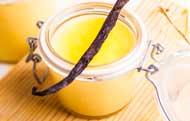
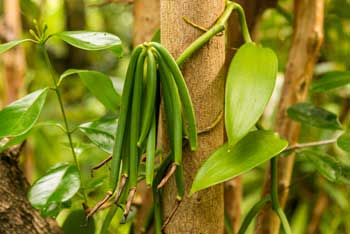
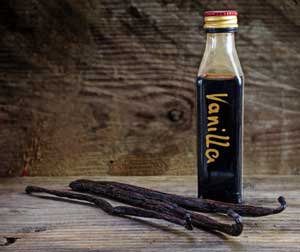
Vanilla extract is a flavourful liquid made by macerating real vanilla beans (the fruit of an orchid) in a solution of ethanol (alcohol) and water, creating a complex essence used to enhance desserts like cakes, ice cream, and custards.
Vanilla extract contains hundreds of flavour compounds, though vanillin is the main one, and pure extract must meet specific alcohol content standards.
History and Origin
Vanilla, first cultivated by Mexico's Totonac people and later used by the Aztecs in chocolate, was brought to Europe by Spanish explorers, becoming an exclusive luxury.
Its global commercialization began after 12-year-old enslaved Edmond Albius invented hand-pollination in 1841 on Réunion Island, bypassing the need for native Mexican Melipona bees.
- • Vanilla Planifolia
- • Madagascar/Bourbon
- • Mexican
- • Indian
- • Vanilla Tahitensis
- • Vanilla Pompona
There are three main commercial vanilla species: Vanilla planifolia (Madagascar/Bourbon, Mexican), known for rich, creamy notes; Vanilla × tahitensis (Tahitian), with floral and fruity hints; and Vanilla pompona, less common but pungent.
Varieties differ by origin, offering unique flavours like smoky Indonesian or chocolatey Ugandan, available as beans, extract, or paste, with natural options distinct from synthetic.
Major Vanilla Species & Origins
- Vanilla Planifolia: The most common, producing what people think of as classic vanilla flavour.
- Madagascar/Bourbon: Rich, creamy, sweet, and versatile; the most widely used.
- Mexican: Bold, dark, and smoky with woody notes, often paired with warm spices.
- Indian: Full-bodied with chocolate undertones.
- Vanilla Tahitensis: A hybrid (Planifolia x Pompona), offering floral, cherry, and almond notes, excellent for cold applications.
- Vanilla Pompona: Less commercially dominant, known for pungent, fruity, and woody profiles.
Common Forms
- Whole Beans: The whole dried pod, used by splitting and scraping.
- Extract: Alcohol-based liquid, often labelled by origin (e.g., Madagascar Extract).
- Paste: A concentrated blend of extract, vanilla bean specks, and sometimes sugar.
- Powder: Ground dried beans, used for dry mixes or dusting.
- Imitation Vanilla: Made from synthetic vanillin, lacking the complexity of natural extracts.
Flavour Profiles by Origin (Examples)
- Ugandan: Creamy and bold with chocolate notes.
- Indonesian: Smoky and woody, holding up well in high heat.
- Tahitian: Floral, fruity (cherry/almond).
- Madagascar: Creamy, classic, all-purpose.
Spices ” Vanilla ” ( Nutritional value )
Nutritional value per 13 g – 1 Tablespoon
Vanilla Extract
|
Nutrient ( Proximate’s )
|
Unit
|
Value
|
Daily Value %
|
|
Energy
|
kcal
|
37
|
1.8%
|
|
Protein
|
g
|
0.01
|
0.02%
|
|
Total lipid (fat)
|
g
|
0.01
|
.001%
|
|
Carbohydrate, by difference
|
g
|
1.64
|
0.5%
|
|
Fiber, total dietary
|
g
|
0.0
|
|
|
Sugars, total
|
g
|
1.64
|
|
|
Minerals
|
|||
|
Calcium, Ca
|
mg
|
1
|
.007%
|
|
Iron, Fe
|
mg
|
0.02
|
0.1%
|
|
Magnesium, Mg
|
mg
|
2
|
0.4%
|
|
Phosphorus, P
|
mg
|
1
|
.008%
|
|
Potassium, K
|
mg
|
19
|
0.4%
|
|
Sodium, Na
|
mg
|
1
|
.004%
|
|
Zinc, Zn
|
mg
|
0.01
|
.009%
|
|
Copper, Cu
|
mg
|
0.009
|
1%
|
|
Manganese, Mn
|
mg
|
0.030
|
1.3%
|
|
Selenium, Se
|
mcg
|
0.0
|
|
|
Vitamins
|
|||
|
Vitamin C, total ascorbic acid
|
mg
|
0.0
|
|
|
Thiamin (B-1)
|
mg
|
0.001
|
.008%
|
|
Riboflavin (B-2)
|
mg
|
0.012
|
0.9%
|
|
Niacin (B-3)
|
mg
|
0.055
|
0.3%
|
|
Pantothenic acid
|
mg
|
0.005
|
0.1%
|
|
Vitamin (B-6)
|
mg
|
0.003
|
0.1%
|
|
Folate (B-9)
|
mcg
|
0
|
|
|
Vitamin (B-12)
|
mcg
|
0.00
|
|
|
Vitamin A, RAE
|
mcg
|
0
|
|
|
Vitamin D (D2 + D3)
|
mcg
|
0
|
|
|
Vitamin E (alpha-tocopherol)
|
mg
|
0.0
|
|
|
Vitamin K (phylloquinone)
|
mcg
|
0.0
|
|
|
Lipids
|
|||
|
Saturated Fatty Acids
|
g
|
0.001
|
0.005%
|
|
Monounsaturated Fatty Acids
|
g
|
0.001
|
|
|
Polyunsaturated Fatty Acids
|
g
|
0.001
|
|
|
Cholesterol
|
mg
|
0
|
|
Reference Values are based on a 2,000 Calorie Intake, for Adults and Children 4 or More Years of Age. Your daily values may be higher or lower depending on your calorie needs.
Percentages are roughly approximated using (RDA) Recommended Dietary Allowances for adults. Source: USDA United States Department of Agriculture.
Reference Values for Nutrition – FDA U.S. Food and Drug Administration.
Vanilla Extract Nutritional Value
Vanilla extract offers benefits like antioxidants, anti-inflammatory and antibacterial properties, which may help fight disease, reduce stress, improve mood (via aroma), support brain health, aid digestion, and potentially lower cholesterol, though many benefits need more human research, with vanillin being the key compound.
It also helps reduce sugar intake in foods and traditional uses included fever and GI distress.
SOURCE OF ANTIOXIDANTS
Vanilla extract is a source of antioxidants, primarily from compounds like vanillin, which help fight free radicals, reduce oxidative stress, and offer anti-inflammatory benefits for skin and potential internal health, though more human studies are needed to confirm benefits from normal consumption. Its antioxidant power makes it useful in cosmetics and potentially as a natural preservative, with research exploring vanillin for conditions like neurodegeneration.DIGESTIVE AID
The beneficial properties of vanilla are largely attributed to the compound vanillin, which possesses antioxidant and anti-inflammatory qualities. Vanilla has been traditionally used as a digestive aid to help soothe various stomach conditions, including bloating, cramping, nausea, and diarrhoea.ANTIOXIDANT PROPERTIES
Vanilla extract contains compounds like vanillin with documented anti-inflammatory and antioxidant properties, shown in lab and animal studies to help with skin inflammation (cold sores), gut issues, and neuroinflammation, though more human trials are needed to confirm these benefits in typical consumption.ANTIBACTERIAL
Vanilla extract has antibacterial properties due to compounds like vanillin and vanillic acid, which inhibit bacterial growth, disrupt cell membranes, and can even enhance synthetic antibiotics, offering potential for fighting drug-resistant germs and preserving foods. While vanilla extract itself isn't a primary antibiotic, its natural components show promise as adjuncts or preservatives against harmful bacteria like E. coli, S. aureus, and even multidrug-resistant (MDR) pathogens.

HEART HEALTH
Vanilla extract supports heart health primarily through its main compound, vanillin, which shows promise in lowering bad cholesterol, reducing inflammation, and improving blood flow, all crucial for preventing heart disease, though most studies are on animals, so human benefits need more research. Its antioxidants and minerals like potassium also help fight oxidative stress and regulate blood pressure, making pure vanilla a potentially heart-healthy flavour addition, unlike artificial versions.ANTI-INFLAMMATORY PROPERTIES
Vanilla extract, primarily due to its active compound vanillin, has significant anti-inflammatory and antioxidant properties, helping to reduce oxidative stress, soothe skin, protect against cell damage, and potentially benefit conditions like neurodegenerative diseases and stomach ulcers.REDUCES SUGAR NEEDS
Vanilla extract enhances sweetness perception, making foods taste sweeter with less actual sugar, and its natural flavour allows for cutting back on added sweeteners in drinks and desserts like smoothies, coffee, or yogurt, supporting lower-sugar diets without sacrificing flavour. Studies show vanilla can enable significant sugar reductions (e.g., 15% in water, 13% in coconut milk) while keeping perceived sweetness high.NEUROPROTECTIVE
Vanilla extract, specifically its main compound vanillin, shows promising neuroprotective effects in studies by fighting oxidative stress, reducing inflammation, preventing protein clumping (like amyloid), and protecting brain cells from damage, suggesting potential in neurodegenerative diseases, though human evidence from dietary intake is limited.
References
Nutrient Database – USDA (United States Department of Agriculture)
Reference Values for Nutrition – FDA U.S. Food and Drug Administration
Source of antioxidants - Vanilla extract is a source of antioxidants, primarily from compounds like vanillin, which help fight free radicals, reduce oxidative stress, and offer anti-inflammatory benefits for skin and potential internal health, though more human studies are needed to confirm benefits from normal consumption. Its antioxidant power makes it useful in cosmetics and potentially as a natural preservative, with research exploring vanillin for conditions like neurodegeneration.
Anti-inflammatory properties - Vanilla extract, primarily due to its active compound vanillin, has significant anti-inflammatory and antioxidant properties, helping to reduce oxidative stress, soothe skin, protect against cell damage, and potentially benefit conditions like neurodegenerative diseases and stomach ulcers.
Neuroprotective - Vanilla extract, specifically its main compound vanillin, shows promising neuroprotective effects in studies by fighting oxidative stress, reducing inflammation, preventing protein clumping (like amyloid), and protecting brain cells from damage, suggesting potential in neurodegenerative diseases, though human evidence from dietary intake is limited.
Antibacterial - Vanilla extract has antibacterial properties due to compounds like vanillin and vanillic acid, which inhibit bacterial growth, disrupt cell membranes, and can even enhance synthetic antibiotics, offering potential for fighting drug-resistant germs and preserving foods. While vanilla extract itself isn't a primary antibiotic, its natural components show promise as adjuncts or preservatives against harmful bacteria like E. coli, S. aureus, and even multidrug-resistant (MDR) pathogens.
Digestive aid - The beneficial properties of vanilla are largely attributed to the compound vanillin, which possesses antioxidant and anti-inflammatory qualities. Vanilla has been traditionally used as a digestive aid to help soothe various stomach conditions, including bloating, cramping, nausea, and diarrhoea.
Heart Health - Vanilla extract supports heart health primarily through its main compound, vanillin, which shows promise in lowering bad cholesterol, reducing inflammation, and improving blood flow, all crucial for preventing heart disease, though most studies are on animals, so human benefits need more research. Its antioxidants and minerals like potassium also help fight oxidative stress and regulate blood pressure, making pure vanilla a potentially heart-healthy flavour addition, unlike artificial versions.
Antioxidant properties - Vanilla extract contains compounds like vanillin with documented anti-inflammatory and antioxidant properties, shown in lab and animal studies to help with skin inflammation (cold sores), gut issues, and neuroinflammation, though more human trials are needed to confirm these benefits in typical consumption.
Reduces Sugar Needs - Vanilla extract helps reduce sugar needs by enhancing sweetness perception, making foods taste sweeter with less actual sugar, and its natural flavour allows for cutting back on added sweeteners in drinks and desserts like smoothies, coffee, or yogurt, supporting lower-sugar diets without sacrificing flavour. Studies show vanilla can enable significant sugar reductions (e.g., 15% in water, 13% in coconut milk) while keeping perceived sweetness high.