


1. White Pepper Facts
2. Types of White Pepper
3. White Pepper Nutritional Value
4. White Pepper Health Benefits
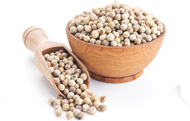
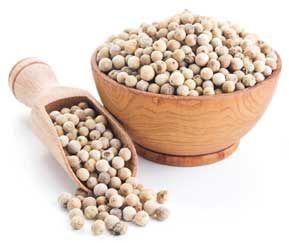
White pepper, derived from the same Piper nigrum vine as black pepper, is made from fully ripe berries that are soaked in water for about a week to ferment and remove their outer skin. This process leaves a pale seed, offering a milder, earthy flavour with a fermented undertone, often used in light-coloured dishes.
White pepper is prized for adding heat without dark flecks, making it ideal for light-coloured sauces, soups, and mashed potatoes, as well as being a staple in many Asian cuisines for its subtle spice.
History and Origin
White pepper originates from the same flowering vine (Piper nigrum) as black pepper, native to the Kerala region of India.
Historically a valuable, luxury trade item in ancient Egypt, Rome, and Europe, white pepper is produced by allowing the berries to fully ripen and removing the outer skin, resulting in a milder, earthy flavour used for culinary and medicinal purposes.
White pepper was a premium spice, traded alongside black pepper and valued by ancient civilizations and European nobility for its refined taste and appearance in delicate sauces.
- • Sarawak White Pepper (Malaysia):
- • Muntok White Pepper (Indonesia)
- • Indian White Pepper
- • Lampong (Indonesia)
- • Penang (Malaysia)
There aren't distinct "types" of white pepper in the way there are different pepper plants, but rather varieties based on origin and processing, with Sarawak (Malaysia) offering bright, strong flavour (often washed) and Muntok (Indonesia) being milder, earthier, and sometimes greyish (fermented/soaked).
Key variations also include processing methods (washing vs. soaking) and regional specialties like India's high-quality, clean white pepper, impacting flavour, aroma, and colour.
Major Varieties by Origin/Processing
- Sarawak White Pepper (Malaysia): Known for its whiter colour, superior flavour, and potent, sweet, winey, floral notes, often considered top tier.
- Muntok White Pepper (Indonesia): Milder, more earthy flavour with a greyish tint, popular and widely available.
- Indian White Pepper: High-quality, clean, super-grade varieties available, offering strong aroma and heat without mustiness, often from Kerala.
- Lampong (Indonesia): Valued for its earthy, pungent flavour, often used in gourmet cooking.
- Penang (Malaysia): Offers subtle sweetness and aroma, distinct from Sarawak.
Key Differences in Processing
- Washed/Flowing Water (Sarawak): Ripe berries are washed under running water to dissolve the husk, resulting in a brighter, cleaner, more flavourful pepper.
- Soaked/Fermented (Muntok/Others): Berries are soaked in water (days to weeks) to ferment and loosen the skin, leading to an earthier, sometimes funkier flavour and greyish colour.
What to Look For
- Colour: Creamy beige is good; greyish can be Muntok; overly yellow or Gray often indicates age or poor quality.
- Aroma: Should be clean, earthy, and spicy, not musty or damp.
- Form: Whole peppercorns retain flavour best; grind fresh for optimal taste.
Spices ” White Pepper ” ( Nutritional value )
Nutritional value per 2.4 g – 1 Teaspoon, ground
Spices, pepper, white
|
Nutrient ( Proximate’s )
|
Unit
|
Value
|
Daily Value %
|
|
Energy
|
kcal
|
7
|
0.3%
|
|
Protein
|
g
|
0.25
|
0.5%
|
|
Total lipid (fat)
|
g
|
0.05
|
.006%
|
|
Carbohydrate, by difference
|
g
|
1.65
|
0.6%
|
|
Fiber, total dietary
|
g
|
0.6
|
2.1%
|
|
Minerals
|
|||
|
Calcium, Ca
|
mg
|
6
|
0.4%
|
|
Iron, Fe
|
mg
|
0.34
|
1.8%
|
|
Magnesium, Mg
|
mg
|
2
|
0.4%
|
|
Phosphorus, P
|
mg
|
4
|
0.3%
|
|
Potassium, K
|
mg
|
2
|
.004%
|
|
Sodium, Na
|
mg
|
0
|
|
|
Zinc, Zn
|
mg
|
0.03
|
0.2%
|
|
Copper, Cu
|
mg
|
0.022
|
2.4%
|
|
Manganese, Mn
|
mg
|
0.103
|
4.4%
|
|
Selenium, Se
|
mcg
|
0.1
|
0.1%
|
|
Vitamins
|
|||
|
Vitamin C, total ascorbic acid
|
mg
|
0.5
|
0.5%
|
|
Thiamin (B-1)
|
mg
|
0.001
|
.008%
|
|
Riboflavin (B-2)
|
mg
|
0.003
|
0.2%
|
|
Niacin (B-3)
|
mg
|
0.005
|
.003%
|
|
Vitamin (B-6)
|
mg
|
0.002
|
0.1%
|
|
Folate (B-9)
|
mcg
|
0
|
|
|
Vitamin (B-12)
|
mcg
|
0.00
|
|
|
Vitamin A, RAE
|
mcg
|
0
|
|
|
Vitamin D (D2 + D3)
|
mcg
|
0
|
|
|
Lipids
|
|||
|
Saturated Fatty Acids
|
g
|
0.015
|
0.07%
|
|
Monounsaturated Fatty Acids
|
g
|
0.019
|
|
|
Polyunsaturated Fatty Acids
|
g
|
0.015
|
|
|
Trans Fatty Acids
|
g
|
0.000
|
|

Reference Values are based on a 2,000 Calorie Intake, for Adults and Children 4 or More Years of Age. Your daily values may be higher or lower depending on your calorie needs.
Percentages are roughly approximated using (RDA) Recommended Dietary Allowances for adults. Source: USDA United States Department of Agriculture.
Reference Values for Nutrition – FDA U.S. Food and Drug Administration.
White Pepper Nutritional Value
White pepper, rich in piperine, offers benefits like boosting digestion (stimulating stomach acid, easing bloating), providing antioxidants (fighting free radicals), reducing inflammation, supporting heart health (potentially lowering cholesterol/clots), and even helping with diarrhoea and skin issues like vitiligo, while also offering nutrients like manganese, iron, and fiber, making it a flavourful way to add health perks to meals.
STIMULATES DIGESTION
White pepper triggers the release of digestive juices and enzymes (like trypsin, amylase) due to its active compound, piperine, helping break down food, reduce bloating, and promote nutrient absorption, making it a traditional remedy for indigestion.RESPIRATORY RELIEF
White pepper is used in traditional medicine for respiratory relief, acting as a decongestant and helping to clear mucus and ease breathing. Its warming properties and the presence of the compound piperine are believed to provide relief from symptoms of colds, coughs, and congestion.REDUCES INFLAMMATION
White pepper contains piperine, an alkaloid with significant anti-inflammatory and antioxidant properties, helping reduce inflammation, oxidative stress, and potentially easing conditions like arthritis, muscle cramps, and headaches, though research often uses extracts and more large-scale human studies are needed to fully confirm these benefits.RICH IN ANTIOXIDANTS
White pepper is rich in antioxidants, primarily due to compounds like piperine, which fight harmful free radicals, reduce oxidative stress, and help prevent chronic diseases, also boosting metabolism and improving nutrient absorption, especially for curcumin. While both black and white pepper have these benefits, white pepper offers a milder flavour for delicate dishes, with black pepper sometimes having higher concentrations but white pepper being noted for antioxidants, manganese, and iron.LOOD SUGAR CONTROL
White pepper contains piperine, a compound that shows promise in helping control blood sugar by improving insulin sensitivity and promoting glucose uptake into cells, similar to how it works in black pepper. While preclinical studies and some human trials suggest benefits, it's not a replacement for diabetes medicine, and you should consult a doctor before using it for blood sugar management, as it could interact with medications and cause hypoglycaemia (low blood sugar).
FIGHTS DIARRHOEA
Traditional medicine suggests that white pepper may help treat diarrhoea, and some studies have shown antidiarrheal effects, especially when stir-fried. However, general medical advice often recommends avoiding all spicy foods, including peppers, when experiencing diarrhoea, as the active compound can irritate the gut and worsen symptoms.MAY LOWER BLOOD PRESSURE
White pepper may help lower blood pressure due to its active compound, piperine, which helps blood vessels dilate and reduces sodium intake's negative effects, while its vitamins (A, C) and flavonoids support heart health, though it's a food, not a medicine, and large amounts could affect blood sugar/clotting before surgery.SUPPORTS HEART HEALTH
White pepper supports heart health primarily by helping manage blood pressure and reducing inflammation, thanks to its piperine content, which can lower sodium intake, dilate blood vessels, and fight oxidative stress, preventing damage to the heart and arteries. Its antioxidants and anti-inflammatory properties also contribute to overall cardiovascular well-being, making it a heart-friendly alternative to salt for flavouring food.AIDS BOWEL MOVEMENTS
White pepper, rich in piperine, is traditionally used in remedies for diarrhoea and digestion in Chinese/Ayurvedic medicine, with studies showing stir-fried white pepper can help treat diarrhoea, especially in kids, by reducing frequency, but consuming too much spicy pepper can cause irritation and diarrhoea, so it's a balancing act between traditional use for digestion and potential overconsumption side effects.BIOAVAILABILITY ENHANCER
White pepper contains the alkaloid piperine, which is a well-established natural bioavailability enhancer. Piperine increases the absorption and systemic utilization of various drugs, vitamins, minerals, and herbal compounds by inhibiting certain metabolic processes in the body.
References
Nutrient Database – USDA (United States Department of Agriculture)
Reference Values for Nutrition – FDA U.S. Food and Drug Administration
Stimulates digestion - White pepper stimulates digestion by triggering the release of digestive juices and enzymes (like trypsin, amylase) due to its active compound, piperine, helping break down food, reduce bloating, and promote nutrient absorption, making it a traditional remedy for indigestion and a great addition to light-coloured dishes.
Fights diarrhoea - Traditional medicine suggests that white pepper may help treat diarrhoea, and some studies have shown antidiarrheal effects, especially when stir-fried. However, general medical advice often recommends avoiding all spicy foods, including peppers, when experiencing diarrhoea, as the active compound can irritate the gut and worsen symptoms.
Aids bowel movements - White pepper, rich in piperine, is traditionally used in remedies for diarrhoea and digestion in Chinese/Ayurvedic medicine, with studies showing stir-fried white pepper can help treat diarrhoea, especially in kids, by reducing frequency, but consuming too much spicy pepper can cause irritation and diarrhoea, so it's a balancing act between traditional use for digestion and potential overconsumption side effects.
Rich in antioxidants - White pepper is rich in antioxidants, primarily due to compounds like piperine, which fight harmful free radicals, reduce oxidative stress, and help prevent chronic diseases, also boosting metabolism and improving nutrient absorption, especially for curcumin. While both black and white pepper have these benefits, white pepper offers a milder flavour for delicate dishes, with black pepper sometimes having higher concentrations but white pepper being noted for antioxidants, manganese, and iron.
Reduces inflammation - White pepper contains piperine, an alkaloid with significant anti-inflammatory and antioxidant properties, helping reduce inflammation, oxidative stress, and potentially easing conditions like arthritis, muscle cramps, and headaches, though research often uses extracts and more large-scale human studies are needed to fully confirm these benefits.
May lower blood pressure - White pepper may help lower blood pressure due to its active compound, piperine, which helps blood vessels dilate and reduces sodium intake's negative effects, while its vitamins (A, C) and flavonoids support heart health, though it's a food, not a medicine, and large amounts could affect blood sugar/clotting before surgery.
to salt for flavouring food.
Supports heart health - White pepper supports heart health primarily by helping manage blood pressure and reducing inflammation, thanks to its piperine content, which can lower sodium intake, dilate blood vessels, and fight oxidative stress, preventing damage to the heart and arteries. Its antioxidants and anti-inflammatory properties also contribute to overall cardiovascular well-being, making it a heart-friendly alternative to salt for flavouring food.
Blood sugar control - White pepper contains piperine, a compound that shows promise in helping control blood sugar by improving insulin sensitivity and promoting glucose uptake into cells, similar to how it works in black pepper. While preclinical studies and some human trials suggest benefits, it's not a replacement for diabetes medicine, and you should consult a doctor before using it for blood sugar management, as it could interact with medications and cause hypoglycaemia (low blood sugar).
Respiratory relief - White pepper is used in traditional medicine for respiratory relief, acting as a decongestant and helping to clear mucus and ease breathing. Its warming properties and the presence of the compound piperine are believed to provide relief from symptoms of colds, coughs, and congestion.
Bioavailability enhancer - White pepper contains the alkaloid piperine, which is a well-established natural bioavailability enhancer. Piperine increases the absorption and systemic utilization of various drugs, vitamins, minerals, and herbal compounds by inhibiting certain metabolic processes in the body.