



1. Adzuki Bean Facts
2. Types of Adzuki Beans
3. Adzuki Bean Nutritional Value
4. Adzuki Bean Health Benefits
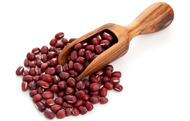
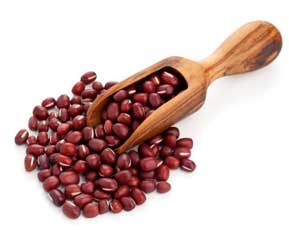
Adzuki beans (Vigna angularis) are small, reddish-brown beans from East Asia. They have a slightly sweet, nutty flavour and are known for benefits such as aiding digestion, stabilizing blood sugar, and potentially protecting against heart disease and diabetes. Their versatility allows for use in sweet or savory dishes, with common applications including red bean paste for desserts and use in soups or stews.
History and Origin
Adzuki beans originated in East Asia and were first domesticated in Japan between 3,000 and 5,000 years ago during the Jomon period. From Japan, cultivation spread to China and Korea, where it became a staple legume alongside millet, rice, and soybeans. Archaeological and genetic evidence confirms its ancient roots in the region, with some of the oldest direct finds dating back at least 6,000 years in China.
The "Erimo" variety is the most common adzuki bean grown and sold in Australia, as it is the main variety preferred by Japanese customers for bean paste. While there are other varieties, such as the older "Bloodwood" and new Japanese-bred varieties like "Kita-no-otome" and "Shumari," the Erimo is dominant.
Types of adzuki beans
- Erimo: This is the main adzuki bean variety grown and sold in Australia and is preferred for its quality in making red bean paste. It was bred in Japan and is considered superior to older varieties.
- Bloodwood: This is an older variety of adzuki bean that is also grown in Australia, though Erimo is generally preferred.
Other varieties
- While newer Japanese varieties like Kita-no-otome and Shumari have been released, Australian cultivation of these varieties is restricted due to plant breeders' rights, so they are not commonly grown or sold in the country.
- Other commonly sold adzuki beans in Australia may be labelled by brand names such as "Galaxy Adzuki Beans" or "Pattu Adzuki Beans," but these are likely still the dominant Erimo variety, sourced from local Australian growers.
Legumes ” Adzuki Bean ” ( Nutritional value )
Nutritional Value per 100 g
Beans, adzuki, mature seed, cooked, boiled, with salt
|
Nutrient ( Proximate’s )
|
Unit
|
Value
|
Daily Value %
|
|
Energy
|
kcal
|
128
|
6.4%
|
|
Protein
|
g
|
7.52
|
15%
|
|
Total lipid (fat)
|
g
|
0.10
|
1.4%
|
|
Carbohydrate, by difference
|
g
|
24.77
|
9%
|
|
Fiber, total dietary
|
g
|
7.3
|
26%
|
|
Minerals
|
|||
|
Calcium, Ca
|
mg
|
28
|
2.1%
|
|
Iron, Fe
|
mg
|
2.00
|
11.1%
|
|
Magnesium, Mg
|
mg
|
52
|
12.3%
|
|
Phosphorus, P
|
mg
|
168
|
13.4%
|
|
Potassium, K
|
mg
|
532
|
11.3%
|
|
Sodium, Na
|
mg
|
244
|
10.6%
|
|
Zinc, Zn
|
mg
|
1.77
|
16%
|
|
Copper, Cu
|
mg
|
0.298
|
33.1%
|
|
Manganese, Mn
|
mg
|
0.573
|
24.9%
|
|
Selenium, Se
|
mcg |
1.2
|
2.1%
|
|
Vitamins
|
|||
|
Vitamin C, total ascorbic acid
|
mg
|
0.0
|
0.0
|
|
Thiamin (B-1)
|
mg
|
0.115
|
9.5%
|
|
Riboflavin (B-2)
|
mg
|
0.064
|
4.9%
|
|
Niacin (B-3)
|
mg
|
0.717
|
4.4%
|
|
Pantothenic acid (B-5)
|
mg
|
0.430
|
8.6%
|
|
Vitamin (B-6)
|
mg
|
0.096
|
5.6%
|
|
Folate (B-9)
|
mcg
|
121
|
30%
|
|
Vitamin (B-12)
|
mcg
|
0.00
|
|
|
Vitamin A, RAE
|
mcg
|
||
|
Vitamin D (D2 + D3)
|
mcg
|
0
|
|
|
Lipids
|
|||
|
Saturated Fatty Acids
|
g
|
0.036
|
0.1%
|
|
Monounsaturated Fatty Acids
|
g
|
0.009
|
|
|
Polyunsaturated Fatty Acids
|
g
|
0.021
|
|
|
Trans Fatty Acids
|
g
|
0.000
|
|
|
Cholesterol
|
mg
|
0
|
|
|
Reference Values are based on a 2,000 Calorie Intake, for Adults and Children 4 or More Years of Age. Your daily values may be higher or lower depending on your calorie needs.
|
|
Percentages are roughly approximated using (RDA) Recommended Dietary Allowances for adults. Source: USDA United States Department of Agriculture
|
|
Reference Values for Nutrition – FDA U.S. Food and Drug Administration
|
Adzuki Beans Nutritional Value
Adzuki beans provide numerous health benefits, including a rich supply of antioxidants and fiber that support heart health and digestion, as well as protein and minerals like iron that help build muscle and reduce fatigue. They can also aid in weight management, help regulate blood sugar, and are associated with benefits for kidney function and detoxification.
WEIGHT MANAGEMENT
Adzuki beans have high fiber and protein content, which promotes fullness and reduces overall calorie intake. They are low in calories and fat, rich in nutrients, and may help with satiety and glycaemic control. While direct human studies are limited, research in animal models shows that adzuki beans can reduce weight gain, improve blood lipids, and positively impact gut microbiota, all of which are linked to weight management.EXCELLENT PROTEIN SOURCE
Adzuki beans are an excellent source of protein, containing about 7.5 grams per 100 grams and providing a good portion of the essential amino acids. They are particularly rich in lysine, leucine, phenylalanine, and valine, which are amino acids that are often deficient in cereal-based proteins. Adzuki beans are a valuable plant-based protein option, especially for those with gluten intolerance, as they are naturally gluten-free. Protein is essential for building and maintaining muscle mass.BONE AND MUSCLE STRENGTH
Adzuki beans support bone and muscle strength due to their high protein content and minerals like calcium, phosphorus, potassium, and magnesium. Protein is essential for building and maintaining muscle, while these minerals are crucial for bone development, muscle contraction, and overall musculoskeletal health.MOLYBDENUM SOURCE
Adzuki beans are an excellent source of molybdenum, a trace mineral vital for liver detoxification. Just a half-serving can provide 100% of the daily recommended intake, as they contain high concentrations of this mineral. Molybdenum is essential for the enzyme sulphite oxidase, which helps the body process and detoxify the liver.BLOOD SUGAR MANAGEMENT
Adzuki beans have a low glycaemic index (GI) and high fiber content, which slows sugar absorption. They may also improve insulin sensitivity and have anti-diabetic properties. Research suggests adzuki beans can help lower blood glucose, improve glucose tolerance, and potentially regulate other metabolic issues like those in metabolic syndrome.
MINERAL-DENSE
Adzuki beans are mineral-dense, offering a good source of copper, manganese, zinc, phosphorus, and potassium. They are also rich in iron, which is essential for oxygen transport, as well as magnesium and selenium. Regular consumption can support bone and muscle health due to the presence of calcium, phosphorus, potassium, and magnesium.KIDNEY SUPPORT
Adzuki beans are traditionally used to support kidney and urinary health, as they are believed to have diuretic properties that promote urine flow and help "clear heat". While scientific evidence for treating specific kidney conditions is limited, adzuki beans are a healthy food rich in fiber, iron, and antioxidants, which may contribute to general wellness. In Traditional Chinese Medicine, adzuki beans are believed to support kidney and bladder function.ANTI-INFLAMMATORY PROPERTIES
Adzuki beans have anti-inflammatory properties due to their antioxidant content, such as polyphenols, and their ability to inhibit inflammatory pathways and markers like pro-inflammatory cytokines, INOS, and NF-κB. Studies in both animal models and humans suggest that adzuki beans can help reduce inflammation associated with conditions like a high-fat diet, obesity, and certain types of gastritis.DETOXIFYING PROPERTIES
Adzuki beans have detoxifying properties due to their antioxidant compounds like anthocyanin and catechin, which protect against oxidative stress and inflammation. They are also known for their diuretic effects, which help the body flush out excess fluid and waste. In traditional medicine, adzuki beans are used to support the body's natural purification processes, aid liver function, and help with conditions like water retention and swelling.RICH IN ANTIOXIDANTS AND FIBER
Adzuki beans are rich in fiber and antioxidants, which can help regulate blood sugar, aid in weight management by promoting fullness, and protect cells from damage. They are also a good source of other nutrients like protein, iron, copper, and various B vitamins.
References
Nutrient Database – USDA (United States Department of Agriculture)
Reference Values for Nutrition – FDA U.S. Food and Drug Administration
Rich in antioxidants and fiber - Adzuki beans are rich in fiber and antioxidants, which can help regulate blood sugar, aid in weight management by promoting fullness, and protect cells from damage. They are also a good source of other nutrients like protein, iron, copper, and various B vitamins.
Excellent protein source - Adzuki beans are an excellent source of protein, containing about 7.5 grams per 100 grams and providing a good portion of the essential amino acids. They are particularly rich in lysine, leucine, phenylalanine, and valine, which are amino acids that are often deficient in cereal-based proteins. Adzuki beans are a valuable plant-based protein option, especially for those with gluten intolerance, as they are naturally gluten-free. Protein is essential for building and maintaining muscle mass.
Mineral-dense – Adzuki beans are mineral-dense, offering a good source of copper, manganese, zinc, phosphorus, and potassium. They are also rich in iron, which is essential for oxygen transport, as well as magnesium and selenium. Regular consumption can support bone and muscle health due to the presence of calcium, phosphorus, potassium, and magnesium.
Molybdenum source - Adzuki beans are an excellent source of molybdenum, a trace mineral vital for liver detoxification. Just a half-serving can provide 100% of the daily recommended intake, as they contain high concentrations of this mineral. Molybdenum is essential for the enzyme sulphite oxidase, which helps the body process and detoxify the liver.
Blood sugar management - Adzuki beans can help manage blood sugar due to their low glycaemic index (GI) and high fiber content, which slows sugar absorption. They may also improve insulin sensitivity and have anti-diabetic properties. Research suggests adzuki beans can help lower blood glucose, improve glucose tolerance, and potentially regulate other metabolic issues like those in metabolic syndrome.
Weight management - Adzuki beans support weight management due to their high fiber and protein content, which promotes fullness and reduces overall calorie intake. They are low in calories and fat, rich in nutrients, and may help with satiety and glycaemic control. While direct human studies are limited, research in animal models shows that adzuki beans can reduce weight gain, improve blood lipids, and positively impact gut microbiota, all of which are linked to weight management.
Kidney support - Adzuki beans are traditionally used to support kidney and urinary health, as they are believed to have diuretic properties that promote urine flow and help "clear heat". While scientific evidence for treating specific kidney conditions is limited, adzuki beans are a healthy food rich in fiber, iron, and antioxidants, which may contribute to general wellness. It is important to note that they should not be used as a substitute for medical treatment for serious kidney issues. In Traditional Chinese Medicine, adzuki beans are believed to support kidney and bladder function.
Anti-inflammatory properties - Adzuki beans have anti-inflammatory properties due to their antioxidant content, such as polyphenols, and their ability to inhibit inflammatory pathways and markers like pro-inflammatory cytokines, iNOS, and NF-κB. Studies in both animal models and humans suggest that adzuki beans can help reduce inflammation associated with conditions like a high-fat diet, obesity, and certain types of gastritis.
Detoxifying properties - Adzuki beans have detoxifying properties due to their antioxidant compounds like anthocyanin and catechin, which protect against oxidative stress and inflammation. They are also known for their diuretic effects, which help the body flush out excess fluid and waste. In traditional medicine, adzuki beans are used to support the body's natural purification processes, aid liver function, and help with conditions like water retention and swelling.
Bone and muscle strength - Adzuki beans support bone and muscle strength due to their high protein content and minerals like calcium, phosphorus, potassium, and magnesium. Protein is essential for building and maintaining muscle, while these minerals are crucial for bone development, muscle contraction, and overall musculoskeletal health.