
1. Game Meat Types
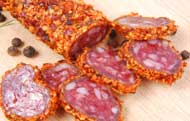
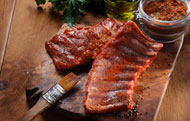
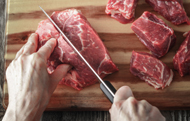
2. Game Meat Cuts and Produce Australia
3. Australian Game Meat Industry Overview
4. Game Meat Nutritional Value
5. Game Meat Health Benefits
Game meat is the flesh of wild animals or birds hunted for food, differing from domestic livestock by being leaner, richer in nutrients (protein, iron), and having a more intense, earthy flavour from natural diets, with common types including venison, rabbit, pheasant, and boar, often available farm-raised for commercial sale.
History and Origin
Game meat's history spans millennia, originating with hunter-gatherers as a vital protein source and evolving from survival necessity to a symbol of status for nobility, later becoming a staple or delicacy, and now often seen as a healthy, sustainable choice, with its journey tied to human migration, agricultural development, and cultural shifts from prehistoric hunts to modern gourmet tables.
- • Kangaroo
- • Venison (deer)
- • Wild Boar
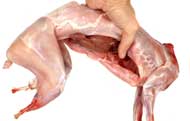
- • Rabbit
- • Crocodile
- • Goat
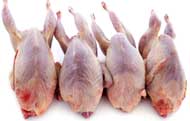
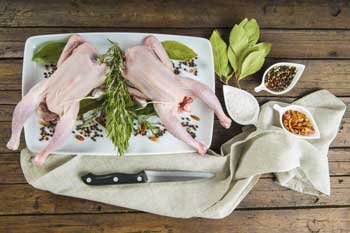
- • Quail
- • Duck
- • Pheasant
Australian Game Meats Industry Overview
Australia's game meat industry harvests wild animals (kangaroo, deer, goat, emu) under strict regulations, focusing on sustainability, welfare, and high safety standards, with significant exports to Asia/Europe, leveraging low-fat profiles for health-conscious markets, though facing challenges in consistent supply and market perception for some species, balancing conservation with commercial harvest. The industry supports rural economies, employs specialized processors, and emphasizes traceability from field to consumer, aiming to meet global demand for unique, responsibly sourced proteins.
Common Australian game meats include Kangaroo, Emu, Venison, Boar, and Crocodile, with cuts like kangaroo loin/rump, emu oyster/round steaks, venison loin, and crocodile tail fillet being popular; these lean meats suit quick searing (kangaroo) or slow cooking (emu/boar/croc), offering high protein and unique flavours for adventurous cooks in everything from steaks to curries and sausages.
Kangaroo
- Cuts: Loin, Fillet, Rump, Shank, Shoulder.
- Uses: Very lean, best cooked rare to medium-rare to stay tender; great for steaks, stir-fries, skewers, and mince for burgers/sausages.
Emu
- Cuts: Oyster Steak (tender fillet), Round Steak, Mince, Liver.
- Uses: Oyster steaks for stir-frying or slow cooking; round steak for roasting or slicing; mince for pasta/meatballs; liver for pâté.
Venison (Deer)
- Cuts: Loin, Fillet, Rump, Shank.
- Uses: Lean and subtly gamey; excellent for pan-searing, roasting, grilling (skewers), or slow-cooking in stews.
Wild Boar
- Cuts: Various, similar to pork.
- Uses: Tastes like a cross between pork and beef; ideal for slow cooking (braises, curries) and roasting to tenderize.
Crocodile
- Cuts: Tail Fillet & Striploin, Jowel Meat, Body Meat, Legs.
- Uses: Tail/striploin for BBQ/frying; jowel for satay/kebabs; body meat for curries/casseroles; legs for soups.
Rabbit
- Uses: Delicate flavour; great for stews, casseroles, or roasted whole due to its lean nature.
General Tips for Game Meat
- Lean: Most game is very lean, so avoid overcooking.
- Flavour: Offers unique, often robust flavours, great for adventurous cooks.
- Versatile: From BBQ to curries, game suits many dishes.
Meats ” Rabbit ” ( Nutritional value )
Nutritional value per 100 g
Game meat, rabbit, domesticated, composite of cuts, cooked, stewed
|
Nutrient ( Proximate’s )
|
Unit
|
Value
|
Daily Value %
|
|
Energy
|
kcal
|
206
|
10.3% |
|
Protein
|
g
|
30.38
|
60.7% |
|
Total lipid (fat)
|
g
|
8.41
|
3% |
|
Carbohydrate, by difference
|
g
|
0.00
|
|
|
Fiber, total dietary
|
g
|
0.0
|
|
|
Sugars, total
|
g
|
0.00
|
|
|
Minerals
|
|||
|
Calcium, Ca
|
mg
|
20
|
1.5% |
|
Iron, Fe
|
mg
|
2.37
|
13.1% |
|
Magnesium, Mg
|
mg
|
20
|
4.7% |
|
Phosphorus, P
|
mg
|
226
|
4.8% |
|
Potassium, K
|
mg
|
300
|
6.3% |
|
Sodium, Na
|
mg
|
37
|
1.6% |
|
Zinc, Zn
|
mg
|
2.37
|
21.5% |
|
Copper, Cu
|
mg
|
0.176
|
19.5% |
|
Manganese, Mn
|
mg
|
0.032
|
1.3% |
|
Selenium, Se
|
mcg
|
38.5
|
70% |
|
Vitamins
|
|||
|
Vitamin C, total ascorbic acid
|
mg
|
0.0
|
|
|
Thiamin (B-1)
|
mg
|
0.060
|
5% |
|
Riboflavin (B-2)
|
mg
|
0.170
|
13% |
|
Niacin (B-3)
|
mg
|
7.160
|
44.7% |
|
Pantothenic acid (B-5)
|
mg
|
0.670
|
13.4% |
|
Vitamin B-6
|
mg
|
0.340
|
20% |
|
Vitamin B-12
|
mg
|
6.51
|
271.2% |
|
Folate (B-9)
|
mcg
|
9
|
2.2% |
|
Vitamin A, RAE
|
mcg
|
0
|
|
|
Vitamin E (alpha-tocopherol)
|
mg
|
0.44
|
2.9% |
|
Vitamin D
|
mcg
|
0
|
|
|
Vitamin K (phylloquinone)
|
mcg
|
1.6
|
1.3% |
|
Lipids
|
|||
|
Saturated Fatty Acids
|
g
|
2.510
|
12.5% |
|
Monounsaturated Fatty Acids
|
g
|
2.270
|
|
|
Polyunsaturated Fatty Acids
|
g
|
1.630
|
|
|
Cholesterol
|
mg
|
86
|
|
|
Reference Values are based on a 2,000 Calorie Intake, for Adults and Children 4 or More Years of Age. Your daily values may be higher or lower depending on your calorie needs.
|
|
Percentages are roughly approximated using (RDA) Recommended Dietary Allowances for adults. Source: USDA United States Department of Agriculture
|
|
Reference Values for Nutrition – National Institutes of Health USA
|
Game Meats Nutritional Value
Game meats offer significant health benefits, being naturally leaner, high in protein, and packed with iron, zinc, B vitamins, and omega-3s, while being free from added hormones and antibiotics found in farmed meats, contributing to heart health, muscle building, and immune function. Their natural diet in the wild leads to a healthier fat profile with more beneficial unsaturated fats and less saturated fat than conventional meats, making them a nutritious, natural choice.
HEALTHIER FATS
Game meats offer healthy fats, primarily beneficial Omega-3s, due to wild animals' natural, varied diets, resulting in a superior fat profile (more polyunsaturated, less saturated) compared to conventional meat, supporting heart and brain health, alongside being leaner, lower in calories, and packed with vitamins (B group) and minerals (iron, zinc).LEAN AND HIGH IN PROTEIN
Game meats are a highly nutritious choice, offering lean, high-quality protein, crucial vitamins (B12, B6), and minerals (iron, zinc, selenium) while being naturally low in fat and calories compared to farmed meats, with some even boasting beneficial omega-3s from their natural diets, making them excellent for muscle, energy, and overall health.RICH IN MICRONUTRIENTS
Game meats (such as venison, kangaroo, bison, wild boar, and rabbit) are highly nutritious, lean, and nutrient-dense alternatives to conventional red meat, offering a superior micronutrient profile. Because these animals live in natural habitats and forage on a diverse diet, their meat is generally lower in total and saturated fat while being richer in essential iron, zinc, B-vitamins, and omega-3 fatty acids.
NO ADDITIVES
Game meats offer significant health benefits due to their natural origins, being leaner, lower in fat, higher in protein, rich in iron, zinc, B vitamins, and omega-3s, and naturally free from added hormones, antibiotics, and additives, supporting muscle health, heart function, and energy production.MORE NUTRIENT-DENSE
Game meats are generally more nutrient-dense than farmed meats, being leaner, lower in total and saturated fat, and richer in protein, iron, zinc, B vitamins, and beneficial Omega-3s, due to the animals' active, natural diets, leading to better heart health and fewer antibiotics.SUPPORTS SUSTAINABILITY
Game meats offer significant health benefits, being leaner and richer in protein, iron, zinc, and Omega-3s, while supporting sustainability by reducing farming's environmental impact, controlling wildlife populations, promoting biodiversity, and offering a natural alternative to industrial livestock with fewer hormones/antibiotics. Choosing wild game provides a nutrient-dense, lower-fat protein source that aligns with eco-friendly practices, reducing greenhouse gases and supporting ecosystem health through responsible harvesting.
References
Nutrient Database – USDA (United States Department of Agriculture)
Reference Values for Nutrition – FDA U.S. Food and Drug Administration
Lean and high in protein - Game meats are a highly nutritious choice, offering lean, high-quality protein, crucial vitamins (B12, B6), and minerals (iron, zinc, selenium) while being naturally low in fat and calories compared to farmed meats, with some even boasting beneficial omega-3s from their natural diets, making them excellent for muscle, energy, and overall health.
More nutrient-dense - Game meats are generally more nutrient-dense than farmed meats, being leaner, lower in total and saturated fat, and richer in protein, iron, zinc, B vitamins, and beneficial Omega-3s, due to the animals' active, natural diets, leading to better heart health and fewer antibiotics.
Rich in micronutrients - Game meats (such as venison, kangaroo, bison, wild boar, and rabbit) are highly nutritious, lean, and nutrient-dense alternatives to conventional red meat, offering a superior micronutrient profile. Because these animals live in natural habitats and forage on a diverse diet, their meat is generally lower in total and saturated fat while being richer in essential iron, zinc, B-vitamins, and omega-3 fatty acids.
Healthier fats - Game meats offer healthy fats, primarily beneficial Omega-3s, due to wild animals' natural, varied diets, resulting in a superior fat profile (more polyunsaturated, less saturated) compared to conventional meat, supporting heart and brain health, alongside being leaner, lower in calories, and packed with vitamins (B group) and minerals (iron, zinc).
No additives - Game meats offer significant health benefits due to their natural origins, being leaner, lower in fat, higher in protein, rich in iron, zinc, B vitamins, and omega-3s, and naturally free from added hormones, antibiotics, and additives, supporting muscle health, heart function, and energy production.
Supports Sustainability - Game meats offer significant health benefits, being leaner and richer in protein, iron, zinc, and Omega-3s, while supporting sustainability by reducing farming's environmental impact, controlling wildlife populations, promoting biodiversity, and offering a natural alternative to industrial livestock with fewer hormones/antibiotics. Choosing wild game provides a nutrient-dense, lower-fat protein source that aligns with eco-friendly practices, reducing greenhouse gases and supporting ecosystem health through responsible harvesting.