


1. Chestnut Facts
2. Types of Chestnuts
3. Chestnut Nutritional Value
4. Chestnut Health Benefits
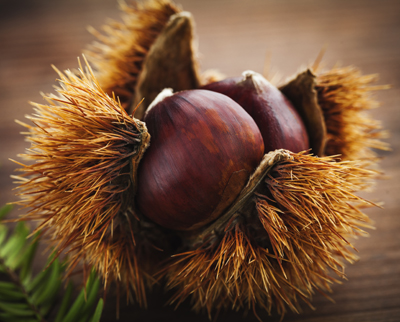
Chestnut, genus of seven species of deciduous trees in the beech family (Fagaceae), native to temperate regions of the Northern Hemisphere.
The scientific name for the sweet chestnut is Castanea sativa. However, "chestnut" can refer to different species, such as the American chestnut (Castanea dentata) and the Chinese chestnut (Castanea mollissima). The genus for all true chestnuts is Castanea.
History and Origin
Chestnut history and origin are deeply intertwined with human civilization, with their origins likely in the Caucasus region and southwestern/eastern Asia. Humans have cultivated chestnuts since at least 2000 BC, using them as a staple food and, in some cases, as a primary source of carbohydrates before the introduction of the potato. Greeks and Romans were instrumental in spreading the European sweet chestnut across the continent, and both cultures documented its uses.
- • Red Spanish
- • Purton's Pride
- • De Coppi Marone
- • Bouche de Betizac
- • Buffalo Queen
- • Reilly
- • Winchester
The main sweet chestnut varieties grown and sold in Australia are Red Spanish, Purton's Pride, De Coppi Marone, and Bouche de Betizac. Other varieties include Buffalo Queen, and some European types like Reilly and Winchester are also grown. They are often categorized by their best use: European types are better for roasting, while Asian types like Red Spanish are good for boiling.
Common varieties
- Red Spanish: A large, Japanese-style nut best suited for boiling or steaming.
- Purton's Pride: A versatile, sweet, and easy-to-peel nut that is great for roasting, boiling, or steaming.
- De Coppi Marone: Often considered the best for roasting, this mid- to late-season nut is easy to peel and has a rich, sweet flavour.
- Bouche de Betizac: A large, early-season nut with a sweet flavour and is easy to peel, making it good for boiling.
- Buffalo Queen: An early-season nut that is considered better for boiling than roasting.
- Reilly: A low-chill variety that is suitable for many regions.
- Winchester: Another large, low-chill selection suitable for warmer climates.
Other information
- Seasonality: Fresh Australian chestnuts are typically available from mid-March to July.
- Availability: Many varieties are sold by their name because they have different characteristics and uses, similar to potatoes.
- Uses: Different varieties are better suited for different cooking methods, such as boiling, roasting, or stir-frying.
Nuts ” Chestnut ” ( Nutritional value )
Nutritional Value per 100 g
Nuts, chestnuts, european, raw, unpeeled
|
Nutrient ( Proximate’s )
|
Unit
|
Value
|
Daily Value %
|
|
Energy
|
kcal
|
213
|
10.6%
|
|
Protein
|
g
|
2.42
|
4.8%
|
|
Total lipid (fat)
|
g
|
2.26
|
2.8%
|
|
Carbohydrate, by difference
|
g
|
45.54
|
16.5%
|
|
Fiber, total dietary
|
g |
8.1
|
28.9%
|
|
Minerals
|
|||
|
Calcium, Ca
|
mg
|
27
|
2%
|
|
Iron, Fe
|
mg
|
1.01
|
9.1%
|
|
Magnesium, Mg
|
mg
|
32
|
7.6%
|
|
Phosphorus, P
|
mg
|
93
|
7.4%
|
|
Potassium, K
|
mg
|
518
|
11%
|
|
Sodium, Na
|
mg
|
3
|
0.1%
|
|
Zinc, Zn
|
mg
|
0.52
|
4.7%
|
|
Copper, Cu
|
mg
|
0.447
|
49.6%
|
|
Manganese, Mn
|
mg
|
0.952
|
41.3%
|
|
Vitamins
|
|||
|
Vitamin C, total ascorbic acid
|
mg
|
43.0
|
47.7%
|
|
Thiamin (B-1)
|
mg
|
0.238
|
19.8%
|
|
Riboflavin (B-2)
|
mg
|
0.168
|
12.9%
|
|
Niacin (B-3)
|
mg
|
1.179
|
7.3%
|
|
Pantothenic acid (B-5)
|
mg
|
0.376
|
7.5%
|
|
Vitamin (B-6)
|
mg
|
0.509
|
29.9%
|
|
Folate (B-9)
|
mcg
|
62
|
15.5%
|
|
Vitamin (B-12)
|
mcg
|
0.00
|
|
|
Vitamin A, RAE
|
mcg | ||
|
Vitamin D (D2 + D3)
|
mcg
|
0
|
|
|
Lipids
|
|||
|
Saturated Fatty Acids
|
g
|
0.425
|
2.1%
|
|
Monounsaturated Fatty Acids
|
g
|
0.780
|
|
|
Polyunsaturated Fatty Acids
|
g
|
0.894
|
|
|
Cholesterol
|
mg
|
0
|
|

|
Reference Values are based on a 2,000 Calorie Intake, for Adults and Children 4 or More Years of Age. Your daily values may be higher or lower depending on your calorie needs.
|
|
Percentages are roughly approximated using (RDA) Recommended Dietary Allowances for adults. Source: USDA United States Department of Agriculture
|
|
Reference Values for Nutrition – FDA U.S. Food and Drug Administration
|
Chestnuts Nutritional Value
Chestnuts offer health benefits including improving heart health due to their low cholesterol and high content of B vitamins, potassium, and antioxidants. They also support digestive health with their high fiber content, aid in energy production, and contain antioxidants that fight inflammation and protect against chronic diseases. Additionally, their low glycaemic index can help with blood sugar management.
PREBIOTIC PROPERTIES
Chestnuts have prebiotic properties due to their fiber content, specifically non-starch polysaccharides and resistant starch, which are indigestible by the body and act as a food source for beneficial gut bacteria like Lactobacillus and Bifidobacterium. When these bacteria ferment the fiber, they produce short-chain fatty acids (SCFAs), such as acetic acid, propionic acid, and butyric acid, which are linked to improved gut health, reduced inflammation, and better blood sugar control.BLOOD VESSEL ELASTICITY
Chestnuts, specifically horse chestnut and its extract containing aescin, can improve blood vessel elasticity by strengthening vein walls and increasing their tone. This is achieved through compounds that tighten weakened vessel walls, reduce capillary leakage, and improve blood flow, which can help with conditions like varicose veins and leg swelling.HEART HEALTH
Chestnut’s support heart health due to their antioxidant content, fiber, and beneficial minerals like potassium and magnesium. These properties help reduce inflammation, lower "bad" cholesterol, regulate blood pressure, and protect against oxidative stress that can lead to heart disease.SUPPORT BRAIN FUNCTION
Chestnuts benefit brain function due to their high content of B vitamins, which support cognitive performance and the nervous system. They are also rich in antioxidants that protect brain cells from damage, and copper and other minerals that aid nerve function, red blood cell formation, and energy production.POTENTIAL ANTI-TUMOUR PROPERTIES
Chestnuts show potential antitumor properties due to their high antioxidant content, such as tannins and ellagic acid, which have been shown in lab and animal studies to suppress cancer cell growth and spread, and induce cancer cell death. These compounds may help by neutralizing free radicals and interfering with cancer-related signalling pathways. However, more research is needed.
SUPPORT BONE HEALTH
Chestnut’s support bone health by providing essential minerals like magnesium and phosphorus, which are crucial for bone strength and density. They also contain copper, which helps the body absorb iron needed for bone development, and manganese, which plays a role in bone health and may help prevent bone loss.LOW GLYCAEMIC INDEX
Chestnuts have a low glycaemic index (GI) of around 54, which is beneficial because their carbohydrates are digested slowly, leading to a more gradual rise in blood sugar levels. Unlike most other nuts, which are low in carbs, chestnuts have enough carbohydrate to be tested and are considered a good source of smart carbs and dietary fiber. This makes them a good option for balancing blood sugar and is similar to how whole grains are digested.RICH IN ANTIOXIDANTS
Chestnuts are rich in antioxidants like vitamin C, gallic acid, and ellagic acid, which help protect cells from damage and may lower the risk of chronic diseases. They also provide other beneficial nutrients such as fiber, potassium, and various B vitamins.DIGESTIVE HEALTH
Chestnuts support digestive health primarily due to their high fiber content, which promotes regular bowel movements and prevents constipation. They also act as a prebiotic, nourishing beneficial gut bacteria that produce short-chain fatty acids, which have numerous health benefits. While whole chestnuts offer digestive benefits, it's important to note that consuming them raw can be toxic and some people may experience digestive discomfort like gas or bloating, especially if they have a low tolerance for high-fiber foods.NUTRIENT-RICH
Chestnuts are nutrient-rich, unique among nuts for their high content of vitamin C and lower fat, and are an excellent source of fiber, potassium, and antioxidants like gallic and ellagic acid. They also provide B vitamins, magnesium, and other minerals, contributing to heart health, digestion, and skin health.
References
Nutrient Database – USDA (United States Department of Agriculture)
Reference Values for Nutrition – FDA U.S. Food and Drug Administration
Heart health - Chestnut’s support heart health due to their antioxidant content, fiber, and beneficial minerals like potassium and magnesium. These properties help reduce inflammation, lower "bad" cholesterol, regulate blood pressure, and protect against oxidative stress that can lead to heart disease.
Blood vessel elasticity - Chestnuts, specifically horse chestnut and its extract containing aescin, can improve blood vessel elasticity by strengthening vein walls and increasing their tone. This is achieved through compounds that tighten weakened vessel walls, reduce capillary leakage, and improve blood flow, which can help with conditions like varicose veins and leg swelling.
Nutrient-rich - Chestnuts are nutrient-rich, unique among nuts for their high content of vitamin C and lower fat, and are an excellent source of fiber, potassium, and antioxidants like gallic and ellagic acid. They also provide B vitamins, magnesium, and other minerals, contributing to heart health, digestion, and skin health.
Digestive health - Chestnuts support digestive health primarily due to their high fiber content, which promotes regular bowel movements and prevents constipation. They also act as a prebiotic, nourishing beneficial gut bacteria that produce short-chain fatty acids, which have numerous health benefits. While whole chestnuts offer digestive benefits, it's important to note that consuming them raw can be toxic and some people may experience digestive discomfort like gas or bloating, especially if they have a low tolerance for high-fiber foods.
Potential anti-tumour properties - Chestnuts show potential antitumor properties due to their high antioxidant content, such as tannins and ellagic acid, which have been shown in lab and animal studies to suppress cancer cell growth and spread, and induce cancer cell death. These compounds may help by neutralizing free radicals and interfering with cancer-related signalling pathways. However, more research is needed to confirm these effects in humans.
Prebiotic properties - Chestnuts have prebiotic properties due to their fiber content, specifically non-starch polysaccharides and resistant starch, which are indigestible by the body and act as a food source for beneficial gut bacteria like Lactobacillus and Bifidobacterium. When these bacteria ferment the fiber, they produce short-chain fatty acids (SCFAs), such as acetic acid, propionic acid, and butyric acid, which are linked to improved gut health, reduced inflammation, and better blood sugar control.
Low glycaemic index - Chestnuts have a low glycaemic index (GI) of around 54, which is beneficial because their carbohydrates are digested slowly, leading to a more gradual rise in blood sugar levels. Unlike most other nuts, which are low in carbs, chestnuts have enough carbohydrate to be tested and are considered a good source of smart carbs and dietary fiber. This makes them a good option for balancing blood sugar and is similar to how whole grains are digested.
Rich in antioxidants - Chestnuts are rich in antioxidants like vitamin C, gallic acid, and ellagic acid, which help protect cells from damage and may lower the risk of chronic diseases. They also provide other beneficial nutrients such as fiber, potassium, and various B vitamins.
Support brain function - Chestnuts benefit brain function due to their high content of B vitamins, which support cognitive performance and the nervous system. They are also rich in antioxidants that protect brain cells from damage, and copper and other minerals that aid nerve function, red blood cell formation, and energy production.
Support bone health - Chestnut’s support bone health by providing essential minerals like magnesium and phosphorus, which are crucial for bone strength and density. They also contain copper, which helps the body absorb iron needed for bone development, and manganese, which plays a role in bone health and may help prevent bone loss.