


1. Pumpkin Facts
2. Types of Pumpkin
3. Pumpkin Nutritional value
4. Pumpkin Health Benefits
Pumpkin (Cucurbita pepo) includes both pumpkin and several summer squash cultivars.
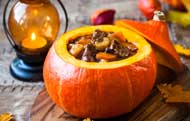
A pumpkin is a cultivated winter squash in the genus Cucurbita. The term is most applied to round, orange-coloured squash varieties.
History and Origin
Pumpkins originated in the Americas, with the oldest known seeds found in Mexico dating back over 7,500 years.
Early civilizations cultivated wild gourds, transforming them through selective breeding into the smaller, bitter, and tough vegetables we recognize as the ancestors of modern pumpkins.
The word "pumpkin" itself comes from the Greek word pepon, meaning "large melon".
- • Butternut
- • Jarrahdale
- • Jap/Kent
- • Queensland Blue
- • Kabocha
- • Buttercup
- • Kent
- • Golden Nugget
- • Turk's Turban
Common pumpkins grown and sold in Australia include Butternut, Jarrahdale, Queensland Blue, and Kent. These varieties vary in size, colour, and flavour, with options available for different uses and storage needs, such as the smaller, sweeter Golden Nugget and the larger, savory Queensland Blue.
Popular varieties
- Butternut: An elongated, pale-skinned pumpkin with a nutty, sweet flavour and rich orange flesh. It's a popular and reliable variety that stores well.
- Jarrahdale: A large, grey-skinned pumpkin with a ribbed surface and sweet, rich orange flesh that stores for a long time. It is a top-selling commercial variety.
- Queensland Blue: A traditional Australian heirloom with blue-grey, ribbed skin and sweet, rich orange flesh. It is known for excellent storage qualities and is a favourite for cooking.
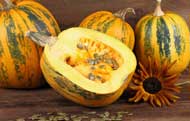
- Kent: A dark green pumpkin, sometimes with gold stripes, that is great for cooking and soups. It has a rich, orange flesh and is a popular cooking variety.
- Golden Nugget: A smaller, bush-type pumpkin that is ideal for limited spaces. It produces a good crop of mini pumpkins with sweet, orange flesh.
- Hybrid Grey Crown: A medium-sized pumpkin with a smooth, uniform shape and easy-to-cut skin. It has sweet, solid orange flesh and stores well.
- Turk's Turban: A decorative, multi-coloured pumpkin that also stores well.
- Buttercup: There are many types of buttercup squash, including the common Burgess Buttercup and Buttercup Hybrid varieties, which can differ slightly in size, growth habits, and specific flavour characteristics. Other types include the Orange Buttercup, which has a similar shape and rich, sweet flesh. All types of buttercup squash are winter squashes known for their sweet, nutty, dense, and slightly dry flesh that is excellent for roasting, soups, and pies.
Vegetables " Pumpkin "
Nutritional value per 100 g
Pumpkin, cooked, boiled, drained, without salt
| Nutrient (Proximity) |
Unit
|
Value
|
Daily Value %
|
|
Energy
|
kcal
|
20 | 1% |
|
Protein
|
g
|
0.72 | 1.4% |
|
Total lipid (fat)
|
g
|
0.07 | 0.8% |
|
Carbohydrate, by difference
|
g
|
4.90 | 1.7% |
|
Fiber, total dietary
|
g
|
1.1 | 3.9% |
|
Sugars, total
|
g
|
2.08
|
|
|
Minerals
|
|||
|
Calcium, Ca
|
mg
|
15 | 1.1% |
|
Iron, Fe
|
mg
|
0.57 | 3.1% |
|
Magnesium, Mg
|
mg
|
9 | 2.1% |
|
Phosphorus, P
|
mg
|
30 | 2.4% |
|
Potassium, K
|
mg
|
230 | 4.8% |
|
Sodium, Na
|
mg
|
1 | 00.4% |
|
Zinc, Zn
|
mg
|
0.23 | 2% |
|
Copper, Cu
|
mg
|
0.091 | 10.1% |
|
Manganese, Mn
|
mg
|
0.089 | 3.8% |
|
Selenium, Se
|
mcg
|
0.2 | 0.3% |
|
Vitamins
|
|||
|
Vitamin C, total ascorbic acid
|
mg
|
4.7 | 5.2% |
|
Thiamin (B-1)
|
mg
|
0.031 | 2.5% |
|
Riboflavin (B-2)
|
mg
|
0.078 | 6% |
|
Niacin (B-3)
|
mg
|
0.413 | 2.5% |
|
Pantothenic acid (B-5)
|
mg
|
0.201 | 4% |
|
Vitamin B-6
|
mg
|
0.044 | 2.5% |
|
Folate, total (B-9)
|
mcg
|
9 | 2.2% |
|
Vitamin B-12
|
mcg
|
0.00
|
|
|
Vitamin A, RAE
|
mcg
|
288 | 32% |
|
Vitamin E (alpha-tocopherol)
|
mg
|
0.80 | 5.3% |
|
Vitamin D (D2 + D3)
|
mcg
|
0
|
|
|
Vitamin K (phylloquinone)
|
mcg
|
0.8 | 0.6% |
|
Lipids
|
|||
|
Saturated Fatty Acids
|
g
|
0.037
|
0.1% |
|
Monounsaturated Fatty Acids
|
g
|
0.009
|
|
|
Polyunsaturated Fatty Acids
|
g
|
0.004
|
|
|
Trans Fatty Acids
|
g
|
0.000
|
|
|
Carotenoids
|
|||
|
Beta-Carotene
|
mcg
|
2096
|
|
|
Alpha-Carotene
|
mcg
|
2715
|
|
|
Beta-Cryptoxanthin
|
mcg
|
||
|
Lutein + zeaxanthin
|
mcg
|
1014
|
|

Reference Values are based on a 2,000 Calorie Intake, for Adults and Children 4 or More Years of Age. Your daily values may be higher or lower depending on your calorie needs.
Percentages are roughly approximated using (RDA) Recommended Dietary Allowances for adults. Source: USDA United States Department of Agriculture.
Reference Values for Nutrition - FDA U.S. Food and Drug Administration.
Pumpkin (fruit) Nutritional Value
Pumpkins provide many health benefits due to their high content of vitamins, minerals, and antioxidants, which can improve vision, boost the immune system, and support heart and skin health. They are a low-calorie, high-fiber food that can aid in weight management and contain compounds that may help fight inflammation and certain diseases.
HEART HEALTH
Pumpkin supports heart health through its high potassium, fiber, and antioxidant content, which help lower blood pressure and cholesterol, improve blood flow, and protect against cell damage. It contains nutrients that assist in regulating heartbeat, relaxing blood vessels, and reducing the risk of heart disease.SKIN HEALTH
Pumpkin benefits skin through its rich content of vitamins, antioxidants, and enzymes that can exfoliate, brighten, and protect the skin. Key components include beta-carotene (vitamin A), which protects against sun damage and boosts collagen production for firmness and elasticity. Vitamins C and E act as antioxidants to protect skin cells and help with collagen formation, while enzymes and alpha-hydroxy acids gently exfoliate dead skin cells, leading to a brighter, smoother complexionANTIOXIDANT AND ANTI-INFLAMMATORY EFFECTS
Pumpkin has significant antioxidant and anti-inflammatory effects due to compounds like beta-carotene, vitamin C, E, and polyphenols, which help protect cells from damage and reduce inflammation markers. These properties contribute to overall health by combating oxidative stress, which is linked to chronic diseases, and also show benefits for skin and brain health.DIGESTIVE HEALTH
Pumpkin supports gut health by being rich in fiber, which aids digestion and promotes regularity. It also contains prebiotics that feed beneficial gut bacteria and antioxidants that help reduce inflammation. Pumpkin also provides important vitamins and minerals like Vitamin A, C, and potassium that contribute to a healthy gut and immune system.
IMMUNE SYSTEM SUPPORT
Pumpkin supports the immune system by providing a variety of vitamins, minerals, and antioxidants, including beta-carotene (which the body converts to vitamin A), vitamin C, and vitamin E. These nutrients help produce white blood cells, fight inflammation, and protect against cell damage from free radicals, which strengthens the body's ability to fight infections.SUPPORT EYE HEALTH
Pumpkins support eye health due to their high levels of beta-carotene, which the body converts to vitamin A, crucial for good vision, especially in low light. They also contain zinc, which helps vitamin A reach the retina, and antioxidants like lutein and zeaxanthin, which act like natural "sunscreen" for your eyes and may help prevent conditions like age-related macular degeneration (AMD) and cataracts. Additionally, pumpkin provides vitamin C, which can help protect blood vessels in the eye and may reduce the risk of cataracts.WEIGHT MANAGEMENT
Pumpkin supports weight management because it is low in calories and high in fiber, which promotes fullness and helps curb appetite. Its high-water content and nutrient density also contribute to its benefits, as it allows you to eat a larger volume of food for fewer calories while providing essential vitamins and minerals.MOOD AND SLEEP
Pumpkin seeds can support mood and sleep due to their content of tryptophan, magnesium, and zinc. Tryptophan helps produce serotonin, the "happy hormone" for mood, which then converts to melatonin to regulate sleep. Magnesium aids in mood regulation and relaxation, while zinc helps the brain use tryptophan effectively.
References
Nutrient Database - USDA (United States Department of Agriculture)
Reference Values for Nutrition - FDA U.S. Food and Drug Administration
Eye health - Pumpkins support eye health due to their high levels of beta-carotene, which the body converts to vitamin A, crucial for good vision, especially in low light. They also contain zinc, which helps vitamin A reach the retina, and antioxidants like lutein and zeaxanthin, which act like natural "sunscreen" for your eyes and may help prevent conditions like age-related macular degeneration (AMD) and cataracts. Additionally, pumpkin provides vitamin C, which can help protect blood vessels in the eye and may reduce the risk of cataracts.
Immune system - Pumpkin supports the immune system by providing a variety of vitamins, minerals, and antioxidants, including beta-carotene (which the body converts to vitamin A), vitamin C, and vitamin E. These nutrients help produce white blood cells, fight inflammation, and protect against cell damage from free radicals, which strengthens the body's ability to fight infections.
Heart health - Pumpkin supports heart health through its high potassium, fiber, and antioxidant content, which help lower blood pressure and cholesterol, improve blood flow, and protect against cell damage. It contains nutrients that assist in regulating heartbeat, relaxing blood vessels, and reducing the risk of heart disease.
Digestive health - Pumpkin supports gut health by being rich in fiber, which aids digestion and promotes regularity. It also contains prebiotics that feed beneficial gut bacteria and antioxidants that help reduce inflammation. Pumpkin also provides important vitamins and minerals like Vitamin A, C, and potassium that contribute to a healthy gut and immune system.
Skin health - Pumpkin benefits skin through its rich content of vitamins, antioxidants, and enzymes that can exfoliate, brighten, and protect the skin. Key components include beta-carotene (vitamin A), which protects against sun damage and boosts collagen production for firmness and elasticity. Vitamins C and E act as antioxidants to protect skin cells and help with collagen formation, while enzymes and alpha-hydroxy acids gently exfoliate dead skin cells, leading to a brighter, smoother complexion.
Antioxidant and anti-inflammatory effects - Pumpkin has significant antioxidant and anti-inflammatory effects due to compounds like beta-carotene, vitamin C, E, and polyphenols, which help protect cells from damage and reduce inflammation markers. These properties contribute to overall health by combating oxidative stress, which is linked to chronic diseases, and also show benefits for skin and brain health.
Weight management - Pumpkin supports weight management because it is low in calories and high in fiber, which promotes fullness and helps curb appetite. Its high-water content and nutrient density also contribute to its benefits, as it allows you to eat a larger volume of food for fewer calories while providing essential vitamins and minerals.
Mood and sleep - Pumpkin seeds can support mood and sleep due to their content of tryptophan, magnesium, and zinc. Tryptophan helps produce serotonin, the "happy hormone" for mood, which then converts to melatonin to regulate sleep. Magnesium aids in mood regulation and relaxation, while zinc helps the brain use tryptophan effectively.